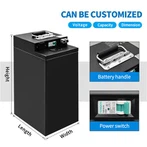
As someone who has helped ebike manufacturers across Europe and North America source the right batteries for over a decade, I get asked the same questions every week. What makes lithium-ion the best choice? Which voltage should I pick? How do I know if a supplier is reliable?
The answers matter because your battery choice affects everything - range, weight, cost, and customer satisfaction. At GEB we work with builders every day to match the right battery technology to their specific ebike designs. Today I'll walk you through what really matters when you're sourcing lithium batteries for your product line.
Why Lithium-Ion Dominates the Ebike Market
Walk into any bike shop in Amsterdam or Portland and you'll see lithium batteries on 95% of the ebikes. There's a reason for that dominance.
Compared to old lead-acid packs, lithium gives you 150-250 Wh/kg energy density versus just 30-50 Wh/kg. That means a battery that weighs 70% less for the same range. Your customers notice that difference the moment they lift the bike.
Cycle life tells an even better story. A quality lithium pack delivers 800-1,500 charge cycles before dropping to 80% capacity. Lead-acid barely makes it to 300-500 cycles. Over the bike's lifetime that difference saves your customers money and saves you warranty headaches.
Charging speed matters too. Our lithium packs fully charge in 3-5 hours versus 8-12 hours for lead-acid. Commuters who charge at work appreciate that convenience.
Key Battery Specifications: What B2B Buyers Need to Know
Let me break down the specs that actually matter when you're placing an order.
Voltage Configurations
Most ebike systems run on three standard platforms. We see these every day at GEB:
|
Voltage |
Best For |
Typical Motor Power |
|
36V systems |
City bikes, light commuters |
250W motors |
|
48V systems |
Performance ebikes, cargo bikes |
500-750W motors |
|
52V systems |
High-performance applications |
750W+ motors |
The 48V platform has become the sweet spot for most manufacturers. It delivers strong performance without pushing into legal gray areas in most markets.
Capacity Considerations
Battery capacity measured in amp-hours (Ah) directly impacts range. Here's what we recommend based on your market positioning:
- 10-13Ah - Budget-friendly option, 40-60km range, perfect for entry-level city bikes
- 14-17Ah - Mid-range solution, 60-80km range, our most popular configuration
- 18-21Ah - Premium offering, 80-100km+ range, ideal for touring and cargo applications
One thing I always tell buyers: don't overspec capacity just to have a bigger number on the box. A 48V 15Ah pack hits the sweet spot for most riders and keeps your costs competitive.
Cell Chemistry Options: NCM vs LFP
This is where things get interesting. We offer both chemistries at GEB because different applications need different solutions.
NCM (Nickel Cobalt Manganese)
This is our standard recommendation for most ebike manufacturers. NCM cells deliver 200-220 Wh/kg energy density with balanced performance and cost. European and North American customers expect this chemistry because it's proven and reliable.
The energy density advantage means lighter batteries. That matters when your customers carry the pack upstairs every night or when you're designing a sleek downtube integration.
LFP (Lithium Iron Phosphate)
LFP is gaining ground fast, especially for cargo and commercial ebikes. The cycle life reaches 2,000+ cycles - more than double NCM. Safety profile is better too with superior thermal stability.
The trade-off? Energy density runs 10-15% lower than NCM. That means slightly heavier packs for the same capacity. But for fleet operators who need batteries that last years of daily use, LFP makes financial sense.
We're seeing more builders offer LFP as an upgrade option for commercial customers while keeping NCM for consumer models.

Quality Certifications for International Markets
Here's where many new buyers get stuck. You can't just ship batteries across borders and hope for the best. The certifications are mandatory and for good reason.
Essential Certifications
UN38.3 comes first. Without this transport certification your freight forwarder won't touch the shipment. It covers altitude simulation, thermal cycling, vibration, and impact testing. Every battery we ship includes valid UN38.3 documentation.
CE certification opens European markets. This covers the Low Voltage Directive, EMC Directive, and RoHS compliance. We maintain CE marking on all our standard products so you can sell across the EU without delays.
UL certification matters for North America. While not legally mandatory everywhere, major retailers and insurance companies require it. UL 2271 specifically covers batteries for light electric vehicles. Our UL-certified packs give you access to the full US market.
IEC 62133 provides the international safety benchmark. This standard addresses portable battery safety and is recognized globally. It's the foundation that other certifications build on.
Documentation You Should Demand
Don't just take a supplier's word that they have certifications. Ask for:
- Original test reports with lab accreditation
- Certificates showing your specific battery model
- Declaration of Conformity for CE marking
- Material Safety Data Sheets (MSDS)
At GEB we provide complete documentation packages with every order. No exceptions.
Manufacturing Quality Indicators
After working with dozens of battery suppliers over the years, I've learned what separates the professionals from the rest.
Advanced BMS (Battery Management System)
The BMS is the brain of your battery. A quality system protects against overcharge, over-discharge, short circuit, and thermal issues. But it does more than just protection.
Our BMS includes cell balancing to keep all cells at equal charge levels. That extends cycle life significantly. We also offer communication protocols - UART and CAN bus - so the battery talks to your display and motor controller.
Some suppliers cut corners here. You'll see it in premature failures and warranty claims. Don't compromise on BMS quality.
Automated Production Lines
Hand-welded battery packs might work for prototypes, but volume production needs automation. Our automated spot welding ensures consistent connection resistance. That means reliable power delivery and longer life.
When you visit a factory - and you should visit before placing large orders - look for automated cell handling, welding robots, and testing stations. Manual assembly introduces too much variation.
Comprehensive Testing Protocols
We test every single battery before it ships. Not samples - every unit. That includes:
- Voltage verification
- Capacity testing (sample basis)
- BMS function check
- Insulation resistance
- Visual inspection
Ask potential suppliers about their testing procedures. If they're vague or defensive, that's a red flag.
Traceability Systems
Every GEB battery has a unique serial number linking back to production date, cell batch, and test results. If there's ever a quality issue we can trace it immediately and take corrective action.
This traceability also helps with warranty management. You know exactly when each battery was made and can track performance over time.
Customization Capabilities
Standard products work for many applications, but sometimes you need something specific. Here's what's realistic to customize:
Easy Customization (Low MOQ)
- Branded housing and labels
- Cable length and connector type
- Capacity configuration within standard voltage
- BMS communication protocol
These changes typically need 100-200 unit minimum orders and add 2-3 weeks to lead time.
Advanced Customization (Higher MOQ)
- Custom housing dimensions and mounting
- Integrated smart features (Bluetooth, GPS)
- Specific cell selection for performance
- Custom BMS programming
These require 500-1,000 unit minimums and 60-90 day lead times. But the differentiation can be worth it for established brands.
Supply Chain Considerations
Let's talk about the practical side of working with a battery supplier.
Lead Times
Standard products ship in 30-45 days from order confirmation. Custom solutions need 60-90 days. Plan your inventory accordingly, especially before peak season.
We recommend placing orders 90 days before you need the batteries. That buffer handles any unexpected delays in production or shipping.
MOQ Requirements
Our standard MOQ is 50-100 units for existing products. Custom specifications start at 200-500 units depending on complexity. These minimums let us maintain quality while keeping prices competitive.
New buyers often start with a small trial order of standard products. Once you're confident in quality and compatibility, you can move to larger orders or custom specifications.
Logistics and Shipping
Battery shipping requires expertise. We handle dangerous goods documentation, proper packaging, and freight forwarding. You don't need to become an expert in IATA regulations - we manage that.
Sea freight costs $0.50-1 per kg and takes 25-40 days to Europe or North America. Air freight costs $3-5 per kg and takes 5-10 days. Most buyers use sea freight for regular orders and air freight for urgent restocks.
After-Sales Support
Technical support matters as much as the product. We provide:
- 24-hour response time for technical questions
- Installation and integration guidance
- Troubleshooting support for your service team
- Warranty management assistance
Time zones can be challenging, but we staff our support team to cover European and North American business hours.
Cost Analysis Framework
Price per unit is important, but it's not the whole story. Here's how to think about total cost:
Unit Price Range
Expect to pay $150-400 per pack depending on specifications. A 48V 15Ah pack with quality cells and proper certifications typically runs $220-280 at 500-unit volume.
If someone quotes significantly below market, ask why. Usually it means lower-grade cells, missing certifications, or corners cut in manufacturing.
Hidden Costs
- Shipping and customs: Add 8-12% for sea freight to Europe/North America
- Quality control: Budget for incoming inspection
- Warranty reserves: Set aside 2-3% for potential claims
- Inventory carrying: Consider cash flow impact
Value vs Price
A battery that costs 15% more but has half the warranty claim rate saves you money. We see this pattern constantly. Buyers who choose quality suppliers spend less over time because of fewer returns, better customer satisfaction, and stronger brand reputation.
Future-Proofing Your Battery Strategy
The battery industry moves fast. Here's what's coming that you should know about.
Higher Energy Density
New cell generations are reaching 280+ Wh/kg. That means 15-20% more range in the same package. We're already testing these cells and will offer them in production by late 2026.
Fast Charging
Customers increasingly expect 80% charge in under 1 hour. Our latest packs support 2C charging rates with proper thermal management. This matters especially for commercial and rental applications.
Smart Battery Features
IoT integration is moving from premium to standard. Bluetooth connectivity, GPS tracking, and cloud analytics help with fleet management and theft prevention. We offer these features as options now and expect them to become standard within two years.
Sustainability Requirements
The EU Battery Regulation introduces carbon footprint declarations and recycled content requirements starting 2028. We're already tracking our supply chain to meet these standards. Choose suppliers who are preparing now, not scrambling later.
How to Choose the Right Battery Partner
After all these years in the industry, here's my checklist for evaluating suppliers:
Must-Have Qualities
- Complete certifications with documentation you can verify
- Transparent communication about capabilities and limitations
- Consistent quality backed by testing data
- Reasonable lead times they actually meet
- Technical support that responds quickly
Red Flags to Watch For
- Vague answers about certifications or testing
- Prices significantly below market without explanation
- Resistance to factory visits or audits
- Poor English communication (for international business)
- No clear warranty terms
Questions to Ask
Before you place an order, get clear answers to:
- What cell brand do you use? (Tier 1 brands like Samsung, LG, Panasonic, or reputable Tier 2?)
- What's your typical warranty claim rate? (Should be under 3%)
- Can I visit your factory? (Good suppliers welcome visits)
- What testing do you perform on every unit?
- How do you handle warranty claims?
Final Thoughts
Choosing the right lithium battery supplier affects your entire product line. The battery is often the most expensive component and the one most likely to cause warranty issues if quality isn't right.
At GEB we've built our reputation on consistent quality, transparent communication, and reliable delivery. We work with ebike manufacturers from 10-unit startups to 10,000-unit established brands. The approach is the same - understand your specific needs and deliver batteries that perform.
If you're evaluating suppliers right now, I'm happy to discuss your specific application. Tell us about your motor setup, target market, and volume plans. We'll recommend the exact battery configuration that fits your needs and budget.
About GEB - Your Ebike Battery Partner
Founded in 2009 in Shenzhen, China, General Electronics Technology (GEB) specializes in lithium battery packs for electric bicycles. Our facility combines experienced engineering, modern automated production, and comprehensive quality control.
We serve manufacturers and distributors across Europe and North America with:
- Complete international certifications (UN38.3, CE, UL, IEC 62133)
- ISO 9001:2015 certified manufacturing
- Flexible customization from 100 units
- 24-hour technical support response
- Transparent pricing and reliable delivery
Contact us to discuss your battery requirements. We're here to help you build better ebikes.