
Latest Products



Contact Us
- 4th Floor, Building 5, Mingkunda Industrial Park, 38 Huachang Road, Dalang Street, Longhua District, Shenzhen 518109, Guangdong Province, PR China
- sales@gebattery.co
- +86-755-81762725 ext.611
- +86-755-81762726 ext.611
- +86-755-81762727 ext.611
Brand GEB belongs to General Electronics Technology Co., LTD. It is a professional manufacturer of electric bicycle lithium batteries. GEB means getting energy from our battery. This brand name is famous in the global lithium battery industry. Our factory was established in 2009 and is located in Shenzhen. Now, we have more than 180 employees, our annual sales of more than 30 million US dollars, and have become leaders of the industry. Our products mainly includes electric bicycle battery, scooter battery, motorcycle battery, power tool battery, forklift battery and toys car battery.
R&D And Manufacturing
GEB has a lithium battery R&D team of more than 20 people, and technology research and development is at an important position in the company's development. Through rigorous R&D organization, advanced R&D equipment and a large amount of R&D investment, we have achieved industry-leading research and development results. Our strong R&D teamcan coordinate the design and development process of our customers according to their needs, design and development, and help customers to quickly realize product solutions.
Quality Control
GEB is equipped with professional battery testing facilities, including UL safety electrical testing laboratory, instrument salt and fog test equipment, lithium battery cell performace test, and high and low temperature performance test machine. Our company adheres to a high-quality vision to perform the reliability tests for all new models.
Complete Qualifications
The company has passed ISO quality certification system as well as multiple certification CE, UL, MSDS, IEC. We always committed to providing high-quality products for our customers.
Broad Market
We always maintain a friendly relationship of mutual trust and mutual selection with our customers. We have visiting customers from all over the world, involving Pakistan, Las Vegas, US, UK, Spain, Italy, Mexico and so on.
 12.8 Volt LiFePO4 Battery Pack
Introducing the 12.8V 1500mAh LiFePO4 Battery Pack, designed to deliver reliable power for a wide range of applications. With a 1-year warranty, this battery pack offers efficient performance and a
Add to Inquiry 7.4 V 700mah Battery
The GEB 18350 7.4V 700mAh Li-ion battery offers a dependable power solution for a wide array of applications, ensuring reliability and performance. With a warranty period of one year and a weight of
Add to Inquiry 3.7 V 4800mah Battery
The GEB21700 is a high-quality 21700 4800mAh 3.7v 3C Li-ion rechargeable lithium battery cell, with a warranty period ranging from 3 months to 1 year. Weighing just 70g, it is suitable for a wide
Add to Inquiry 3.7 V 400mah Battery
Take advantage of dependable, long-lasting power with the GEB 403533R Li-polymer battery. With a 1-year warranty and CE certification, this adaptable 3.7V, 400mAh battery ensures safe and effective
Add to Inquiry 3.2 V 1500mah Battery
Experience the reliability and durability of our GEB 18650 3.2V 1500mAh rechargeable battery. Designed with the environment in mind, this Lifepo4/Lithium battery offers exceptional performance and a
Add to Inquiry 7.2 V 3000mah Ni Mh Battery
Presenting the GEB 7.2 v 3000mah ni mh battery, a versatile power solution for numerous applications. With a 1-year warranty and CE certification, this rechargeable cylindrical battery, originating
Add to Inquiry 11.1 V 4000mah Battery
Introducing our GEB 18650 3S2P 11.1V 4000mAh Li-ion Battery, a reliable and rechargeable power solution. This battery, with an anode material of NCM, offers a standard charge current of 0.2C and a
Add to Inquiry Lipo 14.8 V 5000mah
We are pleased to present the GEB lipo 14.8 v 5000mah, an outstanding power option suitable for a multitude of uses. This large-capacity Li-polymer battery has a one-year warranty and a 500 cycle
Add to Inquiry 1.2 V 3000mah Rechargeable Battery
Our Ni-Cd 1.2 V 3000mah Rechargeable Battery is built to last. Designed specifically for power tools, it offers a stable and reliable power supply with a 1.2V voltage, 2000/3000mAh capacity, and a
Add to Inquiry 6800mah Battery Pack
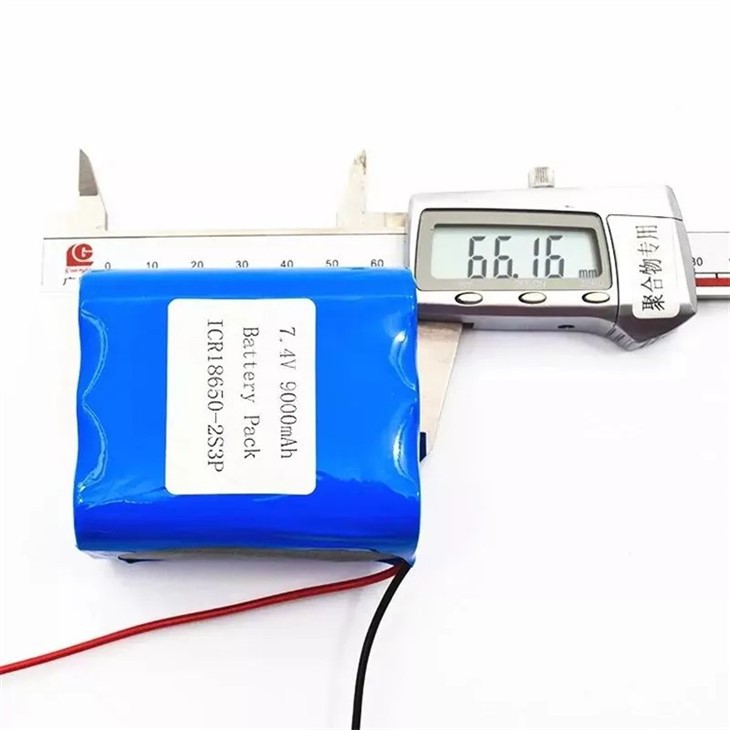
GEB's 18650 2S3P 7.4V 6800mAh Rechargeable Battery Pack is a versatile, high-capacity lithium-ion battery pack designed to power power tools as well as drones and ships.
Add to Inquiry
A power tool battery is a rechargeable battery designed to provide power to electric power tools. These batteries are typically lithium-ion (Li-ion) or nickel-cadmium (NiCd) types, which are known for their high energy density, long lifespan, and ability to hold a charge for extended periods.
Understanding common concepts and features of power tool battery can help you choose the right battery for your tool and different applications. Here are some important terms to know:
Voltage
Voltage refers to the battery's strength and determines the power level a tool provides. Always consider the voltage requirements of the specific tools you plan to use. Tools with higher voltage batteries are more powerful, which is important when performing heavy-duty tasks, but they may be heavier and less compact. Tools with lower voltage batteries are often lighter and more compact but less powerful. Matching the voltage of the replacement battery to the original tool ensures that the tool will operate at its intended power level.
Battery Capacity
Measured in amp-hours (Ah), the capacity refers to how much power a battery can hold and how long it can run before recharging. Certain tools require higher Ah to operate to user expectations. When comparing batteries, look at the Ah ratings to determine a battery’s overall storage capacity and run time. Higher Ah ratings mean the battery can be used for longer periods before needing to be recharged. However, as Ah ratings increase, so does the weight and bulk of the battery and hence the tool.
Memory Effect
This phenomenon occurs in older battery chemistries, like NiCd, where the battery remembers its previous capacity when it's not fully discharged before recharging. When memory effect happens, the capacity can gradually decrease, reducing overall battery life. Newer lithium-ion batteries don't have a memory effect, making them potentially longer-lasting.
Types of Power Tool Battery
|
Nickel-Cadmium (NiCd) |
Nickel-Metal Hybride (NiMH) |
Lithium-ion (Li-ion) |
|
NiCd power tool batteries are what we might refer to as 'older generation' batteries. NiCd batteries are generally heavier and take longer to charge. |
Much lighter than their NiCd counterparts, NiMH batteries are often used to replace older NiCd batteries. NiMH batteries are, however, sensitve to self-discharge and deterioration linked to memory effect. |
Li-ion technology is a much more recent development and li-ion batteries are nowadays used in a wide range of devices. Li-ion technology offers a wide range of advantages, including long operating time, light weight and durability - the perfect technology for your power tool battery. |
|
Pros: Quick, easy charging Long life expectancy |
Pros: Higher capacity than NiCd Weaker memory effect than NiCd Less polluting than NiCd |
Pros: In general, higher capacity than NiMH Low self-discharge No memory effect Lightweight Built-in protection circuit |
|
Cons: High self-discharge Memory effect Polluting (cadmium) |
Cons: Self-discharge Memory effect |
Cons: More expensive Sensitive to deep discharges Difficulty balancing voltage - requires a PCM (Protection Circuit Module |

●When a battery is discharged repeatedly to exactly the same level, and then recharged.
●When a battery gets old.
●When a battery is charged too slowly.
●When a battery is exposed to high temperatures.
●When a battery is completely discharged (batteries should be discharged until the point where the tool refuses to function adequately).
●The most common reason is when a battery is persistently overcharged (voltage depression).
One of the most prominent specifications you’ll see on a power tool or a battery is the voltage. The voltage of a battery, noted as volts (V), indicates the energy or power a battery can provide to a tool. More volts gives the tool more power. For example, a 24-volt battery can provide higher torque or rotational force to a drill, allowing it to bore into dense material quicker than a 12-volt model. Higher-voltage battery packs have more individual battery cells built in. More cells provide more power, but they also add weight, so the 24-volt battery will be heavier than a 12-volt battery of the same type.
How many volts do you need in a battery? It depends on the work you need to do. For general maintenance and repair work, a 12- or 20-volt tool and battery will suffice. They’ll handle the most-common tasks a homeowner might take on and will be lighter and more economical than a 24-volt or higher tool and battery combination. However, heavy-duty projects (such as building a deck or installing a fence) can benefit from the higher-voltage tools and batteries, so if you plan to take on large projects, the added weight might be worth it.
In addition to volts, look for the battery’s amp-hour rating (ampere-hour rating). The amp-hour rating (Ah) of a battery will be noted in the product information and may be printed on the battery along with the voltage. What does Ah mean? An amp-hour measures battery capacity or how much electrical current a fully charged battery can provide over a period of 60 minutes. While the actual time the battery can operate a tool varies by the level of current the tool needs to function, a higher amp-hour rating means a battery can operate the tool for a longer period of time.
Higher amp-hour batteries also allow a tool to use more of its available power to complete a job faster and can better maintain the power level. While the constant power level doesn’t benefit light-duty work significantly, higher-rated batteries are more effective for heavy-duty jobs, letting you complete the work more efficiently.
The battery amperage-hour rating you should look for depends on how you’ll use the tool it powers. As with voltage, you can handle a few light jobs effectively with a battery that has a lower rating. If you have a lot of heavier work to do, a higher amp-hour battery will more effective. It’ll weigh more, but will complete the job noticeably faster.
Features to Consider in a Power Tool Battery
Volts and Battery Power
This is the most important aspect of any power tool battery. You can choose the best manufacturer of power tools. But if you pair it with their lowest quality battery, you’re going to be left wishing you had chosen differently.
The basic rule is that more power is better. That’s why you need to look at the volts. The most modern power tools are rated at 18V or 20V but it should be noted that some tools require more power. This is a good option if you only use the high-powered tool occasionally, you can simply borrow the battery from other electric tools.
Amp-hour Ratings and Battery Runtimes
As mentioned, the higher the amp the longer the runtime of the battery. In most cases, this makes buying higher amp batteries the most logical choice. Of course, higher amp batteries are more expensive, larger, and heavier. You’ll need to consider this when choosing a battery.
5 Tips for Maximizing the Life of Power Tool Battery
Use the Right Battery and Charging System
Choosing a low-power battery, like a 2.0 Ah or 4.0 Ah, for a high-powered tool often requires frequent recharging and can decrease the battery’s life span. Pick a charger or charging mode suitable to the application and run time needs.
According to Power Tool Institute, original manufacturer batteries contain innovative technology to monitor battery health, cell balance, temperature and other critical functions designed to help maintain longer-lasting tools. Only tools, batteries and chargers from the same manufacturer are designed to work together. Since each manufacturer has unique circuity designs, aftermarket or counterfeit batteries may not include all the safety design features or undergo the same testing and quality controls as manufacturer batteries. This could lead to damage, fire or injury. Further, note that it can be challenging to visually determine aftermarket and counterfeit batteries.
Avoid Extreme Temperatures
When using or storing lithium-ion batteries, try to avoid high and low temperatures. Temperatures over 175 F can cause permanent damage to the battery. While that temperature may seem high, factors such as being in direct sunlight or inside a hot trunk can quickly cross that temperature threshold. According to University of Michigan researchers, “elevated temperatures can accelerate the degradation of almost every battery component and lead to significant safety risks, including fire or explosion.” Experts recommend storing batteries in air-conditioned spaces whenever possible since the optimal temperature is around 59 F, with most battery chemistries having an extreme temperature threshold ranging from minus-40 F to 122 F.
Properly Store Batteries
Storing power tools in a moist climate can cause corrosion or lead to problems with the electrical components. Tools should be stored inside a case or cabinet to help eliminate dust and other particles from entering the vents when not in use. Securing them in a toolbox with foam inserts or using a battery holder can also help protect your tools and prolong battery life. Always store your power tools in a cool, dry place since keeping batteries near the optimal temperature mentioned above can help extend run time and make the charging process more efficient.
Use Power Tools Regularly
Batteries have a life expectancy and deteriorate when not in use. When a battery isn’t used immediately after charging, it will slowly lose its charge. Some battery technologies have a faster self-discharge rate than others. For example, if NiCd batteries are stored outside the charger, they will naturally begin to discharge, losing the bulk of their capacity in the first three days. However, lithium-ion batteries have very minimal discharge rates when not in use. Once a battery is damaged, it often has to be recharged more frequently. Recharging battery packs creates more heat that can damage the battery further. Keeping a spare battery ensures you always have a charged battery ready.
Protect Batteries from Liquids and Metals
Avoiding moisture may sound like a no-brainer, but jobsites are prone to all types of weather, so that’s not always possible. Some battery packs are designed to help direct water away from internal electronic components. It’s important to store your power tool batteries where they won’t be exposed to water, liquids or make contact with metal objects such as keys, coins, screws or nails, which can present safety hazards.

7 Tips for Choosing Your Power Tool Battery
●Ideally, you should choose a tool that comes with two batteries so you don't get caught out when you're working on a longer task (you can simply swap the batteries over).
●Lithium-ion batteries are lightweight and will therefore make your tool easier to handle.
●If you have the choice when replacing an old battery, go for a battery with a higher ampere hour rating so it lasts longer between charges.
●Be sure to purchase a battery with the same voltage as your power tool so as not to damage your equipment.
●You can choose to repair an old battery in which case the components will be replaced; beware that the costs of delivery may be high. It's a good idea to ask for a quote to avoid any unpleasant surprises!
●A battery indicator will be a handy and provide you with more control in terms of recharging.
●Do not store your batteries without charging them first. If you don't plan to use your tool for a while, be sure to charge it fully before storing.
FAQ
As one of the most professional power tool battery manufacturers and suppliers in China, we're featured by quality products and low price. Please rest assured to buy discount power tool battery in stock here and get pricelist from our factory. Also, customized service and OEM&ODM service are available.
Power Tool Battery, 6800mah Battery Pack