In today's fast-evolving world of electrification and renewable energy, batteries have become the beating heart of innovation-from electric vehicles (EVs) to e-bikes, energy storage systems, and smart devices. Yet, transforming a battery concept into a reliable mass-produced product is far more than a technical exercise; it's a complex engineering journey requiring cross-disciplinary collaboration, precise control, and continuous optimization.
This article walks you through the complete battery development process, from prototype to mass production, explaining how professional OEM/ODM manufacturers turn ideas into real, market-ready battery packs.
Why Battery Development Is a System Engineering
Battery development is not simply assembling cells into a pack. It's a system engineering process that integrates electrochemistry, materials science, mechanical design, electronics, and manufacturing know-how.
A successful battery must strike a fine balance between:
- Performance: energy density, cycle life, charge speed
- Safety: thermal stability, protective design, certification compliance
- Cost and Manufacturability: scalable design and supply chain efficiency
In today's lithium-ion and LiFePO₄ ecosystems, every design decision-from cell chemistry to BMS algorithm-affects final cost, performance, and safety. Understanding this system-level balance is the key to efficient product development and sustainable competitiveness.
Stage 1: Defining Requirements and Concept Design
Every great battery project begins with a clear definition of what the product must achieve.
Market and Technical Requirement Analysis
Different industries have vastly different priorities:
- EV batteries: focus on energy density and fast-charging capability
- E-bike or e-scooter batteries: prioritize size, weight, and durability
- Energy storage systems: emphasize cycle life and cost efficiency
- Consumer electronics: demand compactness and safety
These market needs are translated into technical parameters such as nominal voltage, capacity, internal resistance, cycle life, discharge rate, and operating temperature. At the same time, developers must consider cost constraints, since materials like cathode active substances (e.g., NCM, LFP) and electrolytes make up 60–70% of total cost.
Concept Design and Feasibility Validation
Once key specs are defined, engineers select the cell chemistry (LFP for safety and long life, NCM for higher density) and start 3D modeling and prototype casing design.
Early samples are often made via CNC machining or 3D printing, allowing teams to quickly validate structure, size, and thermal design before investing in mass-production molds.
Stage 2: Engineering Prototype Development
After concept validation, the project moves to engineering prototype-the bridge between idea and manufacturable product.
Material System and Electrode Development
This phase focuses on fine-tuning cathode/ anode formulations, coating uniformity, and slurry control.
- Cathode: often aluminum foil base; coating thickness and roll-pressing density (3.3–3.5 g/cm³ for NCM) directly affect capacity.
- Anode: copper foil base; balance between graphite and silicon content determines cycle stability.
- Electrolyte: additives and Li-salt concentration are optimized for stable SEI formation and low impedance.
Mechanical and Thermal Management Design
The battery structure must ensure rigidity, insulation, and efficient heat dissipation.
Thermal modeling helps maintain temperature differences within ±2°C inside modules-critical for extending service life.
Some advanced packs integrate phase-change materials or heat pipes to control extreme conditions.
Battery Management System (BMS) Development
The BMS acts as the "brain" of the battery, managing safety, energy balance, and communication.
Core functions include:
Accurate SOC/SOH estimation (using adaptive Kalman filters, error ≤3%)
Cell balancing to improve usable capacity
Thermal coordination with the cooling system
Compliance with ISO 26262 functional safety standards
Hardware-in-the-loop (HIL) testing ensures that the BMS performs reliably under all fault conditions.
Stage 3: Process Development and Pilot Production
Before mass production, engineers must validate that design intent can be consistently replicated at scale.
Electrode Manufacturing Process
This involves precise control of slurry mixing, coating, drying, and calendering:
- Optimal slurry viscosity ensures uniform coating and adhesion.
- Double-sided coating boosts throughput but requires advanced tension control.
- Calendering defines electrode density; excessive compression harms cycle life.
Cell Assembly and Formation
Depending on the form factor:
- Wound cells are efficient for cylindrical formats (up to 4 PPM speed).
- Stacked cells achieve higher energy density and better consistency, preferred for solid-state or pouch designs.
Formation and aging processes are critical-gradual charging builds a stable SEI layer, and precision capacity grading guarantees product consistency.
Stage 4: Testing, Validation, and Certification
No battery enters the market without extensive validation to ensure safety, performance, and durability.
Performance and Cycle Tests
Batteries undergo multi-condition evaluations:
- Capacity and internal resistance at various temperatures (-30°C–60°C)
- Cycle life at 25°C and 45°C under 1C charge/discharge
- Calendar aging during high-temperature storage
Safety Tests
Includes overcharge, short-circuit, crush, vibration, thermal shock, and nail penetration tests.
Thermal runaway simulation is critical to assess heat propagation-robust cell spacing and venting design can delay chain reaction by over 15 minutes.
Compliance and Certifications
Depending on target markets, certification may include:
- UN38.3, CE, IEC62133 – for export and transport
- UL2271/1973, SAE J2929 – for North American standards
- GB38031 – for China EV batteries
Planning certification 3–6 months ahead prevents production delays and ensures smooth global shipment.
Stage 5: Mass Production and Continuous Improvement
Once the design and validation are complete, the project enters mass production-where engineering precision meets factory discipline.
Production Line Setup and Validation
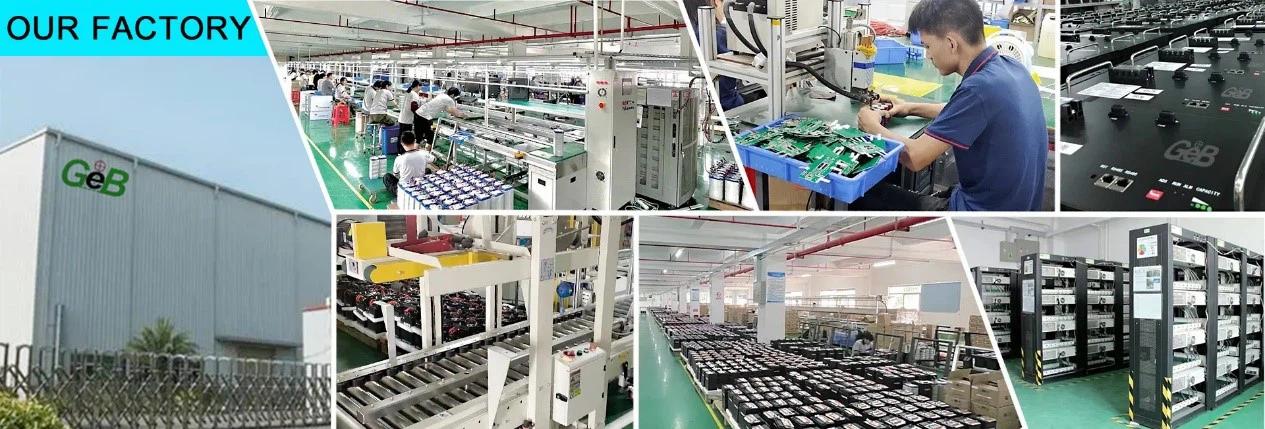
Modern lithium battery plants achieve over 80% automation.
Laser cutting, precision stacking, and automated welding ensure consistency, while the PPAP (Production Part Approval Process) validates CPK values above 1.33 for critical parameters.
Quality Control and Supply Chain Management
Implementing MES and SPC systems allows real-time tracking of 200+ quality control points, reducing rejection rates by up to 40%.
Raw materials (e.g., cathode powder particle size, moisture content) are monitored to ensure traceability and long-term stability.
Ongoing Optimization
Mass production is not the end-it's the beginning of continuous improvement.
Through customer feedback and field data analysis, engineers can refine structure, optimize BMS algorithms (via OTA updates), and prepare next-generation upgrades such as solid-state integration or faster charging platforms.
Conclusion
The journey from prototype to mass production reflects the collaborative art of modern engineering-a seamless blend of science, design, and manufacturing discipline. Each phase requires expertise, testing, and teamwork across electrochemistry, mechanical design, and software systems. As next-generation technologies like solid-state and sodium-ion batteries mature, the process will evolve.
GEB is a brand under General Electronics Technology Co., LTD, and a professional manufacturer of e-bike batteries.
Since the establishment of our factory in 2009, GEB has been dedicated to providing high-quality, high-performance, and environmentally friendly lithium batteries for the European and North American e-bike markets. Over the years, we have built a strong reputation among global clients by upholding our core values of innovation, quality, service, and responsibility.
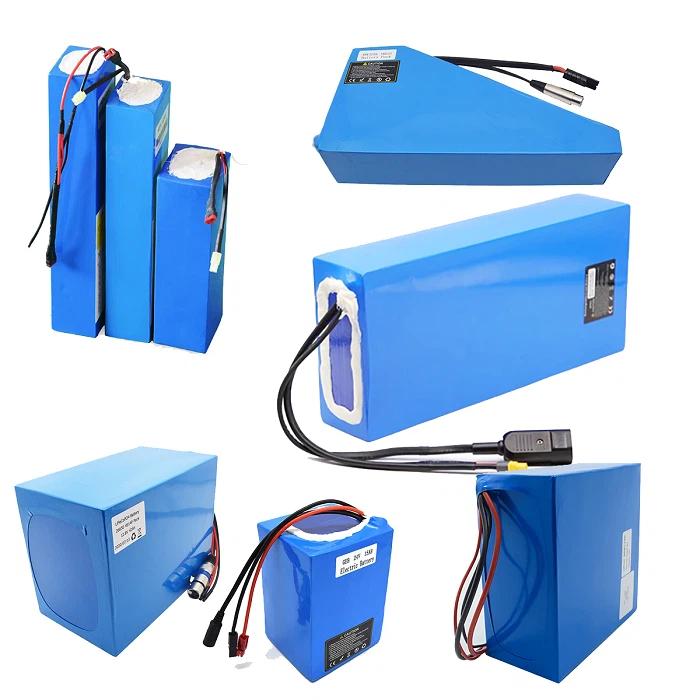
As a professional OEM/ODM battery manufacturer, GEB offers a complete solution from custom design and prototype development to mass production. Contact us today to learn more about our battery solutions.