


The e-bike industry is expanding rapidly, driven by urbanization, sustainable mobility, and advances in lithium battery technology. The battery is the most critical component-it determines range, safety, performance, and overall product reliability.
China, the world's largest producer of e-bike batteries, offers immense sourcing potential. Yet, supplier quality varies widely: alongside world-class manufacturers exist smaller assemblers and trading firms with inconsistent standards. For international buyers, identifying a reliable e-bike battery supplier in China is not simply about comparing prices-it requires evaluating technical capability, quality control, and long-term stability.
This article outlines a structured approach to supplier selection, helping importers assess technical routes, production capacity, and product quality to secure safe and dependable battery partners.

Understanding Battery Technologies for E-Bikes
E-bike batteries mainly fall into two categories: lead-acid and lithium-ion.
Lead-acid batteries remain cost-effective and recyclable but have low energy density (30–50 Wh/kg), heavy weight, and short life (300–500 cycles). They are suitable only for low-cost commuter or rental bikes.
Lithium-ion batteries dominate today's market due to their higher energy density, lighter weight, and longer service life. Within this family, two chemistries are most relevant:
- NCM/NCA (ternary lithium) - High energy density and power output, ideal for performance models. However, they require strict safety control and are more expensive.
- LFP (lithium iron phosphate) - Exceptional thermal stability, long lifespan (2,000+ cycles), and cost efficiency. Slightly lower in energy density but far safer and more durable under heavy cycling or high temperatures.
Battery choice should match application needs: premium bikes benefit from NCM's compactness; delivery fleets and shared mobility systems prefer LFP for safety and longevity.
A reliable supplier should demonstrate technical competence across multiple chemistries, backed by proven process control and R&D capability. Manufacturers focused on stable, mature chemistries-such as LFP-often maintain stronger safety records and product consistency, key traits for export-grade battery partners.

Evaluating Supplier Qualification and Production Capability
Assessing a supplier's technical qualifications and factory operations is essential. Certifications, production systems, and traceability reveal far more about reliability than price quotes.
Trusted manufacturers maintain recognized standards such as ISO 9001, ISO 14001, CE, UN 38.3, and UL 2271, proving their adherence to international quality and safety norms.
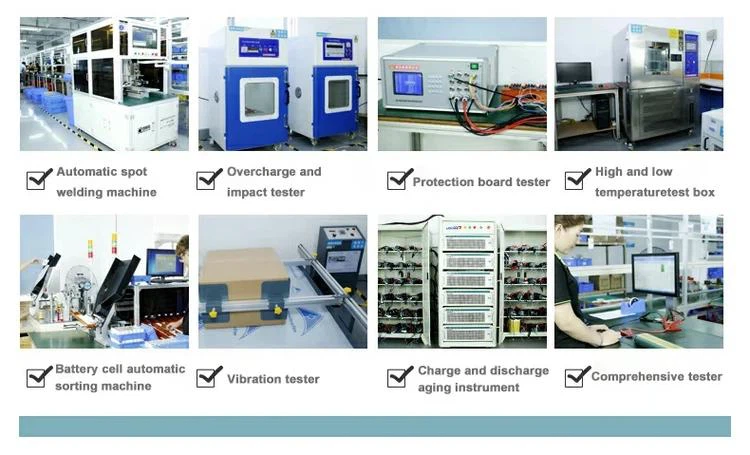
Modern production capability is equally crucial. Leading factories feature automated electrode coating, precision cell assembly, formation aging lines, and computerized testing. Automation ensures cell consistency and low defect rates-vital for e-bike battery safety. Buyers should request data on capacity utilization, defect percentages, and delivery performance.
Strong R&D capability differentiates manufacturers from assemblers. Reliable suppliers invest substantially in research, maintain dedicated labs, hold patents, and collaborate with technical institutes. Such depth reflects long-term sustainability rather than short-term assembly capacity.
Vertical integration is another key indicator. Manufacturers controlling cell production, BMS design, and PACK assembly deliver tighter quality control and better cost efficiency. This structure also reduces supply risks caused by external subcontractors.
Whenever possible, conduct an on-site or virtual audit to observe production lines, testing labs, and inspection procedures. A transparent manufacturer welcomes such evaluation-it demonstrates confidence in their standards and a genuine interest in long-term cooperation.
Assessing Battery Quality and Performance Standards
Quality assessment must go beyond datasheets. A credible supplier provides verifiable test data and consistent results across production batches.
Core performance indicators include:
- Cycle life: The number of charge–discharge cycles before capacity drops below 80%. Quality LFP batteries exceed 2,000 cycles; NCM types typically last 800–1,000.
- Energy density: Defines the range-to-weight ratio-LFP ≈ 90–140 Wh/kg, NCM ≈ 160–200 Wh/kg. Higher density improves range but may compromise stability.
- Safety performance: Batteries must pass overcharge, short-circuit, puncture, and thermal abuse tests without combustion or explosion. Independent lab reports validate compliance.
- Temperature adaptability: Reliable batteries perform well from –20 °C to 55 °C. Optimized electrolyte and BMS design improve low-temperature charging and overall endurance.
- Consistency: Variance in cell capacity or resistance should stay within ±1%. Uniformity directly affects pack balance and lifespan.
Buyers should request third-party test reports, sample test data, and traceability records. Many advanced factories employ digital systems to log production parameters for every batch, enabling full trace-back to equipment, materials, and testing results-evidence of mature quality governance.

Pricing and Supply Chain Considerations
Price alone can be misleading. Understanding the cost structure and supplier type is critical to avoid hidden risks.
Cells represent 60–70 % of a lithium battery's total cost. Manufacturers that produce their own cells control both quality and pricing, while assemblers or traders who source from multiple suppliers often face inconsistencies and fluctuating quality. Apparent "low-price offers" can result in poor reliability, higher warranty claims, and reputational damage.
Partnering directly with a true manufacturer eliminates intermediary markups and ensures better traceability and technical support. Integrated suppliers-those managing the full chain from cell to pack-can maintain stable pricing, fast response, and consistent product quality.
Buyers should ask detailed questions about the origin of cells, production scope, and capacity utilization. A transparent supplier will provide documentation proving internal manufacturing capability.
Ultimately, cost efficiency comes from quality and stability, not from cutting corners. A slightly higher upfront price from a capable, vertically integrated factory often results in a much lower total cost of ownership through longer battery life, fewer failures, and stronger brand trust.
Customization and Technical Support Capabilities
Customization is often the defining factor that separates a standard supplier from a strategic partner. In the e-bike market, where frame geometries, controller interfaces, and usage profiles vary significantly, a one-size-fits-all battery is rarely optimal. Reliable manufacturers therefore offer OEM/ODM solutions that align precisely with the customer's mechanical, electrical, and software requirements.
A professional battery supplier should be able to customize key parameters such as pack dimensions, voltage configurations, connector types, and enclosure protection levels (e.g., IP54–IP67). Beyond the physical design, BMS (Battery Management System) customization plays an equally crucial role. The BMS governs the charging and discharging process, cell balancing, and fault protection. Advanced suppliers can fine-tune BMS algorithms for different applications-optimizing charge curves for fast charging, adjusting discharge profiles to match specific motor controllers, or improving SOC (State of Charge) accuracy for longer operational consistency.
Equally important is the collaborative development workflow. In a mature supplier relationship, product development typically follows a structured sequence:
- Requirement definition - joint evaluation of target application, power demands, and environmental conditions.
- Design and sampling - prototype packs are produced and validated through electrical, mechanical, and safety testing.
- Pilot production and certification - small-batch runs confirm manufacturability and regulatory compliance.
- Mass production and quality validation - ramp-up begins under monitored conditions, ensuring performance repeatability.
Reliable partners also extend their support beyond production. Effective technical assistance and after-sales service may include installation guidance, troubleshooting documentation, remote diagnostic access, and training for maintenance teams. Some suppliers provide IoT-enabled smart battery systems capable of real-time monitoring, fault reporting, and performance optimization-features that greatly enhance lifecycle management for fleet operators.
Companies with full design-to-assembly capability, such as those offering complete PACK integration and BMS programming, can provide end-to-end solutions that reduce engineering complexity and time to market. This integrated approach allows international buyers to manage fewer interfaces and ensures technical consistency throughout the battery's development lifecycle.
Among Chinese manufacturers, some-including GEB-offer turnkey project solutions that cover every stage from cell development to PACK assembly and BMS programming. Such integrated engineering capability helps clients shorten development cycles and ensures performance consistency from prototype to mass production. Contact us now for a free sample.
Environmental Responsibility and Sustainability Practices
As global sustainability standards tighten, the environmental credentials of a battery supplier are becoming as critical as product performance. The European Union's upcoming battery regulations and the growing emphasis on carbon footprint reporting are reshaping expectations for manufacturers worldwide.
Environmentally responsible suppliers adopt green production technologies to minimize emissions and resource waste. Modern factories increasingly employ water-based electrode processing instead of solvent-based methods, significantly reducing volatile organic compound (VOC) emissions. Closed-loop systems for electrolyte recovery, waste recycling, and heat reuse further enhance sustainability across the production chain.
Equally important is product recyclability. A forward-looking supplier designs batteries with disassembly and recycling in mind, enabling recovery of valuable materials such as lithium, cobalt, and aluminum. Some also participate in industry recycling programs or establish their own collection channels to promote a circular economy.
The broader supply chain also matters. Sustainable sourcing of raw materials-avoiding conflict minerals and using energy-efficient logistics-demonstrates a supplier's commitment to responsible manufacturing. Companies that actively monitor and disclose their carbon footprint not only comply with emerging international regulations but also strengthen their credibility with global partners seeking environmentally conscious suppliers.
Manufacturers employing water-based electrode technology and pollution-free production processes represent the direction the global battery industry is moving toward: safer for workers, cleaner for the environment, and more compliant with international sustainability goals.

Service Systems and Partnership Flexibility
A reliable e-bike battery supplier is defined not only by its technical capability but also by the quality of its service and responsiveness. Effective after-sales support ensures that minor technical issues do not escalate into operational setbacks, particularly for international customers.
Comprehensive service includes clear warranty terms, rapid response to inquiries, and transparent procedures for repair or replacement. For large orders, proactive communication and problem tracking systems are key indicators of professional management. A dependable supplier should maintain dedicated support teams capable of providing timely feedback, even across time zones.
Flexibility is another hallmark of a capable manufacturer. Unlike large state-owned enterprises that often focus solely on high-volume clients, independent manufacturers tend to be more adaptable to small or customized projects. They can adjust minimum order quantities, modify pack specifications, or expedite production for pilot runs. This level of agility is invaluable for emerging e-bike brands, startups, or specialized vehicle makers who require shorter lead times and closer technical cooperation.
Successful partnerships are built on open communication, mutual understanding, and the supplier's willingness to tailor both products and processes. Buyers should look for suppliers that emphasize long-term collaboration rather than one-time transactions-those that view customer success as an extension of their own.
Geographic and Logistical Advantages
Geography plays an underrated yet crucial role in the reliability of a Chinese battery supplier. The southern manufacturing belt, particularly regions like Shenzhen, Dongguan, and Guangzhou, represents the heart of China's lithium battery ecosystem. This area hosts a dense network of raw material providers, precision component suppliers, and logistics hubs, forming a mature industrial chain that supports rapid development and efficient scaling.
Proximity to major export gateways-such as the ports of Shenzhen and Hong Kong-provides clear logistical advantages. Batteries, classified as dangerous goods, require strict compliance in packaging and transportation. Suppliers located near international logistics centers can process customs clearance and documentation more efficiently, significantly reducing lead times and minimizing shipping risks.
Furthermore, the Pearl River Delta region's advanced manufacturing infrastructure and skilled workforce allow for quick engineering iteration and high product consistency. This ecosystem offers overseas buyers the assurance of reliable production continuity and responsive supply chain coordination.
Conclusion and Call to Action
Selecting a reliable e-bike battery supplier in China requires a holistic evaluation of technical competence, quality control, service commitment, and environmental responsibility. The most trustworthy partners combine solid engineering foundations with transparent processes and customer-centered operations.
Suppliers with proven experience in LFP technology, advanced manufacturing systems, and sustainable production practices stand out as long-term partners for global e-bike brands. They deliver batteries that not only perform consistently but also align with international standards of safety, efficiency, and eco-consciousness.
Over the past 15 years, GEB has exemplified these principles-maintaining a focus on safe, high-performance lithium batteries while building a reputation for technical integrity and reliability. For companies seeking dependable, cost-efficient, and environmentally responsible power solutions, engaging with an experienced Chinese manufacturer like GEB offers a path toward long-term success and sustainable growth. Contact us now for a free sample.


