Panasonic motor systems have long been a trusted choice in the e-bike industry, especially across Europe, where they are widely used in city, trekking, and touring e-bikes. Many well-known bike brands rely on Panasonic mid-drive systems for their reliability and smooth power delivery.
However, as e-bikes age, battery performance inevitably declines. Riders may experience reduced range, longer charging times, or difficulty sourcing original replacement batteries for older models. In these cases, choosing a compatible replacement battery becomes a practical and often necessary solution.
This article focuses on the key technical and practical factors to consider when buying an e-bike battery compatible with Panasonic motor systems.

Understanding Panasonic E-Bike Motor Systems
Overview of Panasonic 26V (25.2V) Drive Systems
Many Panasonic e-bike systems operate on what is commonly referred to as a 26V system, with a nominal battery voltage of 25.2V. These systems are typically found in mid-drive configurations and are widely used by brands such as KTM, Raleigh, North Flyer, and others.
Key characteristics of Panasonic 26V systems include:
- Stable power delivery optimized for efficiency rather than peak output
- Close integration between motor, controller, display, and battery
- Sensitivity to voltage accuracy and battery communication stability
- Understanding this system architecture is essential before selecting a replacement battery.
Why Panasonic Motor Systems Are Sensitive to Battery Design
Unlike simpler hub-motor setups, Panasonic mid-drive systems rely on tight coordination between components. The battery does more than store energy-it plays an active role in:
- Voltage regulation
- System protection
- Safe communication with the controller
A poorly designed or incompatible battery can lead to error codes, reduced performance, or even system shutdown.
Battery Compatibility Comes First
Matching the Correct Voltage (25.2V / 26V Systems)
Voltage compatibility is the first and most critical requirement.
For Panasonic 26V systems, the correct nominal battery voltage is 25.2V.
Using a battery with incorrect voltage can result in:
- Failure to power on
- Motor controller errors
- Long-term damage to electronic components
When evaluating a replacement battery, always confirm that it is explicitly designed for Panasonic 26V (25.2V) motor systems, rather than relying on "close enough" specifications.
Physical Fit and Connector Design
Beyond electrical compatibility, physical design matters:
- Battery dimensions must fit the original mounting location
- Connector types must match the bike's wiring harness
- Locking mechanisms should ensure secure installation
Even a technically compatible battery can be impractical if it does not integrate cleanly with the bike's frame and hardware.
Capacity and Range - How Much Is Enough?
Understanding Capacity: Ah vs Wh
Battery capacity is often expressed in amp-hours (Ah), but watt-hours (Wh) provide a more accurate picture of real-world range.
- Ah measures charge storage
- Wh accounts for both voltage and capacity
For example, a 25.2V battery with 20.8Ah capacity equals 524Wh, which directly reflects the amount of usable energy available for riding.
Extended-Range Batteries: Who Are They For?
Higher-capacity replacement batteries are particularly suitable for:
- Daily commuters covering long distances
- Riders using higher assistance levels
- Older e-bikes whose original batteries no longer meet range needs
- Users who prefer fewer charging cycles to reduce battery wear
It is worth noting that increasing capacity does not automatically increase stress on the motor system-as long as voltage and BMS design are correct.
Battery Cells - The Foundation of Performance
Why 18650 Lithium-Ion Cells Are Still Widely Used
Despite the emergence of newer formats, 18650 lithium-ion cells remain a popular choice for e-bike batteries due to:
- Proven safety record
- Consistent performance
- Efficient thermal management
- Mature manufacturing standards
Their reliability makes them particularly suitable for systems like Panasonic motors, which prioritize stability over extreme power output.
Cell Quality and Consistency
Beyond cell format, quality matters:
- Reputable manufacturers offer better consistency
- Uniform cell capacity (e.g., 2600mAh per cell) improves balance
- Good consistency reduces heat buildup and extends lifespan
A battery is only as reliable as its weakest cell.
Battery Management System (BMS) and Safety
What a Good BMS Should Provide
A well-designed BMS is essential for both performance and safety. Key protections include:
- Overcharge and over-discharge protection
- Overcurrent protection
- Short-circuit protection
- Temperature monitoring
These functions protect not only the battery but also the motor and controller.
Why BMS Design Matters for Panasonic Motors
Panasonic motor systems are known for their refined control logic. A compatible battery must deliver:
- Stable voltage under load
- Accurate safety feedback
- Predictable behavior during acceleration and climbing
Multi-level BMS protection is particularly important for maintaining system reliability over time.
OEM vs Compatible Replacement Batteries
Limitations of Original Panasonic Batteries
Original batteries offer guaranteed compatibility, but they also have drawbacks:
- Limited capacity options
- High replacement cost
- Reduced availability for older models
For many riders, OEM batteries are no longer the most practical solution.
What to Look for in a Compatible Replacement
A well-designed compatible battery should offer:
- Clear confirmation of Panasonic system compatibility
- Sensible capacity upgrades (not exaggerated claims)
- High-quality cells and a robust BMS
- Proper safety certifications and testing
Compatibility is not about copying-it's about correct system integration.
Common Mistakes Buyers Should Avoid
Choosing a battery based on capacity alone
Ignoring voltage and system compatibility
Assuming all "Panasonic-style" batteries are interchangeable
Purchasing uncertified, ultra-low-cost batteries
Overlooking warranty and technical support
Avoiding these mistakes can save both money and long-term frustration.
Final Buying Checklist
Before purchasing a Panasonic-compatible e-bike battery, confirm:
- Designed specifically for Panasonic 26V (25.2V) systems
- Correct voltage and connector configuration
- Adequate capacity for your riding needs
- High-quality cells and multi-level BMS protection
- Reliable manufacturer support and documentation
Our Panasonic-Compatible Replacement Battery Solution
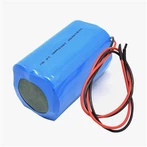
To meet the needs of riders looking for a reliable and high-capacity upgrade, we offer the GEB-PAN-E25.2B Panasonic Replacement E-Bike Battery, specifically engineered for Panasonic 26V (25.2V) motor systems.

- Model: GEB-PAN-E25.2B
- Voltage: 25.2V, fully compatible with Panasonic 26V drive systems
- Capacity: 20.8Ah / 524Wh, delivering nearly double the range of many original batteries
- Cell Type: High-density premium Li-ion 18650 cells (2600mAh) for stable output and long service life
- Safety: Comprehensive multi-level BMS featuring temperature monitoring and short-circuit protection
- System Compatibility: Designed for Panasonic motor systems used by brands such as North Flyer, KTM, and Raleigh
This battery is an ideal solution for riders who want to significantly extend riding range, reduce charging frequency, and restore the performance of their Panasonic-powered e-bikes-without changing or modifying the original motor system. Contact us now to get a quote for our minimum order quantity.
Conclusion
When buying an e-bike battery compatible with Panasonic motor systems, the most important factors are not brand names or marketing claims, but correct voltage, system compatibility, battery quality, and safety design.
A carefully selected replacement battery can restore or even improve riding range while maintaining the reliability Panasonic systems are known for. By focusing on technical compatibility and real-world usage needs, riders can make confident, long-term decisions that support both performance and safety.