
Latest Products



Contact Us
- 4th Floor, Building 5, Mingkunda Industrial Park, 38 Huachang Road, Dalang Street, Longhua District, Shenzhen 518109, Guangdong Province, PR China
- sales@gebattery.co
- +86-755-81762725 ext.611
- +86-755-81762726 ext.611
- +86-755-81762727 ext.611
Brand GEB belongs to General Electronics Technology Co., LTD. It is a professional manufacturer of electric bicycle lithium batteries. GEB means getting energy from our battery. This brand name is famous in the global lithium battery industry. Our factory was established in 2009 and is located in Shenzhen. Now, we have more than 180 employees, our annual sales of more than 30 million US dollars, and have become leaders of the industry. Our products mainly includes electric bicycle battery, scooter battery, motorcycle battery, power tool battery, forklift battery and toys car battery.
R&D And Manufacturing
GEB has a lithium battery R&D team of more than 20 people, and technology research and development is at an important position in the company's development. Through rigorous R&D organization, advanced R&D equipment and a large amount of R&D investment, we have achieved industry-leading research and development results. Our strong R&D teamcan coordinate the design and development process of our customers according to their needs, design and development, and help customers to quickly realize product solutions.
Quality Control
GEB is equipped with professional battery testing facilities, including UL safety electrical testing laboratory, instrument salt and fog test equipment, lithium battery cell performace test, and high and low temperature performance test machine. Our company adheres to a high-quality vision to perform the reliability tests for all new models.
Complete Qualifications
The company has passed ISO quality certification system as well as multiple certification CE, UL, MSDS, IEC. We always committed to providing high-quality products for our customers.
Broad Market
We always maintain a friendly relationship of mutual trust and mutual selection with our customers. We have visiting customers from all over the world, involving Pakistan, Russia, Las Vegas, US, UK, Spain, Italy, Mexico and so on.
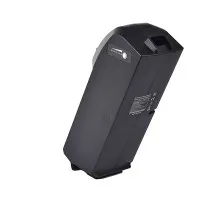
 E-Bike Battery Compatible With Panasonic Motor Systems - ...
Supercharge Your Panasonic E-Bike! Upgrade your ride with this massive 20.8Ah (524Wh) replacement battery. Designed for Panasonic 26V (25.2V) motor systems, it offers nearly double the range of
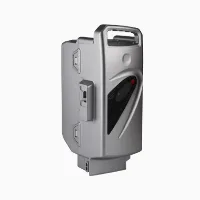
Add to Inquiry Replacement Battery For Bosch PowerPack 400 Frame - 36V 1...
Restore Your Range with Reliable Power. This 36V 11.6Ah (417Wh) lithium-ion battery is a direct replacement for the Bosch PowerPack 400 Frame Type. Built with high-quality 18650 power cells and a
Add to Inquiry 36V 11.6Ah Li-ion E-Bike Battery Replacement For Bosch Sy...
Revitalize Your E-Bike with Premium Power. This 36V 11.6Ah (417Wh) Lithium-ion battery is a direct replacement for the Bosch PowerPack 400 (Frame Mount). Engineered with high-quality cells and a
Add to Inquiry Replacement Battery For Bosch 36V Classic Power Pack 500 ...
High-Capacity 36V Replacement Battery for Replacement Battery for Bosch 36V Classic Power Pack 500 Pannier Rack E-Bike Pedelec Battery
Add to Inquiry 36v 10ah Ebike Battery
Experience unmatched reliability with our Grade A Lithium-Ion (Li-ion) Battery Pack, engineered specifically for high-demand e-bike applications. Built for the long haul, this battery delivers
Add to Inquiry 36v Lithium Ion Battery For E Bicycle
#️⃣ Key Specifications⚡️ Versatile Voltage: The standard 36V nominal voltage makes it perfectly compatible with a wide range of devices and applications.🔋 High Capacity: With 10Ah of capacity, this
Add to Inquiry 36V 1000w Ebike Battery
This 36V 1000W electric bicycle battery is a high-performance lithium-ion battery pack designed to provide reliable and efficient power for mid-to-high-end electric bicycles.
Add to Inquiry 36V 21Ah Ebike Battery
The 36V 21Ah Ebike Battery from GEB is designed to deliver reliable, high-performance power for electric bicycles, catering to the needs of European and American markets.
Add to Inquiry 36v 18650 Lithium Battery
The 36V 18650 Lithium Battery from GEB is engineered for superior performance in electric bicycles, delivering reliable power, long cycle life, and enhanced safety for users in the European and
Add to Inquiry 36V 12Ah E-bike Battery
GEB, a leading brand under General Electronics Technology Co., LTD, specializes in high-performance lithium batteries for electric bicycles, serving the European and American markets since 2009
Add to Inquiry Silverfish Battery 36v
Introducing the GEB Silver Fish 36V battery collection. These glossy and green powerhouses, to be had in 10Ah and 20Ah configurations, provide a compact length of 390mm*75mm*110mm, weighing simply
Add to Inquiry Silverfish 36v Battery
Introducing the Silverfish 36V battery by GeB. This Ternary Lithium-ion battery is built to last, offering a remarkable Cycle Life of 1000 Cycles. With a weight of 3000g and dimensions of
Add to Inquiry 36v 8ah Lithium Ion Battery For E Bicycle
Introducing the GeB 36V 8Ah lithium-ion battery for e-bicycles. With a robust Cycle Life of 1000 cycles, this Ternary Lithium-ion Battery Cell pack ensures long-lasting power. Its charging current of
Add to Inquiry E Bike Battery 36v 15ah
Introducing our 36V 20Ah ebike battery, designed for long-lasting performance. With a Cycle Life of 1000 cycles, this Ternary Lithium-ion Battery Cell pack provides reliable power. It supports a
Add to Inquiry Ebike Battery 36v 20ah
Introducing our 36V 20Ah ebike battery, designed for long-lasting performance. With a Cycle Life of 1000 cycles, this Ternary Lithium-ion Battery Cell pack provides reliable power. It supports a
Add to Inquiry Li Ion Battery 36v 10ah
With a focal point on strength storage, this Grade A lithium-ion (Li-ion) battery gives a cycle be counted number of one thousand times, making sure long-time period reliability. The flat cap layout
Add to Inquiry 36v 20ah Ebike Battery
Introducing the 18650 21700 Lithium Battery Pack. With its compact size and options for capacities ranging from 20ah to 35ah, and voltages of 36V, 48V, or 52V, this battery pack is a versatile and
Add to Inquiry 36v 15ah Ebike Battery
With a charging current of up to 3A, the 36v 15ah Ebike Battery offers efficient charging capabilities. It can be charged within 7-8 hours, ensuring quick turnaround times and minimal downtime for
Add to Inquiry
The 36v ebike battery is a popular choice for electric bicycles, offering increased power and range compared to lower voltage options. With a voltage of 36 volts, these batteries are commonly used in mid-range and high-performance ebikes. They provide a higher level of power output, allowing for faster acceleration and better performance on challenging terrains. The 36V ebike batteries typically utilize lithium-ion cells, known for their high energy density, lightweight design, and long cycle life. These batteries are compatible with ebike systems that operate at 36 volts, and they often incorporate safety features such as overcharge protection and short circuit protection.
NiMh Battery
The NiMh battery for e-bikes is the successor to the NiCd battery and is currently the standard in Europe. This type of battery needs regular charging, even if the e-bike is stationary (for a longer period of time). The battery must remain connected to the charger at all times. The charger ensures that the battery condition remains optimal. With this type of battery, a charging time of 4 to 6 hours can be expected.
Li-ion Battery
Lithium-ion is a collective term for the many batteries that contain lithium. This type of battery has a low self-discharge rate and a long (or longer) service life. However, the price of this type of battery is higher.
LiPo Battery
The LiPo battery is one of the better battery variants in the range with Li-Ion batteries. The battery is even smaller than an average Li-Ion battery. If you do not use your e-bike for a longer period of time, it is recommended to store this battery with 40% charge (preferably in a cool environment).
LiFePo4 Battery
The latest battery generation is called LiFePo4 (or an abbreviation derived from it: LP4, LFP, LFP4). This battery has been improved in every respect and is therefore currently the ultimate. However, the price of the battery also corresponds to this. Mathematically, the purchase of an e-bike with a LifePo4 battery is worth considering, as the battery lasts longer and it is less likely that it will need to be replaced before the electric bike itself is due for replacement. Currently, only a limited range of e-bikes are equipped with this type of battery. The supply will increase in the future.
When comparing a 24V battery to a 36V battery for an ebike, the primary difference lies in their voltage output. A 24V battery provides 24 volts of power, while a 36V battery delivers 36 volts. The higher voltage of the 36V battery translates to increased power output, which can result in higher speeds and improved performance compared to a 24V battery.
However, it’s essential to consider the compatibility of the battery with the ebike’s motor and electronic components. Using a 24V battery on a 36V ebike or vice versa may not be suitable as it could damage the motor or lead to inconsistent performance. Always ensure that the voltage of the battery aligns with the specifications of the ebike for optimal functionality and safety.

Factors Influencing Lifespan of 36v Ebike Battery
There are several factors that affect the lifetime of a battery such as:
Environmental Conditions: Temperature during charging & discharging
Charging Rate: How fast or slow your battery is charged
Charging Voltage: What voltage the battery is charged to
Depth of Discharge (DoD): What voltage the battery is discharged to
In general, batteries decay as a function of time in the charged state.
External Factors Affecting Range of 36v Ebike Battey
●Hills, headwinds, and heavy loads will decrease the range.
●An inefficient motor will lose energy and decrease your range.
●A well-maintained bike will go further. Keep your chain lubricated, check your tire pressure and make sure your bike is in good condition.
●Lower tire pressure will give you less range.
●Pedal when you’re accelerating or climbing will help your battery last longer.

Charge the battery before it gets to 30% life. Batteries are at their healthiest when they stay at or above a 30% charge level. Always pay attention to your battery’s charge level when you are out in the ride. When you get down to 20% or even 10% battery, you’re at risk of losing power before you get back to your charging station. That puts unnecessary strain on the battery. Over time, this speeds up the natural process of deterioration. Your battery will last a bit longer if it stays topped off.
Don’t charge or use the battery on the bike while it’s hot. Batteries can get hot for a number of reasons. On really warm days, the outside temperature can cause a battery to overheat. Climbing steep terrain can cause the motor to get hot — and potentially the battery, too. Another cause of a hot battery is using a charger with a higher voltage than the battery. But whatever the reason, your response to a hot battery should always be the same: let it cool down before continuing use or charging.
Don’t charge immediately after use. Even if your battery doesn’t feel hot, let it rest when you get home after a ride. You won’t have to wait long — batteries recover from use very quickly.
Don’t use it immediately after charging. If you’re leaving on a ride right away, unplug the charger for just a few minutes before you head out. This valuable reset gives your battery time to prepare to transfer energy to the motor on your ride.
Unplug the battery when fully charged. When your battery has reached 80% to 100% charge, go ahead and unplug the charger. This is important because while you can’t actually overfill your battery with power, you can strain the battery by continuing to charge it after it’s full.
Keep your battery at the right temperature. When you’re not riding, store the battery around room temperature: 68°F/20°C or slightly lower. Feel free to store your bike in a weatherproof garage or shed, protected from the elements — but if the temps dip much higher or lower than 68°F/20°C, take the battery indoors.
Don’t get your battery wet. This is true of any battery, really! Your battery has a sealed, waterproof protective cover that keeps it protected from the rain while you ride. Where you need to be careful is in cleaning and storing your bike and its battery.
Always use the right charger. It’s critical for battery health that the charger and battery are compatible and work with the same voltages. Otherwise, at best you’ll see extended charge times — and at worst, you can fry the battery.
Tips for Keeping Your 36v Ebike Battery Warm in Winter

Store in a Warm Room
One of the simplest ways to keep your e-bike battery warm during the winter months is to store it in a room with a higher temperature. Keeping the battery in a room where the temperature is consistently above freezing can help to maintain its capacity and prolong its lifespan.

Use a Neoprene Cover
Another option for keeping your e-bike battery warm is to use a neoprene cover. These covers are designed to insulate the battery and keep it at a higher temperature, even in colder weather conditions.

Limit Exposure to Cold Weather
If possible, try to limit the amount of time your e-bike battery spends in the cold. For example, if you know you won’t be using your e-bike for an extended time, take the battery out of the bike and store it in a warm room.
Keep an Eye on the Temperature
When it comes to keeping your e-bike battery warm in the winter, it's important to keep an eye on the temperature. This means regularly checking the temperature of the environment your e-bike battery is in and making sure it stays above freezing.
●Buy an ebike battery that is certified by a qualified testing laboratory.
●Follow the manufacturer’s instructions for charging and storage.
●Always use the compatible charger.
●Do not leave an electric bike unattended while it’s charging, and don’t leave it charging overnight.
●If a battery overheats or you notice an odor, a change in shape or color, leaking, or odd noises, stop using it immediately.
●If the battery reacts in an alarming way, and it is safe to do so, move the device away from anything that can catch fire and call police.
●Keep batteries and devices at room temperature. Do not place them in direct sunlight.
●Store batteries away from anything flammable.
Disposing of Your Ebike Battery
When your e-bike batteries die, and they eventually will, you can’t simply throw them away with your trash.
Less than 5% of lithium-ion batteries get recycled. Improper disposal can have negatives effects on the environment, such as releasing toxic gases and contributing to water pollution.
Disposing of your e-bike batteries properly is as easy as finding a recycling depot that receives batteries. Offline stores often offer battery drop-off as well.
Choosing the Right Ebike Battery
Choosing the Voltage of Your Battery
The voltage of your battery will mostly be decided by the device that you’re trying to power. For example, if you want to power a 48V ebike, you’ll need a 48V battery (or possibly a 52V battery, which fits most 48V ebike controllers). If you are powering a 24V ebike, you’ll want a 24V battery. If you have a 12V ebike, you’ll want a 12V battery.
Choosing the Capacity of Your Battery
Next you’ll need to decide on the appropriate capacity of your battery, which is usually measured in amp hours or Ah. The more amp hours in your battery, the longer it will last before running out of charge.
Exciting advancements in battery technology are paving the way for the future of e-bikes. Researchers and developers are exploring innovative options such as solid-state batteries, graphene-based batteries, and other emerging technologies. These cutting-edge battery technologies offer promising benefits for e-bike enthusiasts.
They have the potential to deliver higher energy density, allowing for longer ranges per charge. Additionally, faster charging times and improved safety features are anticipated. As these technologies continue to evolve, the future of electric bike batteries looks bright.
Riders can expect enhanced performance, extended range, and even safer and more efficient e-bike experiences. The ongoing research and development in battery technologies hold great promise for reshaping the e-bike industry and propelling it toward new horizons.
FAQ
As one of the most professional 36v ebike battery manufacturers and suppliers in China, we're featured by quality products and low price. Please rest assured to buy discount 36v ebike battery in stock here and get pricelist from our factory. Also, customized service and OEM&ODM service are available.
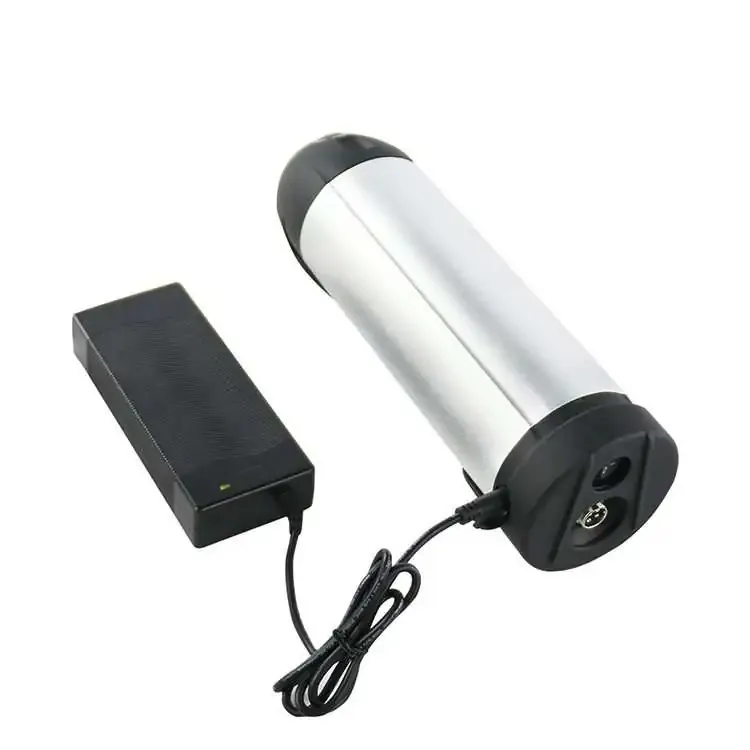
36v 8ah Electric Bike Battery, 36v Battery Pack E Bike, Ebike Water Bottle Battery