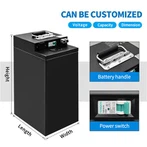
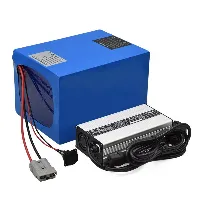
Among various battery specifications available on the market, the 48V battery has become one of the commonly used specifications for electric bicycles at present. Compared with batteries of 12V, 36V, etc., 48V lithium batteries have longer range, higher speed, and better user experience during urban commuting, and thus are widely used. However, 12V batteries still have their own indispensability in certain situations. So, whether as consumers or as manufacturers of electric bicycle batteries, which voltage of electric bicycle battery should be chosen?
In this article, we focus on providing a clear and technically sound comparison between 12V and 48V electric bicycle batteries. We hope to assist cyclists, retailers, and system integrators in making informed choices based on their individual needs.

Understanding the Basics of Voltage and Power Delivery
Before diving into real-world comparisons, it's essential to understand the relationship between volts, amps, and watts-the three pillars of electrical energy flow in any battery system.
- Voltage (Volts) is the electrical "pressure" that pushes current through a system. Think of it like water pressure in a pipe: higher voltage means a stronger force.
- Current (Amps) is the flow of electricity. In our analogy, this is the volume of water moving through the pipe.
- Power (Watts) is the product of voltage and current (Watts = Volts × Amps). It defines how much work or energy the system can deliver at any moment.
A higher voltage system (such as a 48V battery system) can deliver the same power as a lower voltage one but with lower current, which translates to less heat, smaller cable diameters, and improved system efficiency.
For example, to deliver 480 watts:
- A 12V battery must push 40 amps (12V × 40A = 480W)
- A 48V battery needs only 10 amps (48V × 10A = 480W)
This reduced current load has direct implications on design simplicity, component wear, and overall reliability.
Performance Comparison - Which One Delivers More?
1. Power and Speed Output
E-bike enthusiasts often equate battery performance with acceleration and top speed, and rightly so. 48V batteries offer significantly better support for high-powered motors. With greater voltage, the motor spins faster and generates more torque, translating to quicker starts, better hill climbing, and higher top speeds, often exceeding 25 miles per hour depending on configuration.
In contrast, a standalone 12V battery cannot deliver enough power to support standard e-bike motors. To achieve a similar output, it must be connected in series with three or more other 12V units-raising not just the voltage but the complexity and failure risk.
For this reason, 48V battery types are increasingly seen in mid-to-high-end electric bikes built for both urban commuting and off-road trails.
2. Range and Energy Output
Many users ask: does a higher voltage battery mean longer rides? The answer is nuanced. Range depends not only on voltage, but also on amp hours (Ah)-the battery's capacity to deliver current over time. When combined, these yield watt hours (Wh), the true measure of stored energy:
Wh = Volts × Amp Hours
Let's compare:
- A 48V 10Ah battery provides 480Wh.
- A 12V 10Ah battery gives just 120Wh.
Thus, for the same Ah rating, a higher voltage battery inherently stores and delivers more energy. However, actual range (miles on a single charge) also depends on riding style, terrain, and power draw from accessories.
Importantly, higher voltage batteries may encourage faster riding or higher motor assistance levels, which can paradoxically reduce total range if not managed with proper battery care habits.
3. System Efficiency and Heat Management
One often overlooked benefit of a 48V battery system is its operational efficiency. Because it draws less current to achieve the same power, it significantly reduces heat buildup in both the battery and controller. This has a direct impact on system lifespan and safety.
On the flip side, 12V systems-especially when forced to deliver higher loads-require thicker wires to manage current without overheating. They are more prone to voltage drop, increased resistive loss, and thermal inefficiency.
For longer commutes, steep gradients, or repeated stop-and-go cycles, a 48V setup will consistently outperform in terms of sustained power delivery and thermal stability.

Compatibility and Installation Considerations
1. Matching Battery Voltage to Motor and Controller
One of the most critical technical principles in battery selection is system voltage compatibility. The battery voltage must match the voltage rating of the motor controller and the motor itself. A mismatch-such as connecting a 48V battery to a 12V-rated controller-can permanently damage components or trigger thermal runaway in worst-case scenarios.
Manufacturers typically design systems around standardized battery voltages: 36V, 48V, and sometimes 52V. Attempting to introduce a different voltage (especially lower ones like 12V) requires not only rewiring but often a full re-specification of the powertrain, display unit, and charging system.
2. Four 12V Batteries in Series vs One 48V Battery
From a theoretical standpoint, four 12V lithium-ion batteries in series can form a 48V pack. However, practical issues quickly emerge:
- Balancing and consistency: Each cell must have identical capacity, chemistry, and age. Even slight variations can cause voltage imbalance and degrade battery charge cycles.
- Installation complexity: More wiring means more points of failure, increased weight, and higher installation skill requirements.
- Maintenance and safety: Without an integrated battery management system (BMS), it becomes difficult to monitor state of charge, temperature, and fault conditions across cells.
A single 48V battery pack, by contrast, is pre-engineered for system stability. It simplifies wiring, reduces volume, and often includes embedded safety systems. For most riders-especially those without an electrical engineering background-a factory-built 48V unit offers superior reliability and user safety.
3. Transitioning from Lower Voltage to 48V Systems
For those looking to upgrade from 36V batteries or even lower voltages, several factors must be assessed:
- Controller compatibility: Many 36V controllers will not accept 48V input without modification.
- Display and throttle calibration: Some display units are voltage-sensitive and may not read accurately with a higher voltage.
- Charger replacement: A new 48V-compatible charger is mandatory. Using a 36V charger on a 48V pack risks undercharging or system faults.
In some cases, upgrading involves replacing not just the battery, but the entire power delivery chain. While this may sound daunting, the performance gains in torque, speed, and thermal efficiency often justify the investment-especially for riders with growing mileage or payload needs.
Market Demand and Industry Trends
1. The Rise of 48V as the Industry Standard
In the current landscape of electric mobility, 48V batteries have steadily become the go-to power source for mainstream and premium e-bike manufacturers. Leading brands such as Bosch, Shimano, and Giant have already standardized around this voltage class for most of their mid-drive and hub-motor platforms. This isn't a mere coincidence-it's a result of evolving user expectations for faster acceleration, longer range, and more robust motor control.
Modern users expect their e-bikes to handle steep inclines, support cargo loads, and maintain consistent speed across variable terrain. These demands inherently require higher voltage systems, which can deliver more battery power while maintaining manageable current levels. As a result, 48V battery systems not only offer performance advantages but also align with future developments in intelligent motor controllers, regenerative braking, and integrated smart displays.
2. The Niche Role of 12V Batteries
Although the spotlight shines on 48V, 12V batteries continue to serve a functional purpose in niche segments. Legacy electric bike systems-especially entry-level models or early-generation e-bikes-may still rely on 12V-based configurations, often assembled via series connections. In such cases, replacing a single cell or retrofitting a battery pack with new 12V lithium ion batteries is more practical and cost-effective than a full system overhaul.
Additionally, the DIY community finds value in the flexibility and modularity of 12V units. Tinkerers who build custom frames, experimental drivetrains, or solar-powered assist systems often prefer the freedom to assemble packs tailored to their own specifications.
There's also a market for budget-conscious riders in developing regions, where availability and simplicity matter more than outright performance. Here, 12V systems, often adapted from off-the-shelf battery units used in other applications (e.g., UPS systems or small solar arrays), remain a viable low-cost entry point.
3. Strategic Recommendations for Retailers and Technically-Informed Buyers
For battery vendors and aftermarket specialists, understanding both market trends and user segmentation is critical.
- For most riders and modern e-bike models, it is advisable to promote 48V systems as the default solution. These batteries offer superior power output, charging efficiency, and future compatibility.
- At the same time, it is unwise to completely discard 12V inventory. Instead, maintain a selective offering of 12V batteries, aimed at DIY builders, older models, and repair markets.
- Crucially, ensure that sales and support teams are trained to provide accurate compatibility guidance. A mismatch between system voltage and user application can result in equipment failure or safety risks.
By strategically catering to both market tiers, businesses can maximize sales potential while ensuring customers get battery solutions that match their specific technical and economic needs.
Real-World Use Case Comparison
To further illustrate the practical relevance of different battery systems, the table below outlines the recommended voltage options across common e-bike usage scenarios:
|
Use Case |
Recommended Voltage |
Technical Rationale |
|
Urban Commuting |
48V |
Ensures efficient acceleration, traffic handling, and consistent performance over daily miles. |
|
Mountain / Off-road Riding |
48V |
Supports high-torque motors needed for climbing, rugged terrain, and rapid energy recovery. |
|
DIY Conversions / Budget Builds |
12V (in series) |
Allows for flexible voltage design and cost control, ideal for hobbyists. |
|
Legacy or Low-Power Systems |
12V |
Compatible with older motor controllers, easier to maintain, lower upfront cost. |
|
Heavy Loads / Long-Distance Touring |
48V |
Greater energy reserve (Wh), better sustained output, improved thermal stability. |
This breakdown reflects the broader truth: 48V batteries offer a more future-proof and technically robust solution for high-performance and demanding applications, whereas 12V remains relevant only in constrained or legacy-specific scenarios.
Final Thoughts
Choosing between a 12V and 48V battery system is not just a matter of voltage-it's a decision that impacts performance, safety, maintenance, and scalability.
For most modern e-bike users, especially those seeking reliable daily commuting or adventure-grade rides, the 48V Ebike battery system is the clear winner. It provides higher efficiency, smoother torque delivery, and better compatibility with smart control systems and high-capacity motors. Furthermore, the lower current requirement reduces thermal loss and allows for lighter, more compact wiring-factors that significantly improve both riding experience and long-term durability.
At the same time, the 12V Ebike battery is not outdated. It can still fill the market gap in specific scenarios: from DIY modifications to basic multi-functional bicycles, or as replacement modules for older models. The most important thing is to understand the requirements of the system before purchasing - voltage compatibility, controller limitations, expected power requirements, and budget.
Contact us now to learn more about electric bicycle batteries.