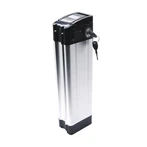
This B2B buying guide explains how delivery companies, cargo-bike brands, rental operators, and fleet integrators should specify batteries, size spare inventory, plan charging, evaluate suppliers, and validate packs before deployment.
The best e-bike battery for a commercial fleet is not automatically the highest-capacity pack. It is the battery system that delivers enough usable energy for the route, maintains current under load, fits the operating and charging workflow, can be swapped or serviced efficiently, and produces the lowest lifecycle cost per completed delivery or operating mile.
Delivery fleets and cargo bikes use batteries very differently from occasional commuter e-bikes. Packs may complete multiple shifts, carry heavier loads, operate in rain or temperature extremes, experience frequent starts and hills, and return to chargers every day. A battery selected only by nominal voltage and Ah can become a bottleneck when real range, current, charging time, swapping, and service requirements are ignored.
Quick Answer: For delivery and cargo applications, calculate energy from real route data, then select voltage, Wh capacity, continuous/peak current, BMS temperature limits, charger power, housing, connector, and swap strategy together. Validate the pack under full load and repeated acceleration, and compare lifecycle cost using usable energy, downtime, spare-pack ratio, cycle performance, warranty, and service logistics.
Key Takeaways for B2B Buyers
- Design from measured route energy and peak current, not only motor wattage or advertised range.
- Include operational reserve so the fleet does not depend on fully discharging every pack.
- Choose charging, opportunity charging, or swapping based on shift length, labor, space, power, and uptime.
- Require serial traceability, health data where practical, clear RMA, and local spare stock.
- Evaluate lifecycle cost using usable energy, cycle retention, downtime, labor, replacement logistics, and end-of-life handling.
Battery Selection Matrix for Fleet Procurement
The right battery depends on route energy, peak current, charging time, vehicle interface, and service model. Use the matrix below as a specification framework, then replace the generic categories with tested GEB products and project data.
| Fleet Need | Battery Attribute to Compare | Evidence Required |
|---|---|---|
| Long daily route | Usable Wh, reserve, capacity retention, charger turnaround | Route log, capacity test, pilot end-of-shift data |
| Heavy cargo and hills | Continuous/peak current, thermal margin, BMS behavior | Load test, current profile, temperature record |
| Multi-shift operation | Swap interface, charge rate, spare-pack ratio, service time | Charging model, swap timing, failure scenario |
| Outdoor or rental use | Housing durability, lock, sealing, traceability, theft control | Fit, vibration, environmental, and service inspection |
| Long vehicle lifecycle | Change control, replenishment lead time, backward compatibility | Supplier continuity plan and approved revision process |
Battery Requirements by Commercial Application
| Application | Main Battery Priority | Common Procurement Risk |
|---|---|---|
| Food and parcel delivery | Reliable daily range, quick swapping, charger availability, low downtime | Range estimate based on light commuter use |
| Cargo bike | Current margin, thermal performance, secure mounting, high usable energy | BMS cut-off or connector heat under load |
| Rental or sharing fleet | Durable housing, traceability, standardized charging, theft resistance | Too many incompatible battery versions |
| Municipal or corporate fleet | Compliance, documentation, service plan, predictable replacement supply | Battery discontinued before vehicle end-of-life |
Why route data matters more than a brochure range
Record distance, elevation, stop frequency, payload, rider behavior, ambient temperature, average speed, assist mode, charging opportunities, and end-of-shift remaining energy. Use the worst normal route rather than the easiest route. A fleet pilot should include several riders and operating days so the specification reflects variation, not one ideal test.
Commercial buyers should connect fleet planning with a stable e-bike battery supply chain and validate samples with the sample testing checklist.
Quick B2B Comparison Table
| Fleet Requirement | Data to Measure | Procurement Decision |
|---|---|---|
| Daily energy | Distance, Wh/km, load, terrain, weather, reserve | Battery Wh and packs per shift |
| Power demand | Controller current, acceleration, hills, cargo weight | Cell, BMS, fuse, connector rating |
| Uptime strategy | Shift length, charging window, turnaround time | Charge, opportunity charge, or swap plan |
| Serviceability | Failure modes, replacement time, spare stock, diagnostics | Modular interface and RMA process |
| Lifecycle economics | Cycle retention, downtime, labor, claims, energy cost | Total cost per operating unit |
Recommended Reading Path: Compare cell options with the cell selection guide, define protection using the BMS requirements article, and negotiate service responsibility through the warranty terms guide.
Start With the Real Fleet Duty Cycle
Motor wattage and battery Ah are not enough to design a fleet battery. Measure the complete operating profile: route distance, elevation, average and peak speed, number of stops, rider and cargo weight, tire and vehicle type, controller current, assist behavior, temperature, wind, road surface, and time between charges.
Collect energy data from representative routes when possible. Wh per kilometer or mile is more useful than a generic range claim. Use several days and include difficult conditions. The procurement specification should reflect the demanding but realistic route, not only the easiest test ride.
Calculate Usable Energy With Operational Reserve
A fleet should not plan to use every theoretical watt-hour. Capacity varies with temperature, aging, load, cell balance, and measurement accuracy. Deep discharge also leaves no operational margin when a route changes or a rider takes a detour.
Define a usable-energy window and reserve. For example, the fleet may plan normal routes using only a controlled portion of nominal capacity, with the remaining energy reserved for variation and battery aging. The exact percentage should be validated through pilot data rather than copied from a consumer rule.
Match Current Capability to Cargo and Stop-and-Go Use
Delivery bikes frequently accelerate from a stop and climb with load. Peak current can be repeated many times per shift. The pack must have enough cell, BMS, fuse, connector, busbar, and cable margin to avoid cut-offs and excess heat.
Ask suppliers to evaluate continuous current, peak current, peak duration, recovery time, low-temperature behavior, and thermal conditions inside the housing. A capacity-focused pack with energy cells may not be the best choice when the route demands repeated high current.
Choose the Charging and Swapping Strategy
Overnight or between-shift charging
This is operationally simple when batteries can complete the shift and remain parked long enough. It requires enough chargers, safe electrical capacity, organized storage, and a clear process for damaged or abnormal packs.
Opportunity charging
Short charging windows during breaks can reduce the required battery size, but they increase process complexity and may concentrate electrical load. The battery, charger, connector, and charging temperature controls must support the planned behavior.
Battery swapping
Swapping can increase vehicle uptime when shifts are long. The fleet must calculate the number of batteries per vehicle, charging queue, spare ratio, storage, identification, state-of-charge control, and labor needed to move packs.
Plan the Pack-to-Vehicle Ratio
A one-to-one battery ratio may work for short routes and long charging windows. Multi-shift operations may need additional packs. The correct ratio depends on usable energy, charge time, route variability, charger availability, maintenance, and reserve stock.
Model normal operation and disruption scenarios: one charger fails, several packs are quarantined, a cold day increases energy use, or a route is extended. The fleet should maintain service without immediately relying on emergency purchases.
Design Safe Charging and Storage Operations
Fleet safety depends on the complete operating process. Use approved chargers, suitable electrical circuits, clear spacing, ventilation appropriate to the facility, temperature control, inspection, access control, and a quarantine process for damaged, wet, swollen, overheated, or abnormal packs.
Assign batteries and chargers clearly, prevent wrong-plug use, and train staff to report damage. Charging records or smart monitoring can help identify packs that charge too slowly, show abnormal temperature, or lose capacity faster than expected.
Require Serviceability and Fast Replacement
Downtime can cost more than the battery. The pack should be easy to remove, identify, inspect, and replace without damaging the bike. Rails, locks, connectors, keys, chargers, fuses where serviceable, and diagnostic tools should be available as spare parts.
Define who performs first-line diagnosis, how a failed battery is quarantined, what information is collected, and how quickly the supplier responds. A fleet may prefer modular and standardized interfaces even when a fully integrated design looks cleaner.
Use Serial Traceability and Health Data
Each battery should have a unique serial number linked to production and service history. The fleet should track assignment, charge cycles or usage indicators where available, failures, repairs, replacements, and retirement.
Smart BMS data can support state-of-charge, temperature, fault, and health monitoring, but data must be accurate and actionable. Avoid paying for dashboards without defining which decisions the data will support. Even a disciplined barcode system can create significant value.
Run a Pilot That Reproduces Real Operations
A bench sample is not enough. Pilot batteries should run on representative vehicles, routes, riders, loads, temperatures, and charging schedules. Include the hardest route and the most demanding shift. Monitor energy use, peak current, temperature, charge time, connector condition, lock wear, water exposure, and rider handling.
Pilot KPIs
- Wh per kilometer or mile by route and load.
- Remaining energy at end of shift.
- Peak current and cut-off events.
- Battery and connector temperature.
- Charge time and charger utilization.
- Swap time and labor.
- Vehicle downtime caused by battery issues.
- Capacity retention and imbalance trend.
- Physical damage, water ingress, lock or rail wear.
- Rider and technician feedback.
Fleet Tip: Do not approve a fleet battery because it completes one ideal route. Approve it when the energy, power, charging, service, and reserve model remains acceptable across representative difficult days.
Compare Lifecycle Cost, Not Purchase Price
A lifecycle model should include battery price, charger and infrastructure, spare packs, installation, financing, energy, labor for swapping, inspection, downtime, warranty handling, replacement transport, expected life, and end-of-life management.
Useful business metrics include cost per operating day, cost per delivered kilometer, cost per usable kWh over life, and downtime per vehicle. A higher-priced battery may be economical when it retains capacity, reduces cut-offs, and improves support. A cheaper battery may work when the duty cycle is light and replacement logistics are simple.
Procurement Requirements for Fleet Contracts
- Approved technical specification and controlled BOM.
- Duty-cycle and current basis used for design.
- Pilot acceptance criteria and data ownership.
- Production traceability and serial-number records.
- Change-notification and substitution rules.
- Charger, rail, lock, connector, and spare-parts availability.
- Warranty definition, response time, failure analysis, and replacement process.
- Capacity planning and replenishment lead time.
- Packaging, transport, storage, and end-of-life responsibilities.
- Performance review process using field data.
Common Fleet Procurement Mistakes
- Using consumer advertised range as the fleet design basis.
- Sizing only for average routes without reserve or aging.
- Ignoring repeated peak current and connector heat.
- Buying batteries before planning chargers, electrical power, storage, and labor.
- Choosing an integrated pack that is difficult to replace or service.
- Running a pilot on light loads or ideal weather only.
- Comparing unit price without downtime and warranty logistics.
- Failing to track serial numbers and battery assignment.
Final Buying Recommendation
Delivery-fleet battery procurement is an operational engineering project. The battery must deliver energy, power, charging speed, serviceability, and data that match the actual route and shift.
Fleets that measure duty cycle, include reserve, pilot the complete system, control charging, and compare lifecycle cost can improve uptime while reducing safety, inventory, and warranty risk.
Planning batteries for delivery bikes, cargo bikes, rentals, or a corporate fleet? Send GEB your route distance, payload, motor/controller data, daily shifts, charging window, swap method, and deployment quantity. Request a commercial duty-cycle battery assessment.
FAQ
How should a delivery fleet size an e-bike battery?
Use measured route energy, cargo and rider load, terrain, weather, controller current, daily distance, battery aging, and an operational reserve. Do not rely only on motor wattage or advertised range.
Is battery swapping always better for fleets?
No. Swapping improves uptime for long or multi-shift operations, but adds batteries, chargers, storage, tracking, labor, and process complexity. Compare it with the available charging window and route energy.
What is the best battery chemistry for delivery bikes?
There is no universal answer. The choice depends on energy density, power, cycle behavior, weight, temperature, housing, safety strategy, cost, and service model. Validate the complete pack for the duty cycle.
How many spare batteries should a fleet keep?
The reserve depends on fleet size, failure and quarantine rate, supplier lead time, charging strategy, seasonality, and required uptime. Use pilot data and disruption scenarios to set the ratio.
Which lifecycle metric is most useful?
Cost per operating day or delivered kilometer is often more useful than unit price because it includes battery life, downtime, labor, support, and replacement logistics.