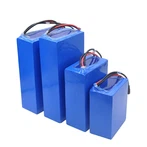
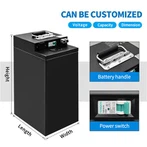
With the development of battery technology, electric bicycles have gradually become the main means of transportation in most people's lives. Whether it is daily commuting or outdoor cycling, they are all very good choices. However, for those who frequently use the batteries of electric bicycles, the battery life of the electric bicycle is very important, that is, the requirement for battery capacity is relatively high. This raises a question: Can electric bicycles be replaced with batteries of larger capacity?
As a professional manufacturer of electric bicycle batteries, we can clearly answer this question. In theory, it is possible to replace the battery with a larger capacity, but some safety and compatibility factors need to be taken into account. In this article, we will introduce in detail the feasible solutions for replacing the battery with a larger capacity to help you make a wise choice.

Can You Really Install a Bigger Battery on an eBike?
Yes, it is technically possible to equip an electric bike with a higher-capacity battery to increase range. However, this process is not always straightforward and depends on several compatibility and design factors. Whether it's replacing the existing battery with a larger one or expanding the current setup, careful consideration of your e-bike's specifications is essential.
Some e-bikes come with modular or semi-integrated battery designs that allow easy replacement with higher-capacity units. Others may require structural or electrical modifications, making the upgrade more complex and potentially requiring professional assistance.
Technical Considerations Before Upgrading
- Battery Compatibility
The most critical factor when upgrading is ensuring compatibility between the new battery and your e-bike's electrical system. Voltage and current must match your motor and controller specifications. For example, installing a 52V battery on a system designed for 36V or 48V without proper configuration may lead to malfunctions or even component damage.
Battery capacity, often expressed in watt-hours (Wh), is calculated by multiplying voltage by amp-hour (Ah) rating. A larger Wh rating generally results in longer range but not necessarily higher speed.
- Battery Management System (BMS)
The Battery Management System plays a central role in protecting the battery and ensuring safe operation. A mismatch between a new battery and the original BMS may lead to overcharging, overheating, or inefficient energy delivery. Any upgraded battery should be BMS-compatible with your existing system to ensure safety and performance.
- Physical Fit
Larger batteries are often bulkier. Before purchasing, verify whether the battery physically fits within your e-bike's battery compartment or frame mount. Integrated batteries in particular may be limited by the space inside the down tube or rear rack. If the dimensions do not align, installation may be impossible without modifying the frame.
- DIY or Professional Installation
While some battery upgrades are plug-and-play, others may involve soldering, rewiring, or reconfiguring connectors. If you're unfamiliar with e-bike electrical systems, it's advisable to consult a technician. Improper installation could result in short circuits, degraded battery life, or voided warranties.

Will a Bigger Battery Increase Range or Speed?
A larger-capacity battery will generally allow for longer riding distances between charges. This is particularly valuable for riders who frequently commute long distances or ride in high-assist modes.
However, battery capacity alone does not directly affect speed. Speed is primarily determined by motor power, voltage, and controller settings. While higher voltage batteries can enable higher speeds on compatible systems, exceeding the design limits can overwork the motor and lead to damage.
It's also important to note that increasing voltage without reprogramming the controller is unlikely to result in significant speed gains.
Potential Risks and Mistakes to Avoid
Upgrading to a bigger battery without checking compatibility poses several risks:
- Electrical Mismatch: Incorrect voltage or current can damage the motor, controller, or display unit.
- Thermal Issues: Incompatible BMS or improper cell configuration can lead to overheating and reduced battery life.
- Installation Damage: Forcing a larger battery into an incompatible space may damage the housing or connections.
- Safety Hazards: Poor wiring or low-quality battery cells increase the risk of electrical failure or thermal runaway.
For most users, selecting a manufacturer-approved or properly engineered upgrade is the safest path.
Are There Other Ways to Extend eBike Range?
Upgrading the battery is not the only way to improve range. Users can also consider the following:
- Optimize Pedal Assist Settings: Riding in lower assist modes conserves energy.
- Reduce Overall Weight: Lighter loads reduce motor strain and extend battery life.
- Maintain Proper Tire Pressure: Proper inflation decreases rolling resistance.
- Ride Efficiently: Smooth acceleration and avoiding hilly terrain when possible improve energy efficiency.
- Dual-Battery Systems: Some bikes support an auxiliary battery for extended range, offering a safer alternative to DIY expansion.
Conclusion
Upgrading to a bigger battery can be an effective way to increase the range of your electric bike, particularly if your daily routes exceed your current battery's capacity. However, this type of modification requires careful attention to electrical compatibility, physical fit, and installation safety.
While not every bike is designed to accommodate a larger battery, those with modular systems or external mounts offer more flexibility. For others, the risks and costs associated with custom upgrades may outweigh the benefits.
Ultimately, whether or not to upgrade depends on your riding needs, technical capabilities, and budget. If you're unsure, consulting a professional or selecting a compatible high-capacity model from the outset may be the most efficient and reliable approach.