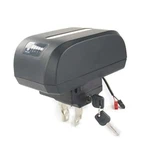
At present, with the increasing demand for new energy to replace traditional diesel power, more countries have begun to choose environmentally friendly and more cost-effective travel tools, that is, battery-powered cars, bicycles, etc., and with the development of recent years, China has become the world's largest battery exporter. Every day, countless batteries are shipped from China to all parts of the world. As a battery buyer, the transportation of batteries also directly affects the efficiency and safety of the entire supply chain. Unlike ordinary commodities, batteries face more complex challenges and regulatory restrictions in transportation due to their special chemical properties. Understanding the international status of battery transport, modes of transport, potential risks and relevant regulations will help your business make more informed decisions about battery purchasing and shipping.
Battery exporters and major enterprises
In addition to China, the current global battery market leaders also include Japan and South Korea, which not only occupy a leading position in battery production technology, but also have a sound export industry chain. As the world's largest battery producer and exporter, China's battery industry cluster effect is obvious, with a complete supply chain from raw materials to finished products. Leading enterprises such as CATL, BYD, Guoxun High-tech, etc., are not only technologically advanced, but also have a wide range of products, which are exported to all over the world. Japanese battery manufacturers such as Panasonic, Murata Manufacturing and other enterprises in the electric bicycle, consumer electronics and other fields to occupy the market high ground. These companies focus on research and development of high energy density and safety performance, especially in the field of consumer lithium batteries and automotive batteries. South Korean energy producers, represented by Samsung SDI and LG, are popular in the international market for their excellent energy density and cycle life. Products exported to Europe and the United States and other major markets.
These companies are not only the backbone of the battery industry, but also the key driving force for the development of the global battery market. They often have very mature transnational transport experience and channels. It can ensure that the battery can be safely and effectively transported to countries around the world. However, there are a number of battery manufacturers who may not be well known internationally, but they also provide high-quality batteries to thousands of electric vehicle manufacturers. So how do they transport the batteries? What information do you need to know during the battery import procurement process?
Cross-border transport of batteries and their advantages and disadvantages
First of all, most battery manufacturers choose cross-border transport of batteries, there are mainly three, respectively, air, sea, land transport. Each mode has its own characteristics in terms of transport speed, cost and safety:
Air Freight:
Advantage: Air freight is the fastest way to ship batteries, suitable for time-sensitive orders such as new product launches or emergency restocking.
Disadvantages: Air transport faces strict safety regulations, especially lithium batteries that need to meet the packaging and declaration requirements set by IATA (International Air Transport Association). The cost is high and the shipping quantity is limited, and substandard packaging can lead to rejection of flights.
Shipping:
Advantages: Sea transport is the most commonly used mode of cross-border battery transport, suitable for mass transportation, and the transportation cost is low.
Disadvantages: Long shipping time, usually weeks or even months. Changes in temperature and humidity in Marine environments may affect battery performance, requiring special attention to packaging and environmental control.
Land Transportation:
Advantages: Suitable for short distance cross-border transportation or distribution from port to warehouse. High flexibility, can adjust the transit time and route according to demand.
Disadvantages: Land transportation is greatly affected by road conditions and border policies, and it is necessary to comply with the safety transportation regulations of different countries when crossing the border, which is prone to delays.
It can be seen that different modes of transportation have their own advantages and disadvantages, however, most battery manufacturers in order to save transportation costs, usually prefer ocean transportation to transport batteries. This often has a minimum order quantity requirement. Even if the purchaser has special circumstances that require the use of air transportation, the battery manufacturer will need the purchaser to bear part of the freight or even pay the freight in full.
Possible risks during battery transportation
As a special item, batteries have many risks compared with ordinary commodities. The potential risks in transportation are not only economic losses, but more importantly safety and regulatory challenges:
Security risks:
Due to its internal chemical reaction characteristics, lithium batteries are easy to burn or explode during transportation due to impact, short circuit or temperature changes. In order to avoid such risks, when selecting suppliers, it is important to understand their processes and protection measures during transportation in advance. Packaging requirements must be strictly observed to ensure that the battery can be safely delivered on time.
Regulatory risks:
There are different regulatory requirements for the transportation of batteries around the world. Some countries or regions stipulate that lithium batteries must pass UN38.3 test certification, and batteries without compliance testing will be refused entry or face high fines.
Environmental Risks:
Changes in temperature and humidity during battery transportation can affect its performance and even cause safety problems. Especially in long-distance transportation, the high temperature or cold environment will accelerate the aging of the battery or cause electrolyte leakage, and additional temperature control measures need to be taken.
Risk of delay and damage:
Transport delay is a common problem in cross-border logistics, weather, port congestion, transport vehicle failure and other factors will affect the delivery time. The special nature of batteries also makes it necessary to pay extra attention to the storage environment during delays to avoid potential damage.
Information that buyers need to know during transportation
As a battery buyer, understanding the key links and precautions in the transportation process can help avoid potential risks:
Regulatory compliance:
Different countries have their own regulatory requirements for battery transportation, and buyers must ensure that suppliers' batteries comply with the relevant tests and certifications, such as UN38.3, MSDS (Material Safety Data Sheet), DG (Dangerous Goods) classification, etc. It is also important to know the import policies and possible taxes of the destination country.
Logistics service provider selection:
It is key to select a certified logistics service provider for the transportation of dangerous goods, which has extensive experience in the packaging, declaration and transportation processes to help reduce compliance issues and transportation risks.
Insurance and Transportation:
Batteries are high-risk shipments, and it is advisable to purchase transportation insurance for them. Insurance can not only reduce losses caused by transportation accidents, but also provide compensation for losses caused by changes in regulations, flight delays, etc.
Packing standard:
Qualified battery transport packaging must be professionally tested to ensure that it remains safe and reliable in a variety of extreme environments. Buyers need to ask suppliers to provide packaging solutions that meet international standards, such as seismic, thermal insulation, moisture-proof packaging.
Can ordinary people carry batteries on public transport?
If you just want to understand whether ordinary people can carry batteries in their daily lives on public transport. Here, I also give some views, strictly speaking, the behavior of carrying batteries on transportation is also strictly restricted by relevant regulations:
Aircraft:
Airlines are allowed to carry a small number of lithium batteries, such as batteries for mobile phones and laptops, but there are strict limits on the capacity (such as no more than 100Wh per battery). Batteries exceeding capacity limits need to be declared in advance and may be refused. You need to check with your airline in advance.
Trains and cars:
Trains, cars and other vehicles have relatively relaxed regulations on the carrying of batteries, but high-capacity batteries or batteries that are considered dangerous are not allowed to be transported as personal luggage. It is recommended to find out the specific regulations of the transport company or local traffic management department in advance.
Public transport:
Public transportation such as buses and subways generally allow passengers to carry ordinary batteries, but must ensure that the battery is in good condition, not damaged or leaking, to avoid causing fire or other safety hazards.
Why choose GEB--15 years of battery export experience
GEB brand belongs to General Electronic Technology Co., LTD., is a professional electric bicycle lithium battery manufacturer. Our factory was established in 2009, located in Shenzhen, adjacent to Hong Kong, Guangzhou, Macao, in the Yangtze River Delta one hour economic circle center, location advantage is obvious, conducive to export. Today, with more than 180 employees and annual sales of more than $30 million, we have become an industry leader.
Our Battery Shipping Policy:This policy aims to protect both parties and set clear expectations for our services.
1,We ship within # hours of receiving your order, except when items are temporarily unavailable. You will be notified by email with an estimated ship date if this occurs.
2,Shipping charges are calculated during checkout based on item weight, size, and destination. We will confirm the exact charges via the contact information provided.
3,Once charges are confirmed, we will dispatch your order promptly.
4,Delivery addresses can be changed anytime before shipping.
5,If delivery exceeds the expected time, please contact us for assistance.
6,After shipping, a tracking link will be provided for real-time updates.
7,If the package is damaged in transit, please refuse delivery if possible and contact our customer service.