


With the increasing popularity of e-bikes, the demand for lithium-ion batteries has surged. However, this rise also brings a growing challenge-how to handle the vast number of used batteries effectively. Recycling e-bike batteries is crucial not just for environmental sustainability but also for resource recovery. This article explores the technical challenges and business opportunities surrounding e-bike battery recycling, highlighting why this emerging sector is pivotal to the future of sustainable mobility.
Why E-Bike Batteries Need to Be Recycled
Environmental Protection
E-bike batteries contain hazardous materials like lithium, cobalt, and nickel, which can cause severe environmental damage if improperly disposed of. When these batteries end up in landfills, they can leak toxic chemicals into the soil and groundwater, posing a risk to human health and ecosystems. Recycling helps to mitigate these risks by safely processing these materials and keeping them out of the environment.
Resource Conservation
Lithium-ion batteries are made of valuable metals that are finite and require energy-intensive mining processes. Recycling allows for the recovery of these materials, reducing the need for new mining activities and conserving natural resources. This is crucial as the demand for metals like lithium and cobalt continues to rise in the face of growing battery production for e-bikes, electric vehicles, and other electronics.
Energy Savings and Emission Reduction
Recycling batteries uses significantly less energy compared to extracting and processing new raw materials. By recycling, we reduce the overall carbon footprint associated with battery production, contributing to climate change mitigation efforts. This makes battery recycling an essential component of a sustainable energy future.
Safety Concerns
Improper disposal of used batteries can lead to serious safety hazards, including fires and explosions. By recycling batteries in controlled environments, these risks are minimized, ensuring safer outcomes for both people and the environment.
Technical Challenges in E-Bike Battery Recycling
Complex Chemical Composition
E-bike batteries typically consist of various materials, including lithium, cobalt, nickel, and manganese. Separating these elements is a complex process due to the intricate design and chemical stability of the batteries. The presence of toxic and flammable components makes recycling hazardous, requiring advanced technology to safely disassemble and process the batteries.
High Recycling Costs
Recycling lithium-ion batteries involves expensive technologies, including crushing, hydrometallurgical, and pyrometallurgical processes. The costs are further elevated due to the need for specialized equipment and safety measures to handle hazardous materials. Currently, the cost of recycling often outweighs the value of the recovered materials, making it financially unappealing for many companies.
Safety Risks
E-bike batteries pose significant safety risks during transportation, storage, and recycling due to their potential to catch fire or explode. Improper handling can lead to thermal runaway, a chain reaction of overheating that poses a major safety concern in recycling facilities. This necessitates stringent safety protocols, which can slow down the recycling process and increase operational costs.
Limited Recycling Infrastructure
The existing recycling infrastructure is often inadequate to handle the growing volume of used e-bike batteries. Many recycling centers lack the capability to process these batteries safely and efficiently, leading to stockpiling or improper disposal, which further aggravates environmental concerns.
Lack of Standardization
The diversity in battery designs and compositions adds another layer of complexity. Without standardized battery designs, recycling facilities must adapt to various battery types, increasing the difficulty of processing and reducing overall efficiency. This lack of standardization also complicates the recovery of valuable materials, affecting the economic viability of recycling.
The Battery Recycling Process
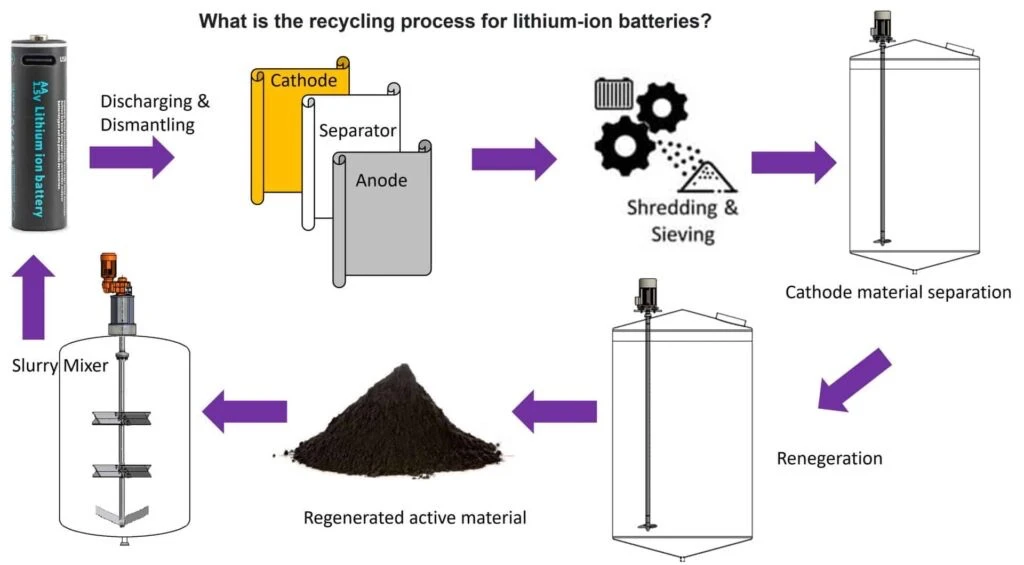
Recycling e-bike batteries involves several key steps:
Collection and Transportation
Used batteries are collected from consumers, retailers, and e-bike manufacturers. These batteries are then transported to recycling facilities with strict safety protocols to prevent any potential accidents during transit.
Disassembly
The batteries are disassembled to remove the outer casing and separate the cells. This step requires careful handling to avoid damaging the cells, which can result in hazardous leaks or fires.
Material Recovery
Advanced technologies, such as hydrometallurgical (chemical leaching) and pyrometallurgical (high-temperature smelting) processes, are employed to extract valuable metals like lithium, cobalt, and nickel. These recovered materials can be reused in new battery production, closing the loop of the battery lifecycle.
Waste Management
Non-recyclable components and toxic by-products are disposed of in compliance with environmental regulations, ensuring minimal impact on the environment. Ongoing research aims to improve this step, reducing the amount of waste generated.
How Consumers Can Responsibly Dispose of E-Bike Batteries
Return to Retailers or Manufacturers
Many e-bike retailers and manufacturers offer take-back programs where you can return old batteries for recycling. This is often the easiest and safest way to ensure that your used battery is properly disposed of.
Drop-Off at Designated Recycling Centers
Specialized recycling centers are equipped to handle e-bike batteries safely. Consumers should look for certified e-waste recycling facilities in their area to drop off their used batteries.
Avoid Throwing Batteries in Household Trash
E-bike batteries should never be disposed of with regular household waste due to the risk of environmental contamination and safety hazards. Proper disposal through designated channels is essential.
Check Local Regulations
Some local governments provide collection points or special recycling events for hazardous waste, including batteries. Checking local guidelines can help consumers find convenient and compliant ways to dispose of their used batteries.

Environmental and Regulatory Challenges
Environmental Impact
Improper disposal of e-bike batteries can lead to significant environmental hazards, including soil and water contamination. Recycling is essential to mitigate these risks, but current methods are not always environmentally friendly, necessitating continuous innovation.
Regulatory Compliance
Governments worldwide are tightening regulations on battery disposal and recycling. Compliance with these regulations can be costly, but they also push the industry towards more sustainable practices. For example, the EU's Battery Directive mandates strict recycling targets, compelling companies to invest in better recycling technologies.
Business Opportunities in E-Bike Battery Recycling
Growing Market Demand
The e-bike market is expanding rapidly, and so is the need for battery recycling. This growth presents a lucrative opportunity for companies willing to invest in recycling infrastructure and technology. With the right approach, businesses can tap into a profitable market driven by environmental concerns and regulatory pressures.
Resource Recovery and Material Reuse
Recycling e-bike batteries allows for the recovery of valuable metals, reducing the dependency on raw material mining. As the price of materials like lithium and cobalt continues to rise, recycled content becomes increasingly valuable, offering a cost-effective alternative for battery manufacturers.
Innovation and Technological Advancements
There is a significant opportunity for companies to develop and patent new recycling technologies that can handle e-bike batteries more efficiently. Innovations that reduce costs, increase recovery rates, or improve safety can offer a competitive edge in this emerging market.
Sustainability Branding
Companies involved in battery recycling can enhance their brand image by promoting sustainability and environmental responsibility. As consumers become more eco-conscious, businesses that prioritize green practices can attract more customers and differentiate themselves in the market.
Government Subsidies and Incentives
Many governments offer subsidies, tax breaks, and other incentives to companies engaged in battery recycling. Leveraging these incentives can help offset initial investment costs and improve the overall profitability of recycling operations.
Future Outlook
The future of e-bike battery recycling looks promising, with advancements in technology expected to address many of the current challenges. New methods, such as direct recycling and robotic disassembly, are on the horizon and could revolutionize the industry. As regulations become stricter and consumer demand for sustainable products increases, the business opportunities in battery recycling will only grow.


