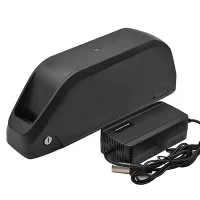
In the rapidly evolving world of electric bikes, the battery has become the defining component that shapes performance, range, and overall riding experience. Among the various options available today, the 48V e-bike battery stands out as one of the most widely adopted configurations. It strikes a balance between efficiency, power delivery, and compatibility, making it suitable for both daily commuters and riders tackling more demanding terrain.
However, for many cyclists, they have no idea what a 48V battery means. They are not familiar with terms such as voltage, ampere-hours, watts and watt-hours. A correct understanding of these indicators not only helps in choosing the right battery, but also ensures safer operation and optimal performance.
This article provides a detailed explanation of what a 48V battery really is, how its parameters influence riding characteristics, and what to look for when selecting one.

What Is a 48V e-Bike Battery?
At its core, a 48V e-bike battery is a power pack designed with a nominal voltage rating of 48 volts, engineered to supply the necessary electrical energy to the motor of an electric bicycle. Voltage, in this case, defines the potential difference within the battery that drives current into the motor, powering the system.
Most modern 48V batteries are lithium-ion e-bike batteries. Their popularity is due to their superior energy density, lighter weight, and extended cycle life compared with older technologies. A well-designed lithium pack can provide several years of reliable service with proper care. In contrast, lead-acid batteries are still present in certain budget-oriented markets. While more affordable, they are considerably heavier, bulkier, and have a much shorter lifespan, making them less appealing for performance-focused or long-term use.
An important variation worth noting is the 48V dual battery system. In this setup, two 48V batteries are connected in parallel. The voltage remains constant at 48V, but the amp-hour capacity is effectively doubled. This configuration dramatically increases range, making it attractive to long-distance riders or delivery services that require extended operational hours without frequent recharging.
Key Battery Metrics Explained
1. Voltage: The Core of Power and Speed
Voltage (V) can be thought of as the "electrical pressure" that pushes current through the motor. In practical terms, the higher the voltage, the more readily energy flows, which translates into stronger acceleration and the ability to climb steeper inclines.
The 48V battery voltage has become a standard because it represents a middle ground: more powerful than a 36V system, which often struggles with torque and hill climbing, yet more stable and widely compatible than higher-voltage systems like 52V or 72V that may demand specialized components.
A fully charged lithium-ion 48V battery typically reads around 54.6V, while its low-voltage cutoff is approximately 39V. Exceeding these boundaries-by either overcharging or deep discharging-can compromise battery health and longevity.
For comparison:
- 48V vs 36V e-bike battery: The 48V provides stronger torque, higher cruising speeds, and better hill-climbing capacity.
- 48V vs 52V battery: A 52V system may offer slightly better top-end speed, but not all controllers are designed to handle the higher voltage, which can pose compatibility risks.
2. Amp Hours (Ah): The Measure of Capacity and Range
If voltage defines how hard the battery can push, amp hours (Ah) define how long it can sustain that push. In essence, amp hours indicate the storage capacity of the battery-the size of its energy "fuel tank."
For instance:
- A 48V 10Ah battery equals approximately 480Wh, providing a practical range of around 24 miles under average consumption rates (20Wh per mile).
- A 48V 20Ah battery equals about 960Wh, which can extend range to nearly 48 miles under similar conditions.
In real-world use, factors such as rider weight, terrain, wind resistance, and level of pedal assist significantly affect actual range. Still, the relationship between capacity and distance remains straightforward: more amp hours mean longer rides, but also greater weight and cost.
This is why capacity selection should align with riding style:
- 10–15Ah for city commuting and lighter use.
- 15–20Ah for touring, off-road, or heavy-load applications where extended range is essential.
3. Watts and Watt-Hours: Power Versus Energy
While voltage and amp hours are widely known, many riders underestimate the importance of watts (W) and watt-hours (Wh).
- Watts (W) represent the instantaneous power output and are calculated as Voltage × Current. For example, a 48V battery working with a 20A controller can deliver up to 960W of power, enough for strong acceleration and hill climbing.
- Watt-hours (Wh), on the other hand, measure the total energy capacity of the battery, calculated as Voltage × Amp Hours. This metric is the most reliable indicator of range. For instance, a 48V 15Ah battery equals 720Wh, which translates to roughly 36 miles of riding assuming standard consumption.
The distinction is critical: watts determine how powerful your e-bike feels, while watt-hours determine how far it can take you. A 48V system with high amp hours will not only feel responsive but also provide the endurance required for longer trips.
How to Choose the Right 48V Battery
Selecting the best 48V battery for an electric bike depends largely on your riding habits, terrain, and budget. While all 48V systems share the same nominal voltage, their capacity, chemistry, and build quality can differ significantly.
- City Commuting: For short daily trips in flat urban environments, a 48V 10–12Ah battery (480–576Wh) is usually sufficient. It offers a 20–30 mile range, is relatively lightweight, and recharges quickly-ideal for riders prioritizing convenience and portability.
- Long-Distance or Hill Climbing: Riders tackling extended commutes, touring, or mountainous terrain will benefit from larger capacities. A 48V 15–20Ah battery (720–960Wh) typically provides 30–50 miles of range, while delivering more consistent power output during climbs.
- Performance Enthusiasts: Some riders may consider upgrading to a 52V system for slightly higher speed and stronger acceleration. However, compatibility must be carefully verified, as not all controllers are rated for higher voltage.
- Budget-Conscious Users: Lead-acid batteries remain an option for entry-level e-bikes, thanks to their low price point. That said, lithium-ion batteries-though more expensive upfront-offer superior energy density, lighter weight, and longer lifespan, making them the more cost-effective solution over time.
Pros and Cons of a 48V e-Bike Battery
Every system has trade-offs. Understanding the pros and cons of a 48V e-bike battery helps clarify whether it is the right choice for your riding needs.
Advantages:
- Balanced power and efficiency: Delivers strong torque and steady cruising speeds without requiring specialized high-voltage components.
- Excellent hill-climbing ability: A reliable choice for both city slopes and rural terrain.
- Compatibility and regulation-friendly: 48V batteries are widely supported across mainstream e-bike models and comply with common international safety standards.
Disadvantages:
- Higher cost compared to 36V systems: The added performance comes at a premium.
- Increased weight and charging time: Larger packs require more time to recharge, especially when using lower-current chargers.
- Limitations for high-performance riders: Enthusiasts seeking maximum top speed and acceleration may find 52V or 72V systems more suitable.
Care and Maintenance of 48V Batteries
A well-maintained battery not only performs better but also lasts significantly longer. Here are key guidelines for 48V e-bike battery maintenance:
- Charging Practices: Keep the battery between 20% and 80% state of charge whenever possible. This range reduces stress on the cells and extends overall lifespan.
- Regular Top-Ups: If the bike is not in use for extended periods, recharge the battery every two months to prevent deep discharge.
- Storage Conditions: Store batteries in a cool, dry location, away from direct sunlight and extreme temperatures. Both high heat and freezing conditions accelerate cell degradation.
Common Misconceptions:
- "Higher voltage always means longer range" → In reality, range depends on watt-hours (Wh), not just voltage.
- "Fast charging always damages the battery" → When using a manufacturer-certified fast charger, the impact is minimal. However, frequent use may slightly shorten long-term cycle life.
- "All 48V batteries are the same" → Cell quality, battery management systems (BMS), and assembly standards vary widely, impacting both safety and performance.
FAQ
How far can a 48V e-bike battery go?
- A 48V 10Ah pack (≈480Wh) typically offers around 24 miles of range.
- A 48V 20Ah pack (≈960Wh) can deliver up to 48 miles, depending on terrain, rider weight, and assist level.
How long does it take to charge a 48V battery?
- With a 2A charger, a 10Ah battery requires about 5 hours.
- With a 4A charger, the same battery can recharge in 2.5 hours.
Can I use a 52V battery on a 48V e-bike?
Some systems may tolerate it, but there are risks. Always confirm your controller's maximum voltage rating before attempting.
Why choose 48V instead of 36V or 52V?
- A 48V system balances power, range, and safety.
- 36V batteries are lighter and cheaper but often underpowered for demanding use.
- 52V batteries provide more punch but can introduce compatibility issues.
Does fast charging damage the battery?
When using an OEM-certified fast charger, fast charging is generally safe. However, excessive reliance on fast charging may cause a modest reduction in long-term cycle life.
Conclusion
The 48V e-bike battery has earned its reputation as the industry's most balanced solution, offering a sweet spot between performance, range, and safety. For most riders, it delivers ample climbing power, practical commuting distance, and broad compatibility across mainstream electric bike platforms. By paying attention to parameters such as Voltage, Amp Hours, and Watt-hours, riders can make informed decisions tailored to their unique riding scenarios.
When choosing a battery, quality assurance and the manufacturer's professional expertise are equally important. Since 2009, GEB has been focusing on the design and production of lithium-ion e-bike batteries, mainly serving the European and North American markets. With certifications such as UL, CE, and RoHS, as well as other region-specific quality and environmental certifications, GEB ensures that every product meets international safety and performance standards. Our products cover a wide range of voltages, capacities, and specifications, and we also provide customized battery development to meet the unique needs of different customers.
Ready to power your ride with a trusted 48V battery?
Browse our selection of high-quality 48V e-bike batteries, or contact us directly for a free quote.