At GEB, we build high-performance lithium batteries for the US and European ebike and electric vehicle markets. We get this question a lot from builders upgrading their setups: Can I run a 72V battery on my 1500W motor? The short answer is yes - and in most cases it's a smart move. The current draw drops to around 21A at full 1500W load, which keeps heat low and efficiency high. But compatibility depends on a few key parts. Get them right, and you gain noticeable speed and torque. Get them wrong, and you risk cutoffs or damage.
This guide walks through the basics, real performance numbers, what you need to match, and the risks to watch. We've seen hundreds of these builds in the field.
Why 72V Works Well with 1500W Motors
Power equals voltage times current: P = V × I.
For a 1500W output on 72V, current is 1500 / 72 ≈ 20.8A. That's low. On a 48V system the same power pulls about 31A. Higher amps mean more heat in wires, connectors, and the motor windings. At 72V the system runs cooler and more efficient.
BLDC hub motors (the most common 1500W type) handle this voltage step-up well. Their KV rating stays fixed, so higher voltage spins the motor faster. Efficiency sits around 85-90% in good conditions.
The result: same nominal power, but better real-world behavior. Less sag under load. Less stress on components.
Real Performance: What You Actually Get
Theoretical top speed sits around 50–70 km/h (31–43 mph) based on motor RPM scaling with voltage. In practice, most riders see 45–60 km/h (28–37 mph) on flat roads with a light rider, full battery, and no limiter.
From forum reports and real builds:
- Direct-drive hub motors often hit 55–65 km/h in optimized setups (flat ground, 60–80kg total weight).
- Mid-drive motors usually top out lower, around 45–55 km/h, because of drivetrain losses.
- Heavier riders or cargo drop speed 5–10 km/h.
- Mild hills or headwinds cut another 5–15 km/h.
Climbing improves a lot - users report about 30% better hill performance compared to 48V or 52V setups. Torque feels more linear because voltage stays stable longer.
Here's a quick comparison table for the same 1500W hub motor:
|
Parameter |
48V Setup |
72V Setup |
|
Current at 1500W |
~31A |
~21A |
|
Typical top speed (flat, light rider) |
35–50 km/h |
45–60+ km/h |
|
Heat during sustained ride |
Higher |
Lower |
|
Hill climbing |
Average |
Noticeably stronger |
These numbers come from user tests on Endless-Sphere, Reddit, and YouTube runs. Real speed varies with wheel size, tire pressure, aero drag, and controller tuning.

Must-Match Components
You can't just swap the battery. These parts need to line up:
- Controller: Must support 72V input (usually up to 84V peak). A 48V-only controller will burn out fast.
- BMS: Continuous discharge at least 40A, better 50A+. It needs to handle brief surges for acceleration without tripping.
- Battery capacity: 20Ah minimum. 30–35Ah gives the best balance of range and sustained power. Smaller packs sag more and wear faster under high draw.
- Connectors and wiring: XT90 or Anderson plugs. At least 10AWG wire to avoid melting at 20A+.
- Charger: 84V output matched to your pack chemistry (usually Li-ion).
Use this checklist before you buy:
- Controller voltage range covers 72V nominal / 84V max.
- BMS continuous rating ≥40A (20% headroom over expected draw).
- High-discharge cells (21700 types like Samsung 40T handle 35–45A per cell better than cheap 18650s).
- Physical fit: 72V packs are heavier - check frame clearance and mounting.
Risks and How to Avoid Them
The biggest killer is mismatch. A 48V controller on 72V dies in seconds. Weak BMS trips on hills, cutting power mid-ride. Cheap cells sag hard, dropping voltage and triggering low-voltage cutoff.
Other issues:
- Sustained high speed can heat the motor, but at 72V the low current actually helps keep it cooler than lower-voltage setups.
- Poor storage or cold weather increases internal resistance - power drops until the pack warms up.
- Over-volting without good cooling shortens motor life in extreme cases.
Fixes are straightforward:
- Match voltage ratings exactly.
- Choose lithium packs with strong BMS (overcurrent, balancing, temp protection).
- Add a fuse between battery and controller.
- Monitor voltage/current with an LCD display.
- Store at 50–60% charge in moderate temps.
Follow local laws - many US and EU areas limit ebike speed to 25–28 mph. Higher speeds turn your bike into something else legally.
GEB 72V Batteries for 1500W Builds
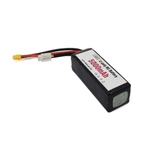
We design our 72V Ebike battery for exactly these high-performance ebike upgrades. Our packs use high-discharge cells with low internal resistance, so voltage holds steady under load. BMS ratings start at 50A continuous with higher peak capability. We offer 20Ah to 35Ah options, all with UL and CE certifications for US and European shipping compliance.
These packs avoid the sag and cutoff issues common in generic batteries. Builders tell us they get consistent power on long hills and sustained runs without the system going dark.
We handle assembly, load testing, and transit to keep delivery reliable. If you're planning a 72V upgrade on a 1500W motor, drop us a message with your controller specs and frame details. We can point you to the right capacity and connector setup.
FAQ
Will 72V burn out my 1500W motor?
No - current stays low (~21A at 1500W). Most hub motors handle it fine if the controller supports the voltage.
What's the real top speed?
45–60 km/h is common on flat roads. Optimized hub setups reach 55–65 km/h. Weight, terrain, and wind change it fast.
What battery capacity do I need?
20Ah minimum. 30–35Ah gives solid range and power delivery without heavy sag.
Do I need a new controller?
Yes - it must be rated for 72V input.
How's the range?
Throttle-only at high speed uses 35–45 Wh/mile - a 1500Wh pack (about 72V 20Ah) gives 25–40 miles. Pedal assist stretches it further.
Best for what riding?
Fast commuting, hilly routes, light off-road. Not ideal for strict speed-limit zones.