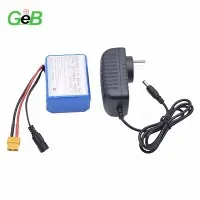
A sample battery is not a decoration for your product shelf. It is a risk test for the entire bulk order. If a sample passes only a short ride around the warehouse, many hidden problems can still appear later: weak capacity, early voltage sag, BMS cut-off, charger mismatch, poor fit, or unclear warranty responsibility.
Professional e-bike battery buyers treat sample testing as a structured approval process. The goal is not simply to check whether the battery turns on. The goal is to confirm whether the sample can survive real customer use, match your bike system, meet your market expectations, and be reproduced consistently in mass production.
Quick Answer: Before approving an e-bike battery sample, test physical fit, connector compatibility, charger behavior, actual capacity, discharge performance, BMS protection, temperature rise, waterproofing expectations, label accuracy, documentation, and packaging. Do not move to bulk production until both the product and the test records are acceptable.
Key Takeaways for B2B Buyers
- A sample should be tested against your real bike, charger, controller, and riding load.
- Capacity and discharge tests are more useful than only checking open-circuit voltage.
- Document every issue with photos, data, and supplier responses before approving changes.
- Sample approval should define the standard for bulk production and warranty evaluation.
Buyer Decision Snapshot
| Test Area | Pass Signal | Red Flag |
|---|---|---|
| Physical fit | Battery locks smoothly and connector aligns correctly. | Rail mismatch, loose lock, cable interference. |
| Capacity | Measured capacity is close to agreed specification. | Large gap between label capacity and test result. |
| BMS behavior | No unexpected cut-off under expected load. | Cut-off during acceleration, hills, or cold start. |
| Charging | Correct charger voltage, no abnormal heat. | Wrong charger output or unstable charging. |
| Documentation | Test records, label, and batch code are consistent. | No traceability or unclear product version. |
Recommended Reading Path: Before requesting samples, make sure your RFQ is complete. After sample approval, use a pre-shipment QC checklist to make sure mass production matches the approved sample. For sample planning support, request sample guidance from GEB.
Confirm the Sample Matches the Approved Specification
Before testing performance, confirm that the sample is actually built according to the agreed specification. Compare the battery label, voltage, capacity, charger output, connector, housing, color, logo, mounting rail, cable length, and accessory list with the proforma invoice or sample specification sheet. Many disputes begin when the buyer tests a sample that is different from what the supplier quoted.
Ask the supplier to provide a sample record with cell type, BMS rating, production date, test results, and battery serial number. This record becomes useful later when comparing sample quality with trial order quality. For OEM/ODM projects, every sample should have a version number so engineering changes can be tracked.
Basic incoming inspection
- Check label information: voltage, capacity, Wh, polarity, warning marks, and model number.
- Check dimensions and weight against the agreed drawing.
- Check connector type, pin position, lock structure, rail fit, and charger plug.
- Check surface quality: scratches, gaps, loose parts, smell, deformation, or poor sealing.
- Check whether accessories, manual, charger, keys, and packaging match the order.
Measure Voltage, Capacity, and Energy
Open-circuit voltage is the simplest first check. A lithium-ion e-bike battery should arrive within a reasonable storage voltage range, not fully empty and not abnormally high. Then perform charge and discharge testing with suitable equipment. For B2B approval, do not rely only on the display percentage on the bike. Use test equipment to measure actual capacity and energy.
Capacity should be evaluated under a defined discharge current and cutoff voltage. If the supplier claims 48V 20Ah, the sample should be tested in a controlled way to verify whether the actual Ah and Wh are close to specification. A small tolerance may be acceptable depending on cell type and test method, but a large gap should be investigated before any bulk order.
Capacity test data to record
- Starting voltage and ending voltage.
- Discharge current and test temperature.
- Measured Ah and Wh.
- Battery surface temperature during discharge.
- BMS cutoff behavior.
- Recharge time with the supplied charger.
Test Under Realistic Load Conditions
A sample that passes a low-current capacity test may still fail on a real e-bike. The controller may demand higher current during acceleration, hill climbing, or heavy cargo operation. Testing should include normal riding current, peak current, and repeated load changes. If the BMS shuts down unexpectedly, the design may need a higher BMS rating, better cells, or improved thermal management.
For distributors, it is useful to test the battery on multiple bikes or kits that represent real customer usage. For brands, test the battery with the actual motor, controller, display, and charger that will be sold together. Compatibility issues are easier to fix during the sample stage than after customers receive products.
Evaluate Mechanical Fit and Daily Handling
Mechanical fit is not just about whether the battery can be pushed into the frame. The sample should lock securely, remove smoothly, avoid rattling, resist vibration, and remain stable during riding. Check whether the key feels reliable, whether the rail alignment is correct, and whether the battery can be removed by the end user without excessive force.
If the project uses a down tube battery, test the rail position and clearance around the frame. If the battery is a rear rack model, test balance, cable routing, and rack strength. If it is a custom in-frame pack, check installation tolerance carefully because small dimensional errors can become large assembly problems in mass production.
Review BMS and Safety Behavior
A good sample should not only deliver power. It should protect the battery when something goes wrong. Buyers should ask the supplier how the BMS handles overcharge, over-discharge, over-current, short circuit, and temperature. Where possible, these protections should be verified by controlled testing or supplier test reports.
For commercial projects, temperature behavior is especially important. A pack that becomes too hot during discharge or charging may have poor cell matching, insufficient current margin, weak nickel strips, or limited heat dissipation. The sample stage should identify these risks before production quantities increase.
Questions to ask the supplier
- What is the standard and maximum continuous discharge current?
- What is the peak current and peak duration?
- Where are the temperature sensors located?
- Does the BMS support cell balancing?
- Can the supplier provide BMS test records?
- Are there optional communication functions for smart systems?
Check Packaging and Shipping Readiness
Even if the battery performs well, poor packaging can create damage during international shipment. A sample shipment should be used to evaluate carton strength, inner protection, warning labels, manuals, and document preparation. For lithium batteries, transportation requirements and carrier rules can vary, so buyers should confirm packaging and documents with their freight partner before bulk shipment.
Ask whether the supplier can provide UN38.3 test summary, MSDS/SDS, packing list, commercial invoice details, and carton information. If the supplier cannot support export documents during the sample stage, the bulk shipment may face delays.
Use a Pass, Conditional Pass, or Fail Decision
After testing, avoid vague conclusions such as "the sample is okay." Use a structured decision. A pass means the sample meets the agreed specification and can move to trial order. A conditional pass means minor changes are required, such as label revision, cable length adjustment, charger plug update, or packaging improvement. A fail means the electrical, mechanical, safety, or compatibility issue is too serious for trial order approval.
Document every issue with photos, test values, and requested correction. This protects the buyer and gives the supplier a clear action list. For repeated projects, a sample approval template also improves communication between purchasing, engineering, sales, and after-sales teams.
Questions to Ask During Sample Approval
- Is this sample made with the same cells and BMS intended for mass production?
- Which tests were completed before shipment?
- What changes were made after the first sample and how are they documented?
- What is the acceptable tolerance for capacity, dimensions, and appearance?
- How will the approved sample be used as a golden sample for bulk inspection?
Procurement Tip: If a supplier answers these questions clearly, the project is usually easier to sample, inspect, and repeat. If the answers stay vague, treat the quotation as preliminary rather than final.
Conclusion
E-bike battery sample testing is the bridge between a quotation and a real business decision. It helps buyers confirm technical performance, mechanical fit, BMS safety, documentation, packaging, and supplier cooperation before placing larger orders. The best sample is not only one that works today, but one that proves the design can be repeated in mass production.
Testing a new battery model for your e-bike brand or distribution project? Contact GEB for sample validation support, test documentation planning, and OEM/ODM battery recommendations before committing to bulk production.
FAQ
How many battery samples should a buyer test?
For early evaluation, one or two samples may be enough. Before trial order approval, testing multiple samples is better because it shows consistency between units.
Should sample testing include real riding tests?
Yes. Bench testing is useful, but real riding tests reveal vibration, fit, display compatibility, current cutoff, and handling issues that may not appear on a bench.
What if the sample fails one test?
The buyer should identify whether the issue is minor, correctable, or fundamental. Minor issues can be revised before trial order, but safety, capacity, or BMS failures require deeper review.
How many samples should a B2B buyer test?
For serious projects, buyers usually test more than one sample so they can compare consistency. The right quantity depends on the project size, but one sample alone may not reveal variation between packs.