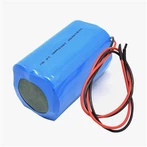
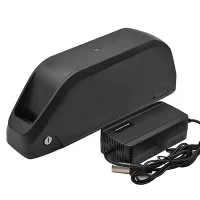
In the current era where there is a strong emphasis on green transportation and sustainable development, electric bicycles have become an indispensable part of urban transportation. As the "heart" of electric bicycles, the lithium battery pack relies largely on a "smart manager" that works silently - the Battery Management System (BMS). This article will deeply analyze the crucial role of BMS in electric bicycles, revealing how it precisely monitors, intelligently protects, and optimizes performance to ensure our riding safety and the long-term lifespan of the E-bike battery.

What Is a BMS: The Brain of the E-Bike Battery
A Battery Management System (BMS) is an electronic control unit designed to oversee rechargeable batteries. For e-bikes, it plays a critical role because the packs are usually built from multiple lithium-ion cells connected in series and parallel.
Without a BMS, small differences between cells can quickly add up, leading to safety risks and reduced performance. With a BMS in place, the system works like a brain-collecting data, making decisions, and taking action to protect the entire pack.
Core Functions and How a BMS Works
1. Voltage and Current Monitoring
One of the most basic but essential jobs of a BMS is to watch every single cell:
- Voltage monitoring: It tracks each cell's voltage to prevent overcharge or over-discharge. For example, charging stops if a cell reaches about 4.25V, and discharging stops if it drops near 2.7V.
- Current monitoring: It measures charging and discharging current. If the current goes beyond a safe level, the BMS cuts the circuit to protect the pack.
This function ensures e-bike batteries don't suffer permanent damage from unsafe operating conditions.
2. Temperature Management and Thermal Protection
Lithium batteries are sensitive to heat and cold. A good BMS includes multiple temperature sensors, usually NTC or PTC resistors, placed at key spots in the pack.
- It prevents charging in very cold conditions (typically below 0°C).
- It limits or stops charging and discharging if temperatures exceed safe ranges, usually above 55–60°C.
- By avoiding thermal runaway, the BMS keeps both the rider and the battery safe.
3. Battery Balancing Management
Not all cells age at the same rate. If one cell lags behind, it can limit the performance of the entire pack. That's why balancing is one of the BMS's most important roles.
Passive balancing
- Extra energy from higher-voltage cells is released as heat through resistors.
- It's simple and low-cost, but less efficient.
- Common in standard e-bike batteries.
Active balancing
- Energy is transferred from higher-voltage cells to lower ones using circuits like DC-DC converters or capacitors.
- More efficient and keeps the pack healthier for longer.
- Often found in high-end e-bikes.
Balancing extends the battery's lifespan and ensures consistent performance.
4. State Calculation and Intelligent Evaluation
Modern BMS systems don't just measure-they also calculate key parameters:
- SOC (State of Charge): The "fuel gauge" of the battery. Calculated using methods like coulomb counting, open-circuit voltage checks, and advanced filters such as Kalman algorithms.
- SOH (State of Health): Shows how much capacity and performance the battery has lost over time. Once SOH drops below about 80%, replacement is usually recommended.
- SOP (State of Power): Tells how much power the battery can safely deliver at any given moment, based on temperature, SOC, and cell condition.
These calculations help the BMS make smarter decisions and give the rider reliable information.
5. Control Execution and Protection Mechanisms
When the BMS detects danger, it takes immediate action:
- Cuts charging when cells are full.
- Stops discharging when cells are too low.
- Shuts down the circuit in case of short circuit or overcurrent.
- Uses MOSFET switches to open or close power flow.
This set of protective layers forms the foundation of e-bike battery safety.
6. Communication and Smart Connectivity
A modern BMS is not just a closed box-it also talks to other systems:
- CAN bus communication: Links the BMS with the bike's controller and sometimes with chargers.
- Wireless communication: Bluetooth or 4G modules let users monitor battery status through apps or cloud platforms.
- Fault alerts: If something goes wrong-like a cell overheating-the BMS sends a warning so the issue can be addressed before it becomes serious.
Connectivity makes battery management more transparent and gives riders confidence in their e-bike's performance.

BMS Hardware Architecture Explained
A BMS isn't just software; it's built on a carefully engineered hardware design. Every module works together to monitor and protect the e-bike battery.
- Sensor network: This is the "nervous system" of the BMS. It measures voltage, current, and temperature across the pack. High-precision sensors make sure the data is reliable, even under harsh riding conditions.
- Main control unit (MCU): Think of this as the "brain." It runs the algorithms, processes sensor data, and makes real-time decisions. Many systems use low-power ARM-based chips to balance performance and efficiency.
- Power switches and balancing circuits: MOSFET switches control the flow of current, cutting off charging or discharging when needed. Balancing circuits-either passive or active-keep all cells aligned.
- Integrated design and thermal management: Because space is tight on an e-bike, most BMS units are compact and fully sealed. Potting compounds protect against vibration and moisture, while thermal pads and housings help manage heat.
This hardware foundation ensures that the BMS can deliver precise monitoring and reliable protection in real-world use.
How a BMS Impacts E-Bike Performance
The quality of the BMS has a direct effect on how the bike performs day to day.
- Safety assurance: Prevents overcharging, overheating, and thermal runaway that can cause fires.
- Range optimization: Accurate SOC calculation helps riders use more of the available capacity. In many cases, a good BMS can improve usable range by 10–15%.
- Longer battery life: Balancing cells and managing charge/discharge stress extends cycle life, reducing how often a battery needs to be replaced.
- Better charging experience: Smart charging curves, compatibility with fast chargers, and cell balancing during charging mean the pack charges efficiently and fully-no more "never reaches 100%" complaints.
In short, the BMS doesn't just protect the battery; it unlocks its full potential.
Future Trends in E-Bike BMS
BMS technology is advancing rapidly, pushed by higher performance demands and stricter safety standards.
- AI and big data: Machine learning algorithms are being used to predict user habits and adapt charging and discharging strategies for maximum life and efficiency.
- Cloud and IoT: Many modern BMS units can connect to apps or cloud platforms, enabling remote monitoring, fault alerts, and over-the-air software updates.
- Standardization and safety: New regulations require stronger ESD protection, better functional safety, and higher durability. This drives innovation in circuit design and testing.
- Next-gen batteries: Solid-state batteries and new chemistries may change how BMS units are designed. Instead of focusing heavily on thermal risks, they may add new monitoring parameters like pressure.
The future is a smarter, more connected BMS that blends electronics, software, and data.
FAQ
What happens if an e-bike battery has no BMS?
Without a BMS, cells can easily overcharge or over-discharge. This can cause permanent damage, poor performance, or even dangerous failures.
How can I tell if my BMS is damaged?
Signs include the battery not charging fully, shutting down suddenly, or showing inconsistent range. Advanced BMS units may also report fault codes.
Can a BMS be replaced separately?
Yes, but it depends on the design. Some packs use integrated BMS boards that can be swapped, while others require full battery replacement. Always ensure compatibility.
How do I choose the right BMS?
Look for complete protection functions, reliable balancing (active if possible), accurate SOC reporting, and robust protection against dust, water, and vibration.
Conclusion and Buying Guide
The BMS is more than just a safety device-it's the core system that keeps an e-bike battery reliable, efficient, and long-lasting. It manages the balance between protection and performance, giving riders confidence every time they get on their bike.
When choosing a battery, pay close attention to:
- Whether the BMS covers all key protections (overcharge, over-discharge, overcurrent, temperature).
- The type of balancing system.
- The accuracy of SOC reporting.
- The physical durability of the board (sealing, waterproofing, vibration resistance).
Contact us now to learn more about Ebike batteries or get a free quote. Email: sales@gebattery.co