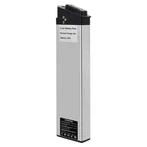
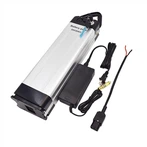
In the process of e-bike modification and selection, the issue of matching the battery with the motor has always been a key concern for users. This article focuses on the specific configuration of a 48V 20Ah battery paired with a 2000W motor, providing a comprehensive analysis from theoretical calculations to real-world usage scenarios. It examines runtime, speed performance, battery lifespan, and important usage considerations.

Battery and Motor Fundamentals
A 48V 20Ah battery can be described in terms of stored energy. Multiplying voltage by capacity gives the theoretical energy content:
48V×20Ah=960Wh
This means the battery can deliver approximately 960 watt-hours of energy when new, under ideal conditions.
A 2000W motor, on the other hand, represents a continuous power demand of 2000 watts. Dividing this by the system voltage (48V) reveals the current draw:
2000W÷48V≈41.7A
In simple terms, the motor requires more than 40 amps of current during full-power operation. With a battery rated at 20Ah, that means the theoretical discharge duration at full load is:
20Ah÷41.7A≈0.48h(about 29 minutes)
From this basic calculation alone, we can already see the tension in this pairing: the motor demands a great deal from a relatively modest energy store. But this idealized figure does not account for real-world inefficiencies or variable riding conditions.
The Principle of Power Matching
In battery system design, matching the battery's discharge capability with the motor's consumption is fundamental. A 48V 20Ah pack is not inherently incapable of running a 2000W motor, but it is not optimized for it. Here's why:
Excessive Current Draw
Drawing over 40A continuously strains most 20Ah batteries, especially if they are not designed with high-rate discharge cells. This leads to increased heat generation, voltage sag, and reduced efficiency.
Reduced Cycle Life
High-rate discharge shortens the usable lifespan of the battery. Instead of lasting 800–1000 cycles (typical for quality lithium-ion packs), such use may cut service life in half or worse, leading to premature replacement costs.
System Safety
Overloading batteries increases risks: overheated connectors, stressed controllers, and in extreme cases, potential failure of protective circuits.
For a sustainable setup, most professionals recommend pairing a 48V 20Ah battery with motors up to around 1200W–1500W, where the discharge current remains within a safer continuous operating range. Running a 2000W motor is possible but inherently compromises efficiency, longevity, and reliability.
Theoretical Runtime vs. Real-World Range
The simple energy-to-power ratio gives us a theoretical runtime of 29 minutes, or roughly 18–20 kilometers at a constant speed of 40 km/h. However, practical results rarely align with this.
- Laboratory Conditions: Under controlled tests-flat terrain, constant moderate speed (25–30 km/h), single rider, mild temperatures-some users report ranges of 60–70 km. This discrepancy exists because the motor seldom runs at its maximum 2000W output continuously. Instead, it operates below peak demand for much of the ride.
- Everyday Urban Riding: In stop-and-go traffic, with typical acceleration and moderate cruising speeds, the same setup usually delivers around 30–40 km of real range. This aligns with the majority of rider reports and is widely considered the realistic expectation.
- The Gap Explained: The motor's rated power (2000W) indicates peak or maximum draw, but average consumption in real-world conditions is often much lower-perhaps 1000–1500W. The difference between "maximum" and "average" demand largely explains why real-world range is longer than the stark 18 km theoretical estimate, but still far shorter than idealized lab claims.
Key Factors Affecting Actual Runtime
Several variables influence how long a 48V 20Ah battery can truly sustain a 2000W motor:
Riding Style
Aggressive acceleration, frequent braking, or cruising at high speeds pushes the motor closer to peak demand, consuming energy at a faster rate. Smooth, steady riding conserves significant battery power.
Load Weight
A lightweight rider (70kg) may achieve around 35km of range, whereas a heavily loaded rider (120kg including cargo) might see the figure drop below 25km.
Terrain
Flat city roads offer the best conditions, but hills dramatically increase consumption. A climb of just 5% grade can spike instantaneous demand to 3000W or more, quickly depleting the pack.
Temperature
Lithium-ion cells lose efficiency in cold climates, with capacity dropping 30–50% in sub-zero conditions. High heat accelerates chemical degradation, permanently reducing long-term battery capacity.
Battery Age
Over time, the effective capacity declines as the pack goes through charge-discharge cycles. A year-old battery may already provide 10–15% less range than when new, even under identical conditions.
Together, these factors mean that two riders with identical equipment can report vastly different experiences depending on how and where they ride.
Differences Among Battery Types
When evaluating how a 48V 20Ah battery performs with a 2000W motor, the chemistry of the battery itself makes a profound difference. Not all 20Ah packs are created equal, and the type of cells used dictates discharge behavior, cycle life, and overall practicality.
Lead-Acid Batteries
Traditional lead-acid packs remain common due to their low upfront cost. However, they come with clear limitations: usable depth of discharge is typically limited to about 50% of rated capacity, meaning that only around 10Ah out of the 20Ah can be reliably used without severely compromising longevity. Their cycle life averages 300–400 full charges, and their bulk and weight significantly affect vehicle performance.
Conventional Lithium-Ion Batteries
Lithium-ion chemistry has transformed light electric vehicles. With a usable depth of discharge of up to 80%, energy availability rises to about 16Ah in practical terms. Typical cycle life ranges from 800 to 1000 cycles, offering far superior durability compared to lead-acid. They are also lighter and more compact, improving handling and overall energy efficiency.
Lithium Iron Phosphate (LiFePO4)
Among lithium chemistries, LiFePO4 is particularly well-suited to high-power applications. It supports high discharge rates, tolerates deep discharges, and carries a reputation for excellent thermal stability and safety. While initial costs are higher, the chemistry's durability and ability to deliver high current safely make it one of the most appropriate choices for pairing with demanding motors such as a 2000W system.
Battery Lifespan and Economic Considerations
Pairing a 2000W motor with a 48V 20Ah pack creates a situation where the battery is forced into high-rate discharges. This accelerates wear and reduces lifespan significantly.
Lead-Acid Batteries
Under heavy load, real-world service life can be as short as 6–8 months before capacity loss makes the pack unusable. This is far below the advertised expectations, and frequent replacement adds up in cost.
Lithium-Ion Batteries
These cells cope better but still experience accelerated degradation when consistently asked to deliver high currents. A pack that might last three years under moderate use could lose half of its effective life expectancy in this configuration.
Economic Trade-Off
While the initial investment in a smaller battery seems attractive, mismatching the motor and battery means higher long-term operating costs. Shortened lifespan, increased risk of premature failure, and possible safety issues make this setup less economical than upgrading to a higher-capacity pack or using a better-matched motor.
Optimization and Alternative Solutions
Fortunately, there are practical ways to mitigate the drawbacks of this configuration or to choose better-suited alternatives:
Controller Current Limiting
By restricting maximum current to around 30A, the system reduces peak demand on the battery. This inevitably sacrifices some performance but can extend runtime by up to 40% and reduce thermal stress.
Battery Upgrades
Moving to a 48V 40Ah pack or running two 20Ah packs in parallel doubles available energy and lowers the discharge rate per cell. This approach improves both range and lifespan.
Motor Alternatives
A 1200W–1500W motor paired with the same 20Ah battery results in a more balanced system, maintaining reasonable performance without overstressing the pack.
Supercapacitor Support
Incorporating a supercapacitor module to handle peak current surges during acceleration or hill climbs can protect the battery, improving both immediate performance and long-term durability.
Riding Habits
Practical choices by the rider-maintaining steady speeds, reducing aggressive acceleration, and moderating cruising velocity-can significantly conserve energy and extend range.
FAQ
1. Can a 48V 20Ah battery power a 3000W motor?
Technically, yes, but it is strongly discouraged. The current demand becomes excessive, leading to rapid voltage sag, dangerous heat buildup, and drastically shortened battery life.
2. How much range difference is there between lead-acid and lithium batteries?
For the same nominal capacity, lithium batteries often provide 20–30% more usable range, thanks to higher usable depth of discharge and better efficiency.
3. Why does the manufacturer advertise 60 km of range, but I only get 30 km?
Advertised figures are usually based on ideal conditions-light rider, flat terrain, steady low speed. Real-world factors such as hills, traffic, and heavier loads cut range nearly in half.
4. How long does a 48V 20Ah battery typically last?
With proper usage, a lithium pack might serve for 2–3 years or 800–1000 cycles, while lead-acid versions may last just 6–18 months depending on stress levels.
5. How can I choose the right battery configuration?
Match the motor's demand to the battery's rated continuous discharge, and prioritize quality cells and capacity suitable for your riding style and distance needs.

Conclusion
In theory, a 48V 20Ah Ebike battery with a 2000W motor provides about 29 minutes of runtime or 18–20 kilometers of travel at 40 km/h. In practice, users can expect 30–40 kilometers depending on terrain, load, and riding habits.
The central risk of this pairing lies in the mismatch between the motor's demand and the battery's sustainable output. Over time, this accelerates wear, shortens lifespan, and increases long-term costs.
- Riders seeking longer range should consider upgrading to higher-capacity packs, such as 40Ah or more.
- Those prioritizing durability should either limit current through the controller or select a motor in the 1200W–1500W range.
- For the best balance of safety, cost, and performance, investing in a properly matched system pays dividends over the life of the vehicle.
Contact us now to learn more about 48V Ebike batteries or get a free quote. Email: sales@gebattery.co