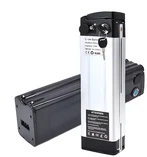
As an environmentally friendly and convenient short-distance travel tool, electric bicycles have gradually gained popularity around the world in recent years. Among them, China, as the world's most populous country, the emergence of electric bicycles has facilitated the lives of hundreds of millions of people. With technological advances and changes in consumer demand, the power source of electric bicycles has also undergone a shift from traditional lead-acid batteries to more advanced lithium batteries. This shift not only improves the performance of electric bicycles, but also promotes innovation and development in the industry. In order to let more people understand the development of electric bicycle batteries, this article will delve into the evolution of this battery technology and its impact on the development of electric bicycles.
The development history of electric bicycles
Electric bicycles were first launched in Japan in the 1990s, and Yamaha was one of the first companies to launch electric bicycles, but at that time most people called them "electric power bicycles", which was also the predecessor of electric bicycles. Gained early recognition in the market with its electric assisted bicycles. The introduction of electric bicycles in Japan is mainly to solve the problem of short-distance commuting and elderly travel in cities. At that time, electric bicycles were heavier and had a lower top speed, but they were already innovative means of transportation at the time.
With the rapid development of markets such as China and Europe, electric bicycles have gradually entered the public field of vision from a niche market. Especially in China, electric bicycles have become the main means of short-distance transportation, and the number has soared. However, with the development of social economy and the changing needs of consumers, the early electric bicycles have exposed more and more problems: large vehicle weight, limited endurance, long charging time, low speed and so on. These factors have made consumer demand for more efficient, lighter, and longer endurance models urgent, which has driven e-bike manufacturers to explore new battery technology.
Introduction of lead-acid batteries and lithium batteries
Before we understand how batteries affect the development of electric bicycles, we still need to learn how batteries work. The working principle of the battery is mainly based on the process of converting chemical energy into electricity. Electrons are released through a chemical reaction inside the battery, which creates an electric current to power the e-bike. The early widely used lead-acid batteries and the current more popular lithium batteries are slightly different in working principle.
Lead-acid batteries work by creating an electric current through a chemical reaction between lead and lead oxide and a sulfuric acid electrolyte. The lead-acid battery has two electrodes, positive and negative, when discharged, sulfuric acid ions react with the lead electrode to form lead sulfate, which emits an electric current. Lead-acid battery has simple structure, low cost and mature technology.
Lithium batteries store and release energy through the movement of lithium ions between the positive and negative electrodes. The core of a lithium battery is that lithium ions move from positive to negative when charging, and from negative to positive when discharging. Due to the light weight and high energy density of lithium itself, lithium batteries are lighter and more powerful than lead-acid batteries, can store more energy, and can provide longer battery life.
Comparison of advantages and disadvantages of lead-acid batteries and lithium batteries
So in order to better distinguish the difference between the two, here I made a summary of advantages and disadvantages. In short, the difference between lead-acid batteries and lithium batteries is that:
Lead-acid battery:
Advantages:
- low cost: easy to obtain production materials, low manufacturing cost, is the standard configuration of early electric bicycles.
- Mature technology: After years of application and improvement, the production and recycling technology of lead-acid batteries has been very perfect.
- High safety: Lead-acid batteries have a low risk of thermal runaway and are stable in harsh environments.
Cons:
- Low energy density: Lead-acid batteries have a low energy density, resulting in a limited range for electric bicycles.
- Heavier weight: the weight of the lead-acid battery is larger, which increases the overall weight of the electric bicycle and affects the riding experience.
- Short cycle life: fewer charge and discharge cycles, short service life, need to be replaced frequently.
- High pollution: lead and acidic electrolyte, if not handled properly, will cause pollution to the environment.
Lithium battery:
Advantages:
- High energy density: lithium batteries have high energy density, and the storage capacity under the same volume is much higher than that of lead-acid batteries.
- Light weight: significantly reduce the weight of the electric bicycle, improve the riding experience, increase the endurance.
- Long life: many charge and discharge cycles, lithium batteries can usually be recycled thousands of times.
- Fast charging speed: compared with lead-acid batteries, lithium batteries have shorter charging time, which greatly improves the travel efficiency.
Cons:
- high cost: the material cost and production process of lithium batteries are more complex, and the initial price is higher than that of lead-acid batteries.
- Risk of thermal runaway: There is a risk of thermal runaway under conditions such as high temperature and overcharge, which requires a strict battery management system.
- Environment sensitive: High requirements on charging and storage environment. Improper use may affect battery performance.
The impact of lithium batteries replacing lead-acid batteries on the development of electric bicycles
From the above analysis and comparison, compared with what you already know, the advantages of lithium batteries are more in line with the current demand for the development of electric bicycles, and the trend of lithium batteries replacing lead-acid batteries to become electric bicycle batteries is unstoppable. The substitution of lithium batteries for electric bicycles has brought about obvious positive changes. The lightweight and high energy density of lithium batteries directly improve the driving range and riding speed of electric bicycles, and riders can be more convenient to shuttle in the city. While making riding easier and more enjoyable, the long life of lithium batteries also reduces the frequency of replacement, reducing the cost of frequent battery replacement for consumers, and there is no need to worry about the battery aging too fast affecting the performance of electric bicycles. The development of lithium batteries has really made electric bicycles more in line with the pace and needs of modern urban life.
Disadvantages of lithium batteries
However, lithium-ion batteries also have some disadvantages, compared to lead-acid batteries, the high cost of lithium batteries initially discouraged many e-bike manufacturers, especially in the entry-level model, which remains a challenge. In addition, due to the lithium battery compared with lead-acid batteries, the stability is less, the thermal runaway problem of lithium batteries has also increased the technical and management requirements for safe use, I believe that many people have learned a lot about the news of spontaneous combustion of electric bicycles, which does make many consumers worry about lithium battery electric bicycles, the market also needs to strengthen supervision and safety education.
Lithium battery for environmental pollution
The production of lithium batteries requires a large number of rare metal resources, and the mining and processing process has potential impacts on the environment. At the same time, the recycling process of lithium batteries is complex, and there are high requirements for equipment and technology. If handled improperly, it will not only cause pollution to the environment, but also waste valuable resources. Therefore, the future research and development direction of lithium batteries needs to further improve its safety and environmental protection while improving its performance.
The future development trend of electric bicycle batteries
It is undeniable that the emergence of lithium batteries has indeed brought a great role to the development of electric bicycles. It also makes people more and more inseparable from the convenience brought by electric bicycles. In the future, the battery technology of electric bicycles will be further developed. New battery technologies such as solid-state batteries and sodium-ion batteries are emerging. By using solid electrolytes, solid-state batteries reduce the risk of thermal runaway and are expected to provide higher energy density and longer cycle life; Sodium-ion batteries are regarded as one of the potential replacements for lithium batteries due to their abundant sodium resources and low cost. With the maturity of these new technologies, the performance and safety of electric bicycles will be further improved.
How to Choose the Right E-Bike Battery Supplier
GEB(General Electronics Battery) belongs to General Electronics Technology Co., LTD. It is a professional manufacturer of electric bicycle lithium batteries.
Since the establishment of the GEB factory in 2009, we have been focusing on the research and development of high-end safe lithium batteries, adhering to the technical route of LFP batteries, and have never changed. There has never been a safety accident caused by our batteries, which has won the reputation of domestic and foreign customers, choosing GEB is to choose safe lithium batteries.
In the lithium battery family, the most widely used in the field of power storage are ternary batteries (NCM or NCA) and lithium iron phosphate batteries (LFP). Ternary batteries are usually used in the automotive market due to their high energy density, while LFP batteries are far better than ternary batteries in terms of safety and cost advantages.
In addition, GEB uses a unique plastic shell process, due to the natural insulation and chemical resistance of the plastic, the safety of the battery module has a greater guarantee, and the low-temperature charging performance characteristics are better.
Hot product
48v Ebike Battery

The 48V e-bike battery delivers superior power and range compared to 36V batteries. Commonly used in high-end e-bikes and conversion kits, it provides enhanced torque and acceleration, ideal for steep hills and rough terrain. The higher voltage also supports longer rides, making it suitable for extended commutes and recreational use. Typically, these batteries use lithium-ion cells for high energy density and long life, and they include advanced safety features for reliable operation.
36v Ebike Battery

1. Long cycle life: provide 1000 reliable cycle life.
2. Advanced battery type: ternary lithium-ion battery with excellent performance.
3, efficient charging: support ≤3A charging current, the maximum continuous charging current is 5A.
4. Optimal discharge: Provide 1C discharge current and 5C maximum continuous discharge current to achieve smooth power transmission.
5. Lightweight design: weight is only 3000 grams, easy to operate, more portable.
6. Compact size: 390 * 110 * 75mm, space saving, easy to integrate.
7. Warranty coverage: Provide 1-year warranty to ensure peace of mind and support.
8. Easy to charge: 8-9 hours can be fully charged, can be used quickly and continuously.
9, wide temperature compatibility: designed for storage in the range of 0°C to 40°C, to ensure adaptability to various environments.