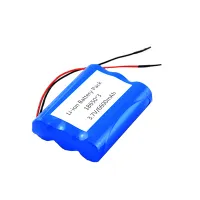
For users who frequently use electric bicycles, sometimes they may encounter situations where the battery charger is damaged or lost. At such times, you might worry about how to charge the battery of your electric bicycle. As a trusted manufacturer of electric bicycle batteries, GEB is well aware of the difficulties that users often encounter during use. In this article, we take a 36V electric bicycle battery as an example to help you understand how to temporarily charge your 36V electric bicycle battery without an original charger.

What Is a 36V Electric Bicycle Lithium Battery?
A 36V Ebike lithium battery is a reliable power source for electric bicycles, commonly used in urban commuting, mountain biking, and pedal-assist models. The "36V" refers to the battery's nominal voltage, with a typical operating range of 36V to 42V when fully charged. These batteries are lightweight, offer high energy density, and support hundreds of charge cycles, making them a cost-effective choice for ebike enthusiasts.
Internally, a 36V battery consists of multiple lithium-ion cells (often 18650 or 21700 types) arranged in a 10-series (10S) configuration, delivering a nominal 3.6V per cell. A Battery Management System (BMS) is integrated to monitor voltage, temperature, and charge balance, ensuring safe operation during charging and discharging. This setup powers motors ranging from 250W to 750W, providing a balance of range (typically 30-80 km) and performance for various riding conditions.
How a 36V Battery Works and Its Charging Requirements
A 36V lithium battery generates electricity through the movement of lithium ions between the positive (typically nickel-cobalt-manganese or lithium iron phosphate) and negative (graphite) electrodes. During discharge, ions flow from the negative to the positive electrode, powering the ebike's motor. Charging reverses this process, requiring an external power source to drive ions back to the negative electrode.
To charge a 36V battery safely and efficiently, the following parameters are critical:
- Voltage: The charging voltage must stay within 36V to 42V. Exceeding 42V risks overcharging, which can damage cells or trigger BMS protection.
- Current: A current of 2A to 3A is recommended for most 36V batteries (10Ah-15Ah). Higher currents may accelerate wear on the cells.
- BMS Compatibility: The BMS regulates charging to prevent overcharge, over-discharge, and short circuits. Any charging method must align with the BMS's thresholds to avoid interruptions.
- Temperature: Charge in a temperature range of 0°C to 45°C to prevent capacity loss or safety hazards.
Charging typically involves two stages: a constant current (CC) phase, where the battery charges at a steady current until reaching approximately 41V, followed by a constant voltage (CV) phase, where the voltage is held at 42V as the current tapers off. Using a non-standard charging method requires careful monitoring to replicate these conditions.
How to Charge a 36V Ebike Battery Without the Original Charger
If you find yourself without the original charger, several alternative methods can charge a 36V ebike battery. Below, we detail four practical approaches, including step-by-step instructions and safety precautions. These methods are intended as short-term solutions, and we recommend reverting to a manufacturer-approved charger for regular use.
(a)Methods and Step-by-Step Instructions
Method 1: Using an Adjustable Power Supply
An adjustable DC power supply (sometimes called a universal power supply) is a versatile tool for charging a 36V battery, provided it supports the required voltage and current range.
Steps:
- Select a power supply with an output range of 30V-50V and a current limit of 0-5A.
- Set the output voltage to 36V and the current to 2A-3A using the power supply's controls.
- Identify the battery's charging port (e.g., XT60, DC 5.5mm) and connect the power supply using compatible cables (red to positive, black to negative).
- Use a multimeter to verify the output voltage before connecting to the battery.
- Connect the power supply to the battery and turn it on. Monitor the battery voltage as it rises.
- When the voltage approaches 42V, reduce the current to 0.5A to avoid overcharging. Disconnect once the voltage stabilizes at 42V.
- Check the battery's temperature (should not exceed 50°C) and ensure proper ventilation.
Tools Needed: Adjustable power supply, multimeter, compatible cables or adapters (e.g., XT60 connector).
Method 2: Using a Car Battery with a Boost Module
A 12V car battery paired with a DC-DC boost module can step up the voltage to charge a 36V battery. This method is useful in automotive or off-grid scenarios.
Steps:
- Choose a DC-DC boost module capable of converting 12V to 36V-42V, with a current output of 2A-3A.
- Connect the module's input terminals to a 12V car battery (red to positive, black to negative).
- Adjust the module's output to 36V using a multimeter to confirm.
- Connect the module's output to the battery's charging port, ensuring correct polarity.
- Monitor the battery voltage every 30 minutes. As it nears 42V, prepare to disconnect.
- Disconnect the setup once the voltage reaches 42V. Check the module and battery for overheating (add a fan if needed).
Tools Needed: 12V car battery, DC-DC boost module, multimeter, thick cables (16AWG or better), optional cooling fan.
Method 3: Solar Panel Charging
Solar panels offer an eco-friendly charging option, ideal for outdoor or emergency use, provided you have sufficient sunlight and the right equipment.
Steps:
- Select a 100W-200W solar panel with an output voltage of 36V-45V and a compatible MPPT solar charge controller designed for 36V lithium batteries.
- Place the solar panel in direct sunlight, avoiding shadows or obstructions.
- Connect the panel to the MPPT controller's input terminals.
- Set the controller to a charging voltage of 42V and a current of 2A-3A, selecting the lithium battery profile.
- Connect the controller's output to the battery's charging port, ensuring proper polarity.
- Monitor the charging process viaamong others. Charging may take 6-8 hours for a 10Ah battery in full sunlight.
Tools Needed: Solar panel, MPPT charge controller, compatible cables, multimeter.
Method 4: Parallel Charging with Another Battery
If you have access to another 36V lithium battery with a similar voltage (within 1V), you can transfer charge by connecting them in parallel. This method requires caution due to potential current surges.
Steps:
- Use a multimeter to measure the voltages of both batteries. Ensure the difference is less than 1V.
- Connect the batteries using thick, insulated cables (16AWG or larger): positive to positive, negative to negative.
- Monitor the current flow with a clamp meter, if available, to ensure it remains safe (below 3A).
- Check the voltages every 15 minutes. Disconnect the batteries once their voltages are nearly equal (within 0.1V).
- Inspect both batteries for heat buildup or unusual behavior.
- Tools Needed: Two 36V batteries, thick insulated cables, multimeter, optional clamp meter.
(b) Safety Precautions
When using non-standard charging methods, prioritize safety to protect yourself and your battery:
- Prevent Overcharging: Exceeding 42V can cause thermal runaway, leading to potential fires. Always monitor voltage with a multimeter.
- Avoid Short Circuits: Secure all connections with insulated cables and use heat-shrink tubing or electrical tape to cover exposed wires.
- Monitor Temperature: Ensure the battery and equipment remain below 50°C. Stop charging if excessive heat is detected.
- Verify Polarity: Incorrect connections (e.g., positive to negative) can damage the battery or cause sparks.
- Use in a Ventilated Area: Charge in a dry, well-ventilated space, away from flammable materials.
- Test BMS Compatibility: Some BMS units may reject non-standard charging inputs. Test the setup briefly before extended use.
Battery Usage and Maintenance Tips
To maximize the lifespan and performance of your 36V ebike battery, follow these best practices:
- Use Approved Chargers: Non-standard methods are for emergencies only. Use a manufacturer-approved charger for regular charging to ensure BMS compatibility.
- Charge to 80%-90%: Avoid frequent full discharges (below 30%) or 100% charges to reduce cell stress and extend lifespan (typically 500-1000 cycles).
- Store Properly: For long-term storage, maintain 50%-80% charge and store at 15°C-25°C. Check voltage every 3 months and recharge if below 36V.
- Inspect Regularly: Clean battery contacts with a dry cloth or isopropyl alcohol and check for loose connectors or casing damage every 2-3 months.
- Avoid Extreme Temperatures: High temperatures (above 45°C) accelerate aging, while low temperatures (below 0°C) reduce range.
- Recycle Responsibly: At end-of-life, take the battery to an e-waste recycling center to prevent environmental harm.
Conclusion
Charging a 36V ebike battery without its original charger is possible using methods like adjustable power supplies, car batteries with boost modules, solar panels, or parallel battery charging. However, these are short-term solutions that require careful monitoring of voltage, current, and temperature to ensure safety and prevent damage. By following the steps and precautions outlined above, you can keep your ebike powered in emergencies while protecting your battery's health.
Of course, to ensure safety, we recommend that you carry out the above operations when you have sufficient electrical knowledge, or repurchase batteries and chargers that meet your requirements from professional electric bicycle battery manufacturers. Contact us now to learn more about 36V electric bicycle batteries. ( sales@gebattery.co )