If you own an electric bike, you've probably run into battery issues at some point. One common culprit behind many ebike battery BMS problems is the Battery Management System (BMS). This small circuit board inside your lithium battery pack acts like a smart guardian-it protects the battery cells from overcharging, over-discharging, excessive current, and extreme temperatures. It also helps keep all the cells balanced so they charge and discharge evenly.
When the BMS develops a fault, it can cause frustrating problems like the battery not charging properly, sudden power cutoffs while riding, rapid range loss, or unusual heat buildup. These electric bike battery BMS faults often mimic a dead battery, leading many riders to replace the whole pack unnecessarily.
In this guide, we'll help you identify if your issue is indeed a lithium battery BMS problem and show you simple ways to check it yourself using basic tools. This can save you time and money by avoiding blind replacements.

Common Signs of a Faulty BMS in Electric Bike Batteries
Recognizing the symptoms early can prevent bigger issues. Here are the most typical BMS fault symptoms in e-bike batteries:
- The battery shows full on the charger (green light comes on quickly), but it dies fast when you start riding.
- The charger stays on red for too long or flips to green prematurely without fully charging.
- Sudden power cutoff during rides, even when the battery indicator shows plenty of charge left.
- The battery gets unusually hot during charging or use.
- Voltage readings fluctuate wildly or don't match the expected level.
- The bike won't turn on at all, or the battery won't accept any charge.
- Range drops dramatically compared to when the battery was new.
- Individual cell groups (if you can measure them) show big voltage differences-some high, some low.
- The charger light behaves oddly, like flashing error patterns.
- Overcurrent protection trips too easily, cutting power during normal acceleration.
If you're experiencing one or more of these ebike BMS problems symptoms, it's time to investigate further. One common reason for electric bike battery not charging is a protective lockout triggered by the BMS.
How to Tell If It's a BMS Fault or Damaged Battery Cells
Before diving into tests, it's helpful to make a quick distinction-many riders confuse BMS faults with actual cell damage. Here's a simple comparison:
|
Symptom / Behavior |
Likely BMS Fault |
Likely Cell Damage |
|
Battery won't charge at all |
Common (protection circuit locked) |
Possible, but usually partial charge possible |
|
Sudden power cutoffs while riding |
Very common (overcurrent or balance issue) |
Less common unless severely degraded |
|
Some charge accepted, but low range |
Common (poor balancing or partial protection) |
Very common (reduced capacity) |
|
Voltage normal but no output power |
Common (MOSFET or output protection failed) |
Rare |
|
Swollen pack or leaking |
Rare |
Common |
|
All cells measure similar voltage |
Possible (BMS not balancing properly) |
Unlikely if damaged |
|
Pack works after reset or cooldown |
Very common |
Rare |
If your symptoms lean toward the left column, you're probably dealing with a BMS issue rather than dead cells. This is good news-BMS problems are often easier (and cheaper) to address.
Tools You'll Need and Safety Precautions
You don't need fancy equipment to perform basic BMS checks on your lithium battery. Here's what to gather:
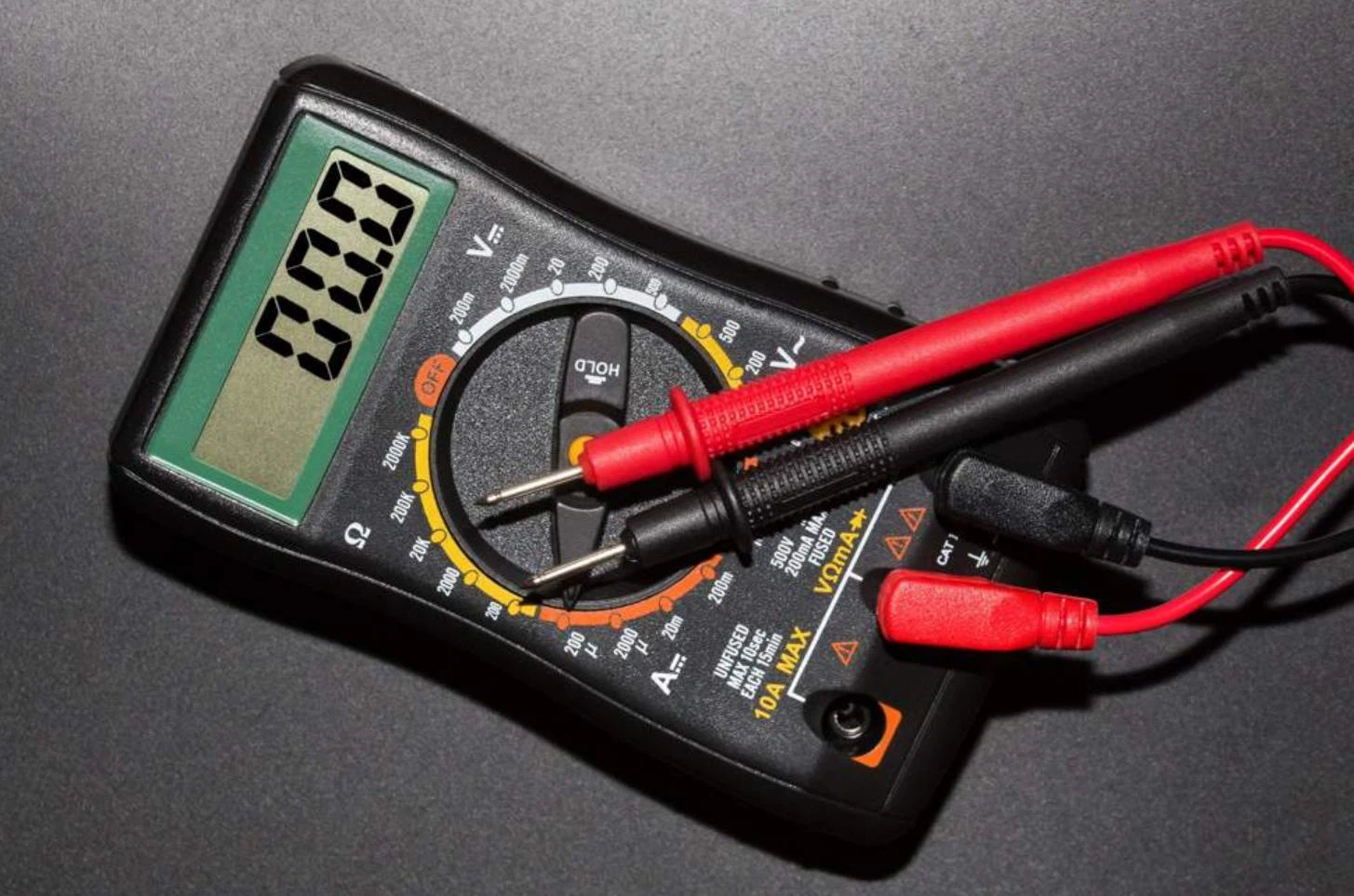
- A digital multimeter (essential for voltage checks-any basic one works).
- Your regular charger.
- Optional: A small load tester or high-wattage resistor for discharge testing.
Safety first-lithium batteries can be dangerous if mishandled:
- Always work in a well-ventilated area away from flammable materials.
- Wear safety glasses and gloves.
- Never short-circuit the terminals.
- Disconnect the battery from the bike before testing.
- Avoid static discharge-touch a grounded metal object first.
- If the pack is swollen, hot, or damaged, stop immediately and dispose of it safely.
Step-by-Step Guide: How to Test Your E-Bike Battery BMS for Faults
Now that you have your tools ready and understand the common symptoms, let's get into the actual electric bike battery BMS testing steps. These lithium battery BMS troubleshooting methods use a digital multimeter to help you pinpoint issues. Follow along carefully-most riders can do this at home.
1. Check the overall battery voltage and charger output
Set your multimeter to DC voltage (higher than your battery's nominal rating, e.g., 60V for a 48V pack). Touch the red probe to the positive terminal and black to negative. A fully charged 48V battery should read around 54-54.6V. If it's much lower and won't charge, note it. Then test your charger alone-it should output slightly higher than the battery's max (e.g., 54.6V for a 48V system).
2. Measure the battery output voltage under no load and with load
First, no load: Measure at the discharge port. Then connect the battery to the bike (or a small load) and measure again while drawing power. If voltage drops dramatically under light load, the BMS might be cutting off due to overcurrent protection.
3. Test the charging port voltage
Plug in the charger and measure voltage at the charging port pins. You should see the charger's full output. If it's zero or very low, the BMS charging circuit could be blocked.
4. Open the battery pack and measure voltage drop across BMS input/output
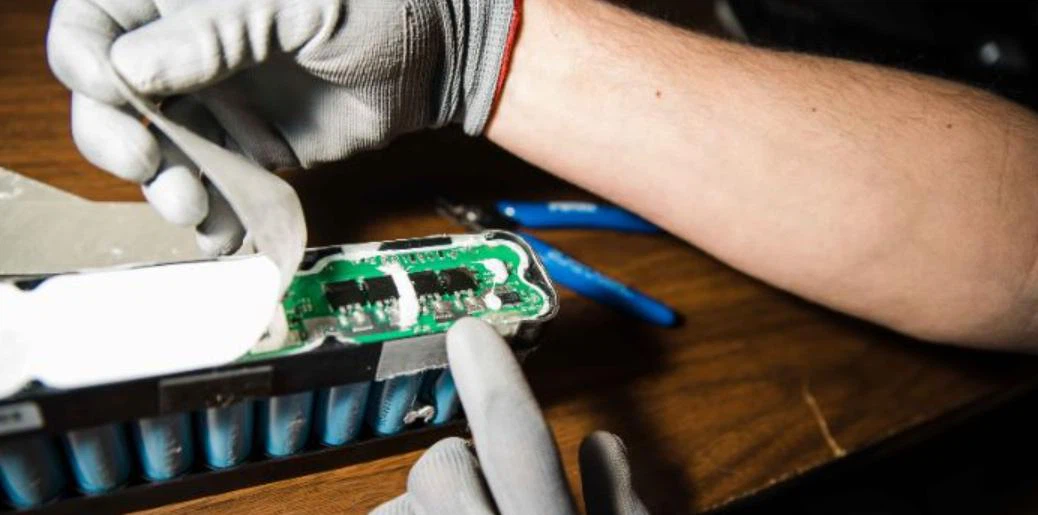
Carefully open the pack (shrink wrap or screws). Measure voltage directly on the cell side (BMS input) and at the output terminals. If there's a big difference (more than 0.1-0.2V), the BMS MOSFETs might be failing.
5. Check individual cell group voltages for balance
Find the balance wires on the BMS (thin wires connected to each cell group). Measure each series group's voltage-they should all be within 0.05-0.1V of each other when fully charged. Big differences point to balancing issues.
6. Test MOSFET on/off (overcurrent protection check)
This is trickier: With the pack open, apply a controlled load and watch if output cuts off prematurely. If it trips too easily even under normal current, overcurrent protection might be faulty.
7. Visual inspection for common fault points
Look closely at the BMS board for burnt spots, cracked solder joints, blown fuses, or damaged components. A melted MOSFET or dark burn marks often explain sudden cutoffs.
If several tests point to the BMS, you've likely found the problem.
Common BMS Fault Types and How to Handle Them
Here are the most frequent electric bike BMS faults and basic fixes:
- Overcurrent protection triggered → The BMS locks out after high current (e.g., hill climb). Try a simple BMS reset: Disconnect the battery for 30-60 minutes, or briefly short the charge/discharge pins (advanced-only if you know the method). This often clears temporary lockouts, but fix the root cause like loose connections.
- Damaged MOSFETs → These switch power on/off. If burnt or failed, no output power. Usually requires replacing the faulty BMS.
- Balancing circuit issues → Cells drift apart over time. Check resistors on balance wires; damaged ones need BMS replacement.
- Blown fuse → A small fuse on the BMS protects against shorts. If melted, replace with the exact same rating.
For most hardware damage, repairing an electric bike BMS fault means swapping the board-it's often not worth soldering tiny components unless you're experienced.
When to Replace the BMS or the Entire Battery
Not every issue is worth fixing. Consider replacing the electric bike BMS if:
The board has visible damage or multiple failed tests.
Repair parts cost more than 20-30% of a new battery.
Your pack is over 3-4 years old-cells may be aging anyway.
If the cells themselves are good (balanced and holding voltage), just swap the BMS (around $20-50 for common sizes). But if cells are uneven or degraded, go for a full replacement.
Look for high-quality lithium batteries with robust BMS designs-better MOSFETs, active balancing, and clear diagnostic features. These last longer, handle higher loads, and make future troubleshooting easier.

How to Prevent E-Bike Battery BMS Faults (Daily Maintenance Tips)
Good habits go a long way toward extending lithium battery BMS life and avoiding issues:
- Charge with the original or matching charger-never overvoltage.
- Store at 40-60% charge in a cool, dry place (ideal 15-25°C/59-77°F).
- Avoid full discharges; stop riding when you hit 20-30% left.
- Don't leave on the charger constantly-unplug once full.
- Check cell balance every few months if you can access the wires.
- Ride smoothly-avoid sudden hard accelerations that spike current.
These electric bike battery maintenance tips can double your pack's lifespan.
FAQ
Can I bypass the BMS on my electric bike battery?
No-strongly not recommended. The BMS prevents dangerous overcharge, over-discharge, and shorts that could cause fire. Bypassing it risks ruining cells or worse.
What if the BMS fault light is on?
Try a full discharge/charge cycle or the reset method above. If it persists, test as outlined-likely a protection lockout or hardware issue.
How do I choose a reliable electric bike battery?
Go for packs with known-brand cells, active balancing BMS, clear voltage specs, and good reviews for longevity. Premium options cost more upfront but save money long-term through fewer faults and better performance.
By following these ebike battery BMS diagnosis steps, you can often identify and even resolve issues without spending hundreds on a new pack. Start simple (voltage checks), then go deeper if needed. Always prioritize safety.
If you run into specific readings during testing, feel free to note them down-many issues have straightforward fixes!
Contact us now to learn more about batteries. Email: sales@gebattery.co