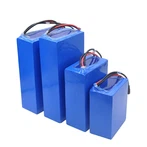
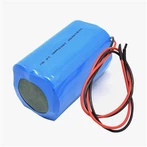
The battery is the lifeblood of electric bicycles (e-bikes), directly influencing their performance, range, and user satisfaction. For procurement specialists, researchers, and everyday consumers alike, understanding the parameters that affect battery performance is crucial. This comprehensive guide will dissect these factors, offering insights to help you make informed decisions when selecting a battery.

Key Parameters Affecting Battery Performance
1. Capacity (Ah)
Capacity, measured in amp-hours (Ah), indicates how much electrical charge a battery can store. A higher capacity translates to a longer range before needing a recharge. For typical e-bike applications, capacity values can range from 10Ah to 20Ah. A battery with a capacity of at least 12Ah is generally considered suitable for daily commuting, while 15Ah to 20Ah is better for longer rides or more demanding usage.
How to Evaluate: Consider your average riding distance. For example, if you ride 30 miles per day and your e-bike consumes about 20Wh per mile, a 15Ah (48V) battery would provide about 720Wh of energy (48V * 15Ah = 720Wh), sufficient for that distance.
2. Voltage (V)
Voltage affects the power output of the battery. Higher voltage batteries can deliver more power, enhancing acceleration and climbing ability. Common e-bike battery voltages are 36V, 48V, and 52V. For most urban applications, 36V is adequate, while 48V is preferred for more robust performance. Higher voltage systems (e.g., 52V) may be necessary for performance-oriented riders or steep terrain.
How to Evaluate: Look for the voltage rating on the battery. Ensure it matches your e-bike motor's requirements, as mismatched voltages can lead to inefficiency or damage.
3. Energy Density (Wh/kg)
Energy density, measured in watt-hours per kilogram (Wh/kg), indicates how much energy is stored relative to the battery's weight. Higher energy density allows for lighter battery packs without compromising range. Lithium-ion batteries typically have an energy density between 150Wh/kg and 250Wh/kg. For e-bikes, an energy density of at least 150Wh/kg is desirable for good performance.
How to Evaluate: Check the manufacturer's specifications for energy density. Consider the trade-off between weight and range; a higher energy density means less weight for the same range, improving handling.
4. Power Density (W/kg)
Power density refers to how quickly the battery can deliver energy, expressed in watts per kilogram (W/kg). High power density is crucial for applications requiring rapid acceleration. A power density of 200W/kg or higher is considered effective for e-bike applications. High-performance models may achieve power densities up to 500W/kg.
How to Evaluate: Manufacturers often provide power density figures. If you frequently ride in stop-and-go conditions or tackle steep inclines, prioritize batteries with high power density for improved responsiveness.
5. Internal Resistance (mΩ)
Internal resistance affects the efficiency of energy transfer within the battery. High internal resistance leads to energy losses as heat, reducing overall performance. For e-bike batteries, internal resistance should ideally be below 50 mΩ. Values above this may indicate lower efficiency and increased heat generation.
How to Evaluate: Some suppliers may provide internal resistance data. For a thorough assessment, consider having the battery tested with specialized equipment to measure resistance accurately.
6. State of Charge (SoC)
SoC indicates the current charge level of the battery. Maintaining an optimal SoC is crucial for battery health and performance. Ideally, keep SoC between 20% and 80% for lithium-ion batteries. Regularly charging to 100% can lead to reduced lifespan, while discharging below 20% can harm the battery.
How to Evaluate: Most e-bikes come with a battery management system (BMS) that displays SoC. Familiarize yourself with how to monitor this to maintain optimal levels.
7. Depth of Discharge (DoD)
DoD refers to how much of the battery's capacity is used before recharging. A deeper discharge can negatively impact battery lifespan. Aim to keep DoD below 80% for optimal battery health. Frequent discharges beyond this limit can lead to premature aging.
How to Evaluate: Track your charging habits. If you regularly deplete your battery significantly, consider adjusting your riding or charging patterns to protect its longevity.
8. Cycle Life
Cycle life indicates how many complete charge and discharge cycles a battery can endure before its capacity falls to 80% of its original rating. For e-bike batteries, a cycle life of 500 to 1,000 cycles is common. Higher quality lithium-ion batteries may achieve up to 1,500 cycles.
How to Evaluate: Check the manufacturer's specifications for cycle life. Longer cycle life typically correlates with better quality, leading to lower long-term costs.
9. Self-Discharge Rate
The self-discharge rate indicates how much charge a battery loses while not in use. Lower rates are preferable, especially for seasonal riders. A self-discharge rate of less than 5% per month is generally acceptable for lithium-ion batteries.
How to Evaluate: When purchasing, ask about self-discharge rates. Consider performing a simple test by charging the battery fully and measuring how much it holds after a month of inactivity.
10. Round-Trip Efficiency
Round-trip efficiency measures the ratio of energy extracted during discharge to the energy used for charging. Higher efficiency means more usable energy and lower operational costs. Look for batteries with round-trip efficiencies above 90%.
How to Evaluate: Manufacturers may provide efficiency data. If possible, assess the performance of the battery under real-world conditions to determine its actual efficiency.