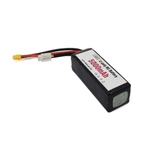
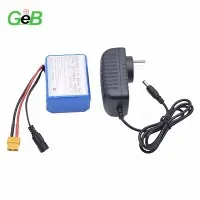
As the global e-bike market continues to expand, battery technology has become the defining factor that separates reliable performance from everyday frustration. The choice of battery chemistry directly determines an e-bike's safety, lifespan, cost efficiency, and environmental impact.
Among the various options available, LiFePO₄ (Lithium Iron Phosphate) batteries are rapidly emerging as the preferred power source for e-bikes. This article explores the science behind LiFePO₄ batteries and explains why they outperform traditional lead-acid and ternary lithium (NCM/NCA) batteries in both safety and longevity.

Understanding LiFePO₄ Battery Technology
LiFePO₄ batteries are a type of lithium-ion battery that use lithium iron phosphate as the cathode material and graphite as the anode. Their crystal structure-known as olivine-provides exceptional thermal and structural stability.
- Stable Crystal Structure: Only 6–7% volume change during charge/discharge ensures mechanical stability.
- Nominal Voltage: 3.2V per cell, providing a balanced voltage output suitable for e-bike systems.
- Thermal Stability: Decomposition temperature up to 500°C minimizes thermal runaway risk.
- Energy Density: 140–160 Wh/kg-moderate, but optimized for safety and cycle life rather than peak density.
Compared with other chemistries, LiFePO₄ delivers a safer, longer-lasting, and more sustainable power source-key for vehicles used daily and frequently charged.
(Learn more about LiFePO₄ chemistry from Battery University.)
LiFePO₄ vs Other Battery Types for E-Bikes
Compared with Lead-Acid Batteries
Lead-acid batteries have been used in early-generation e-bikes, but their limitations are now evident.
- Energy Density: LiFePO₄ batteries store 3–4× more energy (100–140 Wh/kg vs. 30–40 Wh/kg).
- Weight Reduction: Up to 70% lighter - a 48V 20Ah LiFePO₄ pack weighs around 9kg vs. 28kg for lead-acid.
- Cycle Life: 2000–3000 charge cycles vs. only 300–500 for lead-acid.
- Charging Efficiency: >95% vs. 70–80%, cutting charging time nearly in half.
- Eco-Friendliness: Free of lead and cadmium, compliant with RoHS environmental standards.
Bottom line: LiFePO₄ batteries offer better performance, less weight, and much longer lifespan-making them a smarter long-term investment for riders.
Compared with Ternary Lithium (NCM/NCA) Batteries
Ternary lithium batteries dominate the EV and portable electronics markets, but for e-bikes, LiFePO₄ offers a more balanced trade-off between energy density and real-world safety.
|
Feature |
LiFePO₄ |
NCM/NCA |
|
Thermal Stability |
Excellent (500°C) |
Moderate (210°C) |
|
Cycle Life |
2000–5000 cycles |
800–1500 cycles |
|
Safety |
Non-flammable |
Moderate risk of thermal runaway |
|
Cost |
Medium (no cobalt) |
High (cobalt-dependent) |
|
Energy Density |
160–180 Wh/kg |
200–250 Wh/kg |
While NCM/NCA provides higher energy density, LiFePO₄ remains the superior choice for daily-use e-bikes due to its safety margin, durability, and cost-effectiveness.
Why LiFePO₄ Is Ideal for E-Bike Applications
1. Superior Safety Performance
Safety is paramount for e-bike users, especially in high-traffic urban environments.
LiFePO₄ chemistry naturally minimizes the risk of fire or explosion:
Withstands short circuits, overcharging, punctures, and impact tests without ignition.
The electrolyte has a higher flash point, reducing flammability.
Iron and phosphate materials release virtually no oxygen during failure, preventing chain reactions.
No heavy metals (cobalt, nickel) - safer for users and the environment.
(UL 2271 and UL 2849 certifications verify e-bike battery safety standards; see UL Standards & Engagement).
2. Long Cycle Life & Cost Efficiency
For daily commuters, total cost of ownership matters more than upfront price.
- Cycle Life: 2000–5000 cycles (8–10 years of daily use).
- Capacity Retention: >80% even after 3 years of use.
- Cost Efficiency: Per-cycle cost is ⅓ that of lead-acid batteries.
- Reusability: Retired packs can be repurposed for energy storage, maintaining up to 30% residual value.
When measured per kilometer, LiFePO₄ batteries deliver the lowest lifetime cost among all e-bike battery types.
3. Stable Power Delivery & Riding Experience
LiFePO₄ batteries maintain a flat voltage curve, which translates into:
- Smooth power output throughout the discharge cycle.
- Strong torque and acceleration (supports 3–5C continuous discharge).
- Reliable performance across wide temperature ranges:
- Operates from -20°C to 60°C.
- 70% capacity retention at -20°C with proper BMS thermal management.
For riders in both cold winters and hot summers, LiFePO₄ ensures consistent performance and reliable range.
4. Eco-Friendly and Sustainable
LiFePO₄ is the most environmentally responsible lithium-based chemistry:
- Free of toxic metals and fully recyclable.
- Raw materials (iron, phosphorus) are abundant and non-conflict.
- Production and recycling create minimal pollution, aligning with global sustainability goals.
This makes LiFePO₄ the battery of choice for companies committed to green mobility and circular energy systems.
Engineering and Design Advantages
LiFePO₄ packs offer multiple engineering benefits that simplify e-bike integration:
- Modular Pack Design: Square or CTP (cell-to-pack) architecture improves thermal uniformity.
- Customizability: Flexible pack sizes to fit different e-bike frames.
- Smart BMS Integration: Supports accurate SOC/SOH monitoring, overcurrent protection, and data logging.
- Compatibility: Works seamlessly with standard e-bike controllers and chargers.
For OEMs and ODM partners, these design advantages reduce assembly time and improve overall system safety.
Challenges and Continuous Improvement
Despite its many advantages, LiFePO₄ technology continues to evolve:
1. Low-Temperature Performance:
- Improved via nano-scale cathode materials and low-resistance electrolytes.
- Preheating systems help maintain performance below -10°C.
2. Energy Density Enhancement:
Adoption of silicon-carbon composite anodes and thinner electrode coatings.
3. Cost Reduction:
Scale-up production and recycling efficiency have reduced costs by 60% since 2018.
With ongoing R&D, the next generation of LiFePO₄ batteries will offer even better energy-to-weight ratios and faster charging.
Future Outlook
The future of LiFePO₄ in e-bikes looks brighter than ever:
- Fast-Charging Innovation: 20-minute charging under new electrolyte systems.
- Smart BMS: Real-time diagnostics and cloud-based monitoring.
- Battery Swapping Systems: Standardized modular packs for rapid exchange.
- Recycling Ecosystem: A closed-loop system from production to reuse and regeneration.
These advancements will make LiFePO₄ batteries the foundation of sustainable e-mobility worldwide.
Conclusion
LiFePO₄ batteries deliver the perfect balance of safety, longevity, efficiency, and environmental responsibility-making them the ideal power source for modern e-bikes.
Compared with lead-acid and NCM batteries, they offer higher thermal stability, longer service life, and better value over time.
As the e-bike industry continues to evolve toward safer and greener solutions, LiFePO₄ technology stands out as the most reliable choice for both riders and E-bike manufacturers.
About GEB
GEB, a brand under General Electronics Technology Co., LTD, has specialized in LiFePO₄ e-bike batteries since 2009. With certifications including UL, CE, and RoHS, GEB products are trusted across Europe and North America.
Our company focuses on high-quality Ebike Battery OEM/ODM solutions, combining innovation, safety, and sustainability to power the future of green mobility. Contact us now to learn more about e-bike batteries or get a free quote.

Some information sources are from authoritative websites:
Battery University – https://batteryuniversity.com/
UL Standards – https://www.ul.com/
RoHS Directive – https://commission.europa.eu/