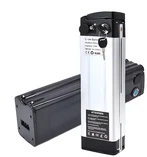
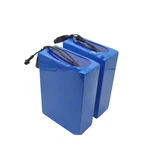
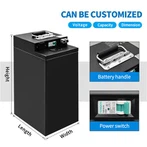
This guide explains what can be customized, what typically creates tooling or NRE charges, how MOQ affects cost, and how brands can control ownership and revisions from the first sample through mass production.
Buyers often ask for the unit price before the architecture is defined. That produces a quotation built on assumptions. A useful custom battery budget separates recurring pack cost from one-time development expenses such as mechanical design, molds, BMS modification, firmware, assembly fixtures, prototypes, certification samples, and validation.
A custom e-bike battery pack can solve problems that standard catalog batteries cannot: limited frame space, higher range targets, special controller current, proprietary communication, unusual connectors, brand-specific appearance, or a commercial duty cycle. The challenge is understanding which changes are simple configuration work and which require real engineering, tooling, testing, and minimum-volume commitments.
Quick Answer: A custom e-bike battery pack cost includes two layers: recurring unit cost for cells, BMS, housing, connectors, charger, assembly, testing, and packaging; and one-time development cost for design, tooling, firmware, fixtures, prototypes, and validation. Start with an existing platform when possible, freeze the requirements before tooling, define ownership in writing, and amortize one-time costs using a realistic volume forecast.
Key Takeaways for B2B Buyers
- Distinguish reusable production tooling from engineering labor, prototypes, certification samples, and ordinary setup charges.
- Ask who owns each tool, design file, firmware version, and drawing after payment.
- Define how many design revisions and sample rounds are included before additional charges apply.
- Compare custom tooling with existing-platform modification; the cheapest development route is not always the lowest lifecycle cost.
- Amortize one-time costs using conservative, expected, and growth volume scenarios.
Build the Custom Battery Cost Model Before Requesting a Quote
Use one worksheet for recurring unit cost and another for one-time development cost. This prevents a low unit price from hiding a large mold, firmware, validation, or support commitment.
Planning Formula: Total project budget = tooling + engineering/NRE + prototypes + validation and certification samples + recurring unit cost × planned quantity + logistics + warranty and service reserve.
| Cost Layer | Typical Scope | Buyer Decision |
|---|---|---|
| Recurring pack cost | Cells, BMS, housing, charger, assembly, testing, packaging | Compare only after the same specification is frozen |
| Mechanical tooling | Housing, rail, lock, seals, inserts, production molds | Confirm ownership, maintenance, transfer, and tool life |
| Electrical and firmware NRE | BMS changes, protection settings, communication, diagnostics | Define reusable platform work versus project-specific work |
| Samples and validation | Prototype rounds, destructive samples, test fixtures, reports | Set included quantities, acceptance criteria, and retest terms |
| Commercial reserve | MOQ, inventory, certification updates, warranty, service stock | Test conservative and expected-volume scenarios |
What Can Be Customized in an E-Bike Battery Pack?
Customization can range from a label change to a completely new battery system. Common options include nominal voltage, Ah and Wh capacity, cell brand and format, continuous and peak current, charging current, BMS protection thresholds, Bluetooth or communication, temperature sensors, fuse design, housing shape, rail, lock, connector, cable length, charger, logo, label, carton, and user manual.
The most cost-effective projects usually begin by separating must-have requirements from preferences. A different connector or label may be easy on an existing platform. A new in-frame enclosure, proprietary rail, high-current BMS, or communication protocol may require mechanical tooling, electrical engineering, firmware, fixtures, and additional validation.
Standard, semi-custom, or fully custom?
- Standard: existing battery, existing components, minimal branding changes.
- Semi-custom: existing housing with adjusted cells, BMS, connector, cable, label, or packaging.
- Fully custom: new housing, internal structure, electronics, firmware, interface, or proprietary installation system.
Use the custom battery planning guide to prepare requirements, then convert them into a written battery RFQ before requesting final tooling and NRE terms.
Quick B2B Comparison Table
| Cost Type | Typical Deliverable | Key Buyer Question |
|---|---|---|
| Mechanical tooling | Housing mold, end caps, rail, lock parts, seals | Who owns and maintains the tool? |
| Electrical NRE | BMS schematic change, component selection, protection settings | Is the design reusable or project-specific? |
| Firmware and communication | Protocol, diagnostics, display or charger communication | Who controls source code and future revisions? |
| Production fixtures | Assembly, welding, sealing, programming, test jigs | Is the fixture dedicated and included in unit price? |
| Validation and documents | Prototype rounds, reports, drawings, certification samples | What tests and revision rounds are included? |
Recommended Reading Path: Use the OEM vs ODM guide to choose the development model, then plan timing with the battery lead-time guide.
What Tooling and NRE Mean in a Battery Project
Tooling is generally a physical asset used to manufacture or test the product. NRE is engineering work performed once or during defined development stages. The categories can overlap because a test fixture may require both engineering design and physical fabrication.
A professional quotation should explain the purpose of each charge. A single line called development fee gives the buyer little control. Ask the supplier to separate mechanical design, electrical design, firmware, prototypes, molds, fixtures, validation, documents, and certification support.
Mechanical Tooling: Housing, Rail, Lock, and Sealing Parts
A fully custom battery enclosure may require injection molds for the main housing, covers, end caps, buttons, light pipes, seals, rails, lock parts, and internal cell supports. Some projects also require metal stamping, extrusion, CNC fixtures, or casting tools.
Mechanical tooling cost depends on size, material, geometry, surface finish, number of cavities, expected tool life, tolerance, sliding structures, inserts, waterproofing details, and whether the housing must match an existing frame. A low-cost mold may be appropriate for a pilot product, while a high-volume program may need a more durable tool and stronger dimensional control.
Questions to ask about a housing mold
- Which parts require new molds and which use existing components?
- What material and expected production life are specified?
- How many cavities and what production capacity are planned?
- Are texture, color matching, logos, and surface treatment included?
- How many mold trials and corrections are included?
- Who owns the mold and where will it be stored?
- Who pays for maintenance, repair, or transfer?
- What happens to the mold if the supplier relationship ends?
Electrical NRE: BMS Hardware and Protection Design
A catalog BMS may not fit every application. Higher current, different series count, additional temperature sensors, communication, low-temperature charging control, special charger behavior, or compact dimensions can require hardware changes.
Electrical NRE can include schematic work, PCB layout, component selection, thermal review, protection thresholds, sample boards, debugging, and validation. Buyers should ask whether the quoted BMS is a standard platform with parameter adjustment or a new hardware design. The risk, timing, ownership, and future support differ significantly.
Firmware and Communication Development
Smart batteries may communicate with displays, motor controllers, chargers, mobile applications, diagnostic tools, or fleet systems. Development can include communication protocol implementation, state-of-charge algorithms, data logging, fault codes, sleep behavior, authentication, and firmware update methods.
Firmware ownership requires special attention. Paying an NRE charge does not automatically transfer source code or unrestricted design rights. Define what the buyer receives: a compiled firmware version, configuration access, protocol documentation, source code, update rights, or only supplier-managed support.
Contract Tip: List the exact firmware revision, approved functions, communication messages, update process, ownership, confidentiality, and change-approval rules in the project agreement.
Production Fixtures and Why They Matter
Dedicated fixtures make production repeatable. They may position cells, hold busbars, support welding, prevent polarity mistakes, align housings, control sealing pressure, program BMS boards, or connect the pack to automated test equipment.
A supplier may spread generic fixture cost across unit pricing, but dedicated fixtures are often charged separately. Ask whether the fixture remains dedicated to your project, whether duplicate fixtures are required for capacity, and whether replacement or maintenance is included.
Prototype and Sample Charges Are Not Always Tooling
Early samples may be expensive because they use CNC housings, 3D-printed parts, hand assembly, special component purchasing, and intensive engineering time. This is not necessarily the final tooling cost. Ask the supplier to identify the sample method and which dimensions or materials differ from production.
A useful development plan separates appearance prototypes, functional electrical samples, engineering validation units, pilot-run units, and final golden samples. Each stage has a different purpose. Mixing them can lead to a visually good sample that is not ready for repeatable production.
Certification and Destructive-Test Samples
Testing programs may require multiple batteries, chargers, labels, manuals, and transport samples. Some units may be consumed or damaged during testing. The supplier may charge for sample construction, special monitoring, technical files, and corrective revisions.
Buyers should confirm whether laboratory fees are included, whether retesting is included after a failure, who owns the report, which model and configuration it covers, and how future cell or BMS changes affect validity. Certification-related cost should be tied to a defined scope rather than described as a general certificate fee.
Tool Ownership, Design Rights, and Transferability
Ownership should be written, not assumed. A buyer may pay for a mold but still lack the right to remove it, copy it, or use it with another factory. A supplier may reuse a standard BMS platform even when the buyer paid for configuration work.
Clauses buyers should clarify
- Legal owner of each mold, fixture, drawing, CAD file, schematic, PCB file, firmware, and protocol document.
- Whether the supplier may use the design for other customers.
- Conditions for tool access, audit, maintenance, storage, and transfer.
- File formats and documents delivered at each milestone.
- Rights after project cancellation or supplier insolvency.
- Confidentiality and intellectual-property protection for buyer-provided designs.
How to Evaluate Whether Custom Tooling Is Worth It
Custom development is justified when it creates a meaningful commercial advantage: unique frame integration, better range, improved serviceability, brand differentiation, a required communication interface, stronger safety performance, or lower long-term unit cost.
It may not be justified when annual volume is low, the market is uncertain, existing housings already fit the application, or the planned product life is short. In those cases, modifying a proven platform can reduce risk and launch time. The decision should compare total project cost, speed, control, differentiation, and future volume rather than only the initial tool invoice.
Use Milestone-Based Payments
Link payment to measurable deliverables. A typical structure may include requirement approval, design review, prototype completion, functional validation, tooling trial, pilot run, and final acceptance. The exact percentages vary, but the principle is consistent: payment should follow evidence of progress.
Milestones should also define acceptance criteria, included revisions, response time, and what happens if the project is stopped. This prevents disagreements about whether an unfinished design has earned the full development fee.
Common Tooling and NRE Mistakes
- Accepting one unexplained development fee.
- Assuming payment automatically gives the buyer ownership of all files and source code.
- Ignoring fixture cost and line-capacity needs.
- Using optimistic volume to justify expensive tooling.
- Failing to define included revision rounds.
- Approving production molds before electrical and mechanical requirements are stable.
- Not documenting what changes will trigger new NRE.
- Choosing a custom design when a proven platform would meet the market need.
Final Buying Recommendation
Tooling and NRE charges are not inherently a warning sign. They are a normal part of building a controlled, repeatable custom battery when the scope is transparent and the deliverables create lasting value.
Professional buyers separate physical tools from engineering work, define ownership and acceptance, use milestone payments, and test the business case across realistic volumes. That discipline turns development cost from a surprise into a managed investment.
Planning a custom e-bike battery pack but unsure whether you need new tooling? Share your frame drawing, available space, voltage, range target, motor/controller data, connector, and annual forecast with GEB. Request a free architecture and development-cost review.
FAQ
What is the difference between tooling and NRE?
Tooling is usually a physical production or test asset, while NRE is one-time engineering work. A project can include both, and each should have separate scope and deliverables.
Do I own the battery mold after I pay for it?
Only if the agreement clearly states ownership and access rights. Payment alone does not always define transfer, maintenance, storage, or the right to move the mold.
Can tooling cost be included in the unit price?
Yes. Some suppliers amortize tooling into a committed volume. Buyers should understand the volume assumption, what happens if orders are lower, and whether ownership changes after the cost is recovered.
Why is firmware development charged separately?
Communication, protection logic, diagnostics, and state-of-charge behavior may require engineering, testing, and long-term version control. The fee should define the functions and rights delivered.
How many sample rounds should be included?
The appropriate number depends on complexity. The agreement should identify sample stages, included revisions, acceptance criteria, and charges for buyer-requested changes after specification approval.