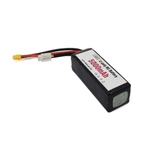
This guide combines a supplier-selection framework with a practical factory audit checklist. Use it to shortlist manufacturers, prepare for an on-site or remote review, compare evidence, and identify risks before samples or bulk orders are approved.
For brands, distributors, importers, and fleet operators, the best e-bike battery manufacturer is the company that can translate an application into a controlled specification and reproduce it consistently. That requires more than assembly equipment. It requires engineering ownership, approved materials, process controls, traceability, testing capacity, documentation, and a clear after-sales process.
Choosing an e-bike battery manufacturer is not the same as buying a standard mechanical component. The supplier will influence product range, charging behavior, safety, certification, warranty cost, and whether your next production batch matches the sample you approved. A low quotation can look attractive, but one uncontrolled cell substitution or weak BMS setting can create far more cost than the initial saving.
Quick Answer: A reliable e-bike battery manufacturer should prove five things: it understands the application, controls the approved bill of materials, uses repeatable production processes, tests every safety-critical function, and can trace each finished pack to its component lots and test records. Evaluate evidence rather than sales claims, and do not release a bulk order until critical audit findings are closed.
Key Takeaways for B2B Buyers
- Confirm whether the company is the actual pack manufacturer, a design owner, a contract manufacturer, or a trading intermediary; each model can work, but responsibilities must be clear.
- Follow one battery from incoming cells to packed shipment and ask for the records created at each stage.
- Check whether the bulk production process matches the approved sample, including cell model, BMS version, connector, housing, firmware, labels, and test limits.
- Require written corrective actions for critical findings and verify closure before releasing the purchase order.
- Use a risk-weighted audit score rather than treating every checklist item as equally important.
15-Point Factory Audit Checklist
- Confirm the legal entity, factory address, production ownership, and subcontracted processes.
- Identify who owns the battery design, BOM, drawings, firmware, and warranty decision.
- Verify the approved cell manufacturer, model, grade, lot control, and storage conditions.
- Review BMS hardware, firmware revision, protection settings, and programming controls.
- Check incoming inspection for cells, BMS boards, chargers, connectors, housings, and critical materials.
- Observe cell sorting, grouping, welding, insulation, and busbar controls.
- Confirm work instructions, process parameters, operator training, and line authorization.
- Review assembly controls for sensors, fuses, harnesses, connectors, housing, seals, and locks.
- Verify aging, capacity, load, protection, communication, and final inspection records.
- Check calibration status and measurement-system controls for safety-critical equipment.
- Review nonconforming-product control, repair identification, retesting, and corrective action.
- Trace a finished serial number backward to material lots, work order, process, and test data.
- Trace a cell or BMS lot forward to finished serial numbers, cartons, shipments, and customers.
- Assess output capacity, bottlenecks, peak-season risks, and continuity plans.
- Confirm change-notification, warranty, service, and repeat-order responsibilities in writing.
What Makes a Good E-Bike Battery Manufacturer?
High-quality manufacturers usually perform well across five connected areas. First, they ask about the motor, controller current, range target, installation space, charger, target market, and user profile before recommending a battery. Second, they define the cell model, pack configuration, BMS, housing, connector, fuse, sensors, charger, labels, and test limits in writing. Third, they use controlled assembly and inspection processes instead of relying on operator experience alone.
Fourth, they can provide documents that match the product being quoted. Depending on the project, these may include transportation reports, safety files, charger documents, drawings, test records, and production traceability. Fifth, they can support repeat orders, engineering changes, warranty analysis, and forecast planning after the first shipment.
Manufacturer, supplier, or trading company?
The company name alone does not determine risk. A direct manufacturer may offer stronger process access and customization, while a technically capable supplier may coordinate several specialist factories. The important question is who controls the design, materials, production, documents, and warranty response. Ask for a responsibility map and verify it during the audit.
For initial screening, read our e-bike battery supplier selection guide. You can also review GEB's manufacturing background before requesting project evidence.
Quick B2B Comparison Table
| Audit Area | Evidence to Review | High-Risk Warning |
|---|---|---|
| Supplier identity and responsibility | Business registration, organization chart, factory address, design ownership, subcontractor list | Sales team cannot identify where key production steps occur |
| Engineering control | Approved BOM, drawings, BMS specification, firmware revision, golden sample | Specifications exist only in chat messages or salesperson notes |
| Production process | Work instructions, process parameters, operator training, line records | Critical settings depend on operator memory |
| Quality system | Incoming inspection, calibration, nonconformance control, corrective actions | Failed packs are repaired without documented root cause |
| Traceability and capacity | Serial records, lot linkage, equipment capacity, peak-season plan | No link between finished battery serial number and cell/BMS lots |
Recommended Reading Path: Before the audit, define the project with a clear e-bike battery RFQ. After the audit, validate samples with the sample testing checklist and review market-document requirements in the battery certification guide.
Define the Audit Scope Before You Visit
A useful audit starts with a project-specific scope. A generic quality checklist may confirm that a factory has machines and documents, but it will not tell you whether the supplier can build your particular battery safely and consistently. Send the factory your intended voltage, capacity, controller current, housing, connector, destination market, expected volume, and approval stage before the audit.
Separate the audit into three questions: Can the supplier design the pack? Can it manufacture the pack repeatedly? Can it prove what was manufactured? A factory may be strong in assembly but depend on an external BMS designer. Another may own the design but outsource plastic molding, chargers, or final packing. Outsourcing is not automatically a problem, but unrecognized outsourcing creates unclear accountability.
Documents to request in advance
- Company registration details and the physical production address.
- Organization chart showing engineering, quality, production, purchasing, and after-sales responsibility.
- Process flow for the target battery family.
- Current quality certificates and the scope shown on each certificate.
- List of major outsourced processes and approved subcontractors.
- Example bill of materials, inspection plan, traceability record, and final test report with commercial details redacted if necessary.
Verify the Supplier's Real Role in the Project
Many sourcing disputes begin because the buyer assumes the supplier controls activities that are actually performed elsewhere. Ask who chooses the cell model, designs the BMS, owns the firmware, approves the housing, purchases connectors, performs pack assembly, conducts aging, prepares dangerous-goods documentation, and handles warranty analysis.
A trading company can still coordinate a successful project when responsibilities are transparent and technical support is strong. A factory can also fail when sales, engineering, and production are disconnected. The audit should therefore focus less on labels such as manufacturer or trader and more on documented control, technical authority, and access to production evidence.
Audit Tip: Ask the supplier to draw the complete responsibility map on one page. Every critical component and process should have a named owner, an approval method, and an escalation path.
Walk the Production Flow From Cell Receiving to Shipment
Do not accept a tour that jumps directly to a clean assembly area. Start at incoming material receiving and follow the actual process sequence. For cells, review supplier approval, lot identification, storage conditions, capacity or voltage checks, internal-resistance screening, and the rule for mixing lots. For BMS boards, review incoming inspection, firmware identification, programming control, and protection-function verification.
Critical production stages to observe
- Cell sorting and grouping criteria, including how outliers are segregated.
- Insulation materials, cell holders, busbars, nickel thickness, and polarity mistake prevention.
- Welding equipment settings, parameter locks, electrode maintenance, and weld-quality verification.
- BMS installation, sensor placement, harness routing, fuse placement, and connector polarity checks.
- Housing assembly, sealing, lock and rail fit, cable strain relief, and water-ingress controls.
- Charge/discharge aging, rest period, abnormal-temperature monitoring, and final functional testing.
- Label verification, serial-number recording, packaging inspection, carton marking, and shipment release.
Ask operators to explain what happens when a result falls outside the limit. Strong processes make the reaction plan visible: stop, identify, segregate, record, investigate, and release only after authorization. Weak processes quietly rework the pack until it passes, leaving no data about the original failure.
Examine Process Control, Not Only Finished Products
A final inspection can catch obvious defects, but it cannot fully detect a weak weld, mixed cell lots, a wrong BMS firmware version, or an insulation error hidden inside the housing. The audit must therefore examine process controls that prevent defects rather than relying only on finished-pack testing.
Check whether critical parameters have defined limits, whether equipment settings are protected, whether measuring instruments are calibrated, and whether the records are reviewed. For example, the factory should be able to explain how weld quality is validated, how torque is controlled on mechanical fasteners, how temperature sensors are positioned, and how capacity results are linked to a serial number.
Evidence-based questions
- Show the most recent calibration record for the equipment used on this line.
- Show a nonconforming battery report and the corrective action that followed.
- Show how an operator knows which BMS firmware belongs to the work order.
- Show how the line prevents a reversed connector or wrong charging port.
- Show the acceptance limits for capacity, voltage difference, insulation, communication, and appearance.
- Show how repaired products are identified and whether they receive a full retest.
Review Traceability, Change Control, and Material Substitution
A supplier may build an excellent sample and later change the cell, BMS, connector, charger, adhesive, fuse, or housing material because of cost or availability. The audit should verify whether the approved bill of materials is controlled and whether any substitution requires documented buyer approval.
Select a finished pack at random and ask the factory to trace it backward. The supplier should be able to identify the production date, work order, cell lot, BMS lot and version, operator or line, test results, and packaging batch. Then select an incoming cell lot and trace it forward to the finished packs that used it. This two-way exercise quickly reveals whether traceability is operational or merely described in a procedure.
Assess Capacity, Peak-Season Risk, and Business Continuity
Production capacity is not simply the theoretical speed of the assembly line. Ask about available shifts, bottleneck equipment, aging capacity, test-channel capacity, approved cell supply, housing lead time, workforce stability, and the effect of peak season. A line may assemble packs quickly but still be limited by aging racks, test equipment, molded housings, or imported components.
Review the supplier's response to equipment failure, cell shortage, quality hold, and sudden demand increases. Backup plans should not depend on changing materials without approval. For important programs, buyers can request a capacity plan that shows normal output, maximum sustainable output, bottlenecks, and the lead time needed to add capacity.
Use a Risk-Weighted Audit Score
A long checklist can create false confidence when cosmetic items receive the same weight as safety-critical controls. Use categories such as critical, major, and minor. A missing lunchroom sign is not equivalent to uncontrolled cell substitution or absent final testing. Critical findings should block approval until evidence of closure is verified.
Suggested approval logic
- Approved: no open critical findings and major findings have acceptable actions and dates.
- Conditionally approved: limited pilot order allowed while specified major actions are verified.
- Not approved: critical safety, traceability, legal, or process-control gaps remain open.
- Re-audit required: major process changes, factory relocation, ownership change, repeated quality failure, or prolonged inactivity.
Red Flags That Deserve Immediate Follow-Up
- The sample area is shown, but the bulk production line is unavailable or located elsewhere.
- Cell model and grade cannot be confirmed in purchase or incoming inspection records.
- BMS firmware has no revision control.
- Operators change welding or test parameters without authorization.
- Failed products are repaired repeatedly without root-cause records.
- Calibration labels are missing, expired, or inconsistent with equipment records.
- The factory cannot trace a finished serial number to component lots.
- Sales promises conflict with engineering or production answers.
Final Buying Recommendation
A factory audit is valuable only when it tests the supplier's real operating system. For e-bike batteries, the highest-risk areas are material control, process discipline, safety protection, traceability, change management, testing, and the ability to repeat the approved design during peak demand.
The best audit outcome is not a perfect score. It is a clear decision supported by evidence: what the factory controls, where the risks are, what must be corrected, and how those corrections will be verified before bulk production.
Need to compare e-bike battery manufacturers for a new brand, replacement line, or fleet project? Send GEB your voltage, capacity, motor power, controller current, housing, target market, and expected volume. Request a manufacturer capability review before you approve samples or tooling.
FAQ
Is a remote e-bike battery factory audit reliable?
A remote audit can verify documents, live production areas, traceability demonstrations, and key records. It is useful for initial screening, but high-risk or high-volume programs may still require an independent on-site audit or inspection.
How long should a battery factory audit take?
A focused audit normally needs enough time to review documents, walk the complete process, sample records, interview responsible staff, and conduct traceability exercises. The duration should be based on scope rather than a fixed factory-tour schedule.
Should a supplier pass every checklist item before sampling?
Not necessarily. Sampling may proceed with controlled minor gaps, but critical issues involving safety, material identity, traceability, or unauthorized changes should be resolved before bulk approval.
What is the most important audit evidence?
The strongest evidence connects written requirements to actual records and products. A random serial-number trace, a real nonconformance case, current process records, and a controlled BOM are more useful than general presentations.
How often should a battery supplier be re-audited?
Re-audit frequency should reflect order volume, product risk, quality performance, process changes, and business continuity. Major changes or repeated failures justify an earlier review.