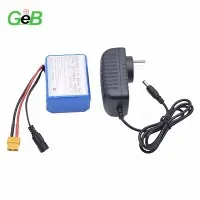
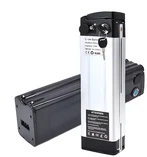
With the development of modular batteries for electric bicycles, different batteries can be replaced and the performance of electric bicycles can be upgraded according to the rider's own needs. In fact, in daily life, it is not uncommon for riders to modify the batteries of their electric bicycles by themselves, which naturally leads to many questions about whether the battery specifications are compatible with the hardware of the electric bicycle.
For instance, we were once asked what would happen if a 36V 10Ah battery was used in combination with a 500W motor? Regarding this issue, we need to delve into it from the battery specifications and the relationship between the motor and the battery. For this reason, we have specially written this guide, aiming to explore this problem from a technical perspective. Help everyone better learn how to safely DIY and modify their electric bicycles and batteries.

Voltage, Current, and Power: Understanding the Electrical Foundation
At the heart of any e-bike power system lies a simple but critical relationship:
Power (W) = Voltage (V) × Current (A)
In this case, a 500W motor operating on a 36V battery draws:
500 ÷ 36 ≈ 13.89 Amps
This is the theoretical continuous current that the motor demands under full load. The real question, however, isn't just whether this figure is achievable-it's whether the battery can consistently deliver that current without overheating, voltage sag, or triggering its built-in protective circuitry.
The key lies in C-rate, or discharge rate. A 10Ah battery asked to deliver 13.89A is operating at approximately 1.39C. While high-performance lithium-ion cells can sustain this, many budget or lower-grade packs are only rated for 1C continuous discharge. Operating above this threshold can stress the cells, reduce lifespan, and potentially lead to performance degradation or failure.
Real-World Performance with a 36V 10Ah Battery and 500W Motor
3.1 Runtime and Range Estimates
In purely mathematical terms, a 36V 10Ah battery contains 360 watt-hours of energy (36V × 10Ah = 360Wh). If the motor continuously draws 500W, the expected runtime is:
10Ah ÷ 13.89A ≈ 0.72 hours, or approximately 43 minutes.
That translates to a range of around 15–20 kilometers, assuming moderate speed (20–25 km/h) on flat terrain and minimal wind resistance. However, real-world factors inevitably reduce this estimate:
- Terrain: Hills dramatically increase current draw
- Rider Weight and Cargo: Heavier loads demand more torque, drawing higher amps
- Acceleration: Frequent starts (e.g., in stop-and-go city traffic) spike power demand
- Wind and Temperature: Wind resistance and low temperatures can both reduce efficiency
Additionally, most riders do not ride at full throttle for extended periods. Some level of pedaling assistance or power modulation will increase range-but not eliminate the inherent limitations of a 360Wh battery.
3.2 Acceleration and Climbing Power
A 36V system powering a 500W motor tends to provide adequate but not aggressive acceleration. In flat urban environments, performance may be satisfactory, especially for riders under 80 kg (175 lbs). However, voltage plays a significant role in the motor's rotational speed and responsiveness. Compared to a 48V system, acceleration will feel slower, and climbing power will be noticeably weaker.
In scenarios involving hills, headwinds, or carrying cargo, a 36V battery may not supply enough voltage headroom to sustain the required amperage. The result can be power drops, sluggish climbs, and potentially thermal stress on both the battery and motor.
3.3 Battery Stress and Safety Risks
Perhaps the most underestimated risk lies in over-discharge stress. Operating a 10Ah battery at nearly 1.4C for prolonged periods introduces several concerns:
- Excessive Heat Generation: Internal resistance can lead to temperature buildup
- Voltage Sag: Especially when the state of charge drops below 50%
- Premature Cut-off: The Battery Management System (BMS) may intervene to prevent damage
- Cycle Life Reduction: Sustained high discharge rates reduce the number of effective charge cycles
If using low-quality cells or poorly constructed packs, additional risks include swelling, leakage, and in rare cases, thermal runaway. For this reason, battery chemistry, cell quality, and BMS design must be factored into any system pairing decision.
Use Case Suitability: Is This Setup Right for You?
Let's evaluate this pairing across three common rider profiles:
Short-Distance, Flat Terrain Commuting (10–15 km)
Recommended. This is the sweet spot for this configuration. On flat terrain and with light pedaling support, the 36V 10Ah battery can offer a reasonable range with minimal stress. The total system remains lightweight, compact, and cost-effective.
Urban Stop-and-Go Riding
Caution Advised. Repeated acceleration drains more power than steady cruising. Riders may find themselves limited by range, and battery life may degrade faster under these high-load patterns. A higher capacity or higher voltage battery may be more appropriate.
Hilly Terrain, Cargo, or Long-Distance Use
Not Recommended. In demanding conditions, the 36V 10Ah battery is likely to underperform. Riders may experience voltage sag, loss of power, or thermal cut-off. Consider upgrading to a 36V 15Ah or 48V 10Ah battery for improved output and longevity.
Comparative Battery Configurations: Which Alternatives Perform Better?
While a 36V 10Ah battery can technically power a 500W motor, it's far from the only option-and in many cases, not the most efficient one. Let's compare it with other common battery configurations that offer different performance profiles.
|
Battery Configuration |
Estimated Range @500W |
Discharge Load |
Recommended Use |
|
36V 10Ah |
~15–20 km |
High (1.4C) |
Short-range commuting |
|
36V 15Ah |
~25–35 km |
Medium (0.93C) |
Medium-distance / light hills |
|
48V 10Ah |
~20–25 km |
Low (0.83C) |
Higher acceleration, mixed terrain |
Each configuration offers trade-offs between energy capacity, discharge strain, and real-world utility:
- If your primary goal is range, increasing the amp-hour (Ah) rating-from 10Ah to 15Ah, for example-can dramatically reduce discharge stress and extend ride time.
- If you're looking for more responsive performance, especially during acceleration or climbing, upgrading from 36V to 48V offers a tangible difference in motor behavior due to increased voltage headroom.
- When budget constraints prevent you from choosing higher capacity or voltage systems, investing in a high-discharge lithium chemistry (such as NCM or INR-based 2C-rated cells) ensures your battery can safely handle the load even at lower capacity.
Ultimately, the right battery is the one that best aligns with your typical riding environment and usage patterns-not just the lowest cost or most advertised.
Compatibility Considerations: Battery, Motor, and Controller
Before implementing or upgrading any battery system, ensure that your motor controller is rated to handle the desired voltage and current output. This is especially critical when considering a switch from 36V to 48V.
Important Technical Parameters:
- 36V Systems typically operate between 42V (fully charged) and 30V (cutoff limit). The controller should prevent the motor from running below this threshold to protect the battery from over-discharge.
- A 48V system, by contrast, ranges from 54.6V (full) to 36V (cutoff). Using a 48V battery on a controller or display designed strictly for 36V may result in circuit damage, false readings, or component failure.
If you're planning to upgrade:
- Confirm compatibility with your motor, controller, display unit, and throttle.
- Check whether your controller has auto-sensing capabilities or is fixed to one voltage class.
- Be cautious of cheap or generic components that lack clear voltage tolerances-these are often the first to fail under upgraded conditions.
Battery Care Tips: Maximizing Lifespan and Safety
Lithium batteries, while robust, are still sensitive to misuse and environmental stress. Here are the best practices we recommend for users looking to maintain battery performance over the long term:
- Avoid deep discharges: Letting the pack drain below 20% on a regular basis stresses the cells and accelerates degradation. Charge proactively rather than reactively.
- Store and operate in moderate temperatures: Avoid riding or charging in extreme cold (<5°C) or heat (>40°C), which can impair chemical stability and reduce capacity.
- Use controlled acceleration: Sudden throttle inputs demand peak power, increasing internal resistance and heat. Steady acceleration extends both battery and motor life.
- Perform routine inspections: Check for swelling, leakage, unusual heat, or visible corrosion. These are signs the pack may be approaching failure and should be replaced.
These small habits can extend your battery's usable lifespan by hundreds of charge cycles, potentially saving you the cost of premature replacement.
Conclusion: Is This Pairing Worth It?
Yes, a 36V 10Ah Ebike battery can power a 500W motor, but the keyword is appropriately.
- If you're using your e-bike for short, predictable rides on flat terrain, this configuration remains one of the most cost-effective and lightweight options available.
- However, if you anticipate frequent climbs, longer routes, or cargo loads, the limitations of this setup will quickly become apparent-most notably in reduced runtime, power drop-off, and battery strain.
- In those cases, either increase battery capacity (Ah) to improve range and reduce stress, or increase voltage (V) to improve performance headroom.
A well-matched system is not just about technical compatibility-it's about aligning electrical performance with real-world expectations.
For riders building or upgrading their systems, we always recommend consulting with a qualified technician or battery specialist to ensure safe, reliable performance tailored to your riding needs.
FAQ
Q: How far can a 36V 10Ah battery take me on a 500W motor?
A: Typically 15–20 km, assuming level terrain and moderate throttle use. Your mileage may vary based on weight, wind, terrain, and riding style.
Q: Is this configuration safe?
A: Yes, but only if the battery supports at least 1.4C continuous discharge. Using a low-grade battery could result in overheating or cut-off issues.
Q: Can I replace my 36V battery with a 48V one?
A: Only if your motor controller and display support 48V input. Otherwise, you'll risk damaging components or encountering electrical faults.
Q: Is this setup enough for daily commuting?
A: If your commute is under 10 km each way, with relatively flat terrain, then yes-it's a practical solution.
Q: Can I use fast charging with this battery?
A: It depends on the battery's built-in BMS and the charger specification. Always use the manufacturer-recommended charger to avoid damaging the cells.