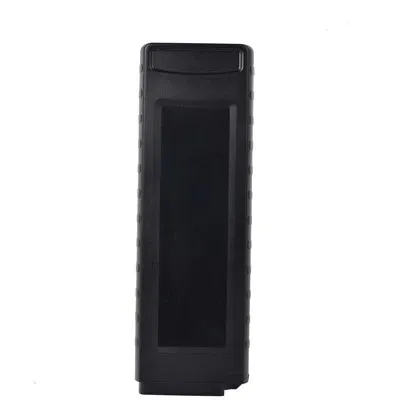
Bosch has built electric bike batteries since 2010. The PowerPack series serves as an external lithium-ion battery that mounts either on the frame (downtube) or on a rear rack. These 36V packs work with Active Line and Performance Line systems on many brands.
The PowerPack 400 came first. Around 2015, Bosch added the PowerPack 500 with higher capacity in the exact same housing and mounting points. This design choice matters a lot for riders and fleet operators. You can often swap one for the other without changing brackets or cables.
Both versions use the same charging port and work with Bosch's standard 4A or compact 2A chargers. The real difference sits inside the case: cell count and energy density.
Bosch PowerPack 500 vs 400: What's the Main Difference?
Capacity drives most decisions. The 500 holds 500 watt-hours while the 400 holds 400 watt-hours - roughly 25% more stored energy.
Weight difference stays small because Bosch kept the outer dimensions identical. Real-world measurements show:
|
Specification |
PowerPack 400 (Frame) |
PowerPack 400 (Rack) |
PowerPack 500 (Frame) |
PowerPack 500 (Rack) |
|
Energy Content |
400 Wh |
400 Wh |
500 Wh |
500 Wh |
|
Approximate Weight |
~2.45 kg (5.4 lbs) |
~2.59 kg (5.7 lbs) |
~2.63 kg (5.8 lbs) |
~2.72 kg (6.0 lbs) |
|
Charging Time (4A charger, full) |
~3.5 hours |
~3.5 hours |
~4.5 hours |
~4.5 hours |
|
Mounting Interface |
Same as 500 |
Same as 500 |
Same as 400 |
Same as 400 |
Data draws from field measurements and Bosch documentation. The 500 adds only about 140–180 grams depending on rack or frame version. For most riders this increase feels negligible, yet it delivers noticeable extra miles.
Price gap runs wider. Frame-mounted 400 versions often list around €266 while 500 versions sit near €539. The extra cost buys more range, not a completely different battery.
How Much Extra Range Does the PowerPack 500 Offer?
The 25% capacity gain usually translates into 20-30% more real-world distance. Exact numbers depend on terrain, rider weight, wind, temperature, and assist level.https://www.gebbattery.com/products
Typical mixed-mode ranges look like this:
- PowerPack 400: 40–90 km (shorter in Turbo or with hills and cargo)
- PowerPack 500: 60–120 km (gives breathing room on longer commutes or loaded tours)
In Eco mode on flat ground, the 500 can stretch 75–110 km. Turbo mode cuts that down sharply for both packs, but the 500 still gives you more buffer before the motor cuts assistance.
Bosch's own range calculator helps estimate for your specific bike and riding style. In practice, many owners report the 500 removes "range anxiety" on routes that push the 400 close to its limit, especially with cargo bikes or regular hills.
Is Bosch PowerPack 500 Better Than 400?
"Better" depends on how you ride.
The 400 works fine for daily short commutes under 50 km, city errands, or riders watching budget and weight. It charges faster and costs less upfront. Many lightweight hybrid or entry-level e-bikes ship with it and perform well in normal conditions.
The 500 shines when you need margin - longer daily rides, weekend tours, frequent hills, or carrying loads. The extra capacity matters more than the tiny weight penalty. Because the housing stays the same, handling characteristics change very little.
Rack-mounted versions suit step-through frames where you want easy on/off access. However, weight sits higher and farther back, which can affect high-speed stability if you also add panniers. Frame-mounted versions keep weight lower and more centered, which many riders prefer for spirited or off-road use.
Neither version is universally superior. Choose based on actual distance, terrain, and how much buffer you want when the battery hits 20%.
Can You Upgrade from Bosch PowerPack 400 to 500?
In most cases, yes - directly.
The mounting interface and connectors stayed consistent across these two capacities. You can swap a 400 for a 500 on the same bike without new brackets in the majority of compatible Bosch systems from model year 2014 onward.
This backwards compatibility makes the 500 a popular upgrade path for older bikes. Owners gain range without buying a new e-bike. Some run DualBattery setups (one frame + one rack) for even more capacity on long tours or cargo work.
Check your specific drive unit and bike model first. Older non-Smart System bikes may lose certain app functions, but basic operation remains solid. Weight distribution changes only slightly, so re-testing handling after the swap is smart, especially on lighter frames.

Replacement Batteries for Bosch PowerPack 400 Rack Mount
When the original PowerPack 400 rack version ages, loses capacity, or gets damaged, many operators look for a reliable drop-in replacement.
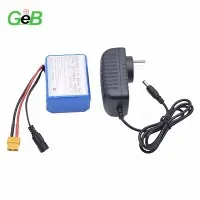
GEB offers the BOS-E36B series as a direct-compatible option for Bosch PowerPack 400 frame/rack positions. It delivers 36V at 11.6Ah (417Wh) using quality 18650 cells and a robust BMS with multiple protection layers: over-charge at 4.3V, over-discharge at 2.4V, over-current, short-circuit, and temperature cutoffs (45°C charge / 50°C discharge), plus a 40A fuse for extra safety.
The pack features an IP54-rated shell, solid mounting bracket, and ergonomic grip areas that match the original form factor. It works with Active and Performance series bikes and restores usable range for daily commuting without requiring frame modifications.
For fleets or cost-conscious riders, such replacements extend the life of existing bikes while maintaining compatibility with original chargers.
Conclusion: Bosch PowerPack 500 or 400?
The PowerPack 500 gives you noticeably more range in the same physical package as the 400, at a higher price and slightly longer charging time. The 400 remains practical for shorter, lighter-duty use and tighter budgets.
If your typical rides stay well under 60–70 km with moderate assist, the 400 often suffices. Once routes grow longer, loads increase, or you simply want fewer charging stops, the 500 becomes the clearer choice. Upgrading from 400 to 500 works in most setups and delivers real benefit with minimal hassle.
At GEB we build and test compatible lithium packs every day. Whether you stay with original Bosch capacities or explore high-quality replacements that match the mounting points, the key is matching energy content to your actual riding profile - not chasing the biggest number on paper.
Have questions about compatibility for your specific bike or need help evaluating replacement options? Drop a comment or reach out. We've helped many operators keep their Bosch-equipped fleets running efficiently.